Alhambra Wood Flooring handles wood floor refinishing in Alhambra, CA, serving surrounding cities including South Pasadena, San Gabriel, Monterey Park, San Marino and Rosemead. For more than 20 years we have sanded worn oak, maple and other hardwoods back to clean wood and built up new finish coats that suit how each household actually uses its floors.
A refinish is only as good as the floor underneath it. Before we schedule sanding we walk the rooms for soft spots, check moisture, look for termite signs and, on older homes, confirm the year the house was built. That short inspection decides whether your floor is ready for sanding or needs a repair first.
You get a written plan that names the finish system, the stain or natural color, the number of coats and the day each room comes back into use. Nothing is left to a verbal promise made at the door.
Is Your Floor Ready For A Full Refinish?
Signs A Hardwood Floor Needs Sanding, Not Just A Coat
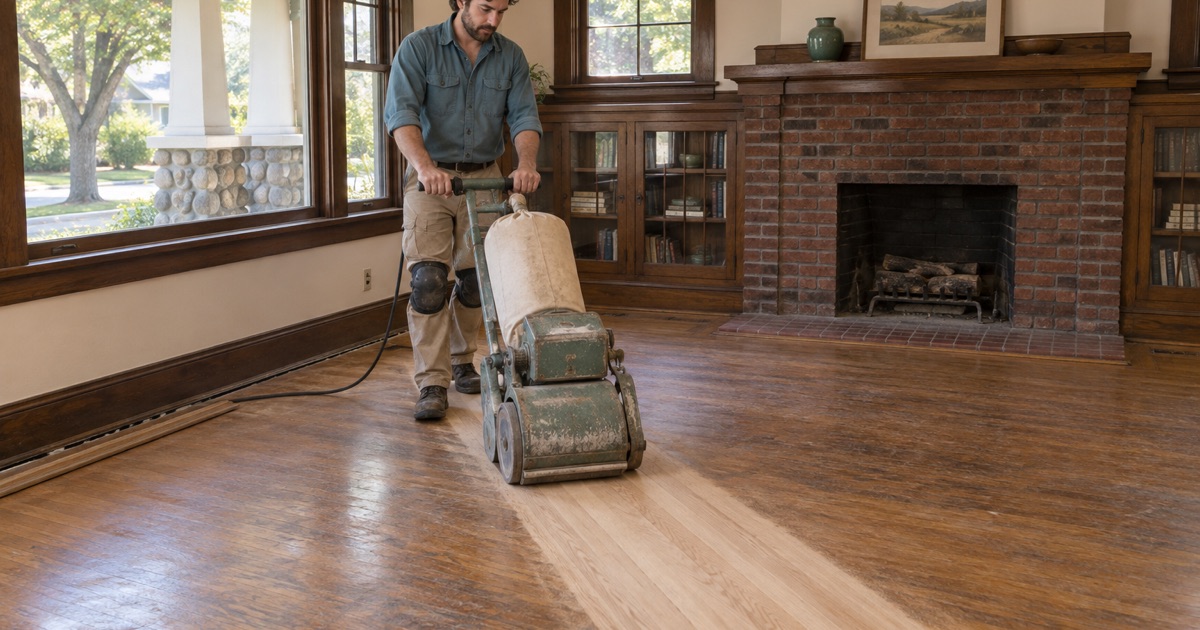
Gray, unprotected wood in the walkways, deep scratches that catch a fingernail, and dents or stains in the wood itself all mean the damage is below the finish. A fresh coat on top would only seal those flaws in. A full sanding removes the damaged layer so the new finish bonds to clean, flat wood.
If the wear is limited to light scuffing of the top coat, we will tell you that a screen and recoat is enough. Sanding a floor that does not need it uses up wood you may want for a future refinish.
Checking How Much Wood Is Left To Sand
Every full sanding removes some wood, and older floors may have been sanded several times already. We check board thickness at a register or threshold to see how much wood remains above the tongue. When a floor is close to its limit we adjust the sanding plan, or tell you plainly that it is time to consider new boards.
Repairs That Come Before The Sander
Loose boards, bouncy areas, termite damage and deep pet stains are handled before refinishing starts, so they are not locked under a new finish. On a raised house we check the framing underneath when the floor moves or slopes, because sanding cannot fix a joist problem. Replacement boards are woven in and then sanded with the whole room.
Those repairs change the estimate, so they are listed as separate line items rather than buried in a square-foot refinishing price. You can see what the sanding costs, what the repairs cost, and decide whether to handle both now or plan the repair work in stages.
How We Sand And Refinish A Wood Floor
Flattening With A Controlled Grit Sequence
We start with a coarse abrasive that flattens overwood and removes the old finish, then step through finer grits until the earlier scratch pattern is gone. The edger works along walls and the orbital sander blends the transition between the edges and the field of the floor. Rushing any of these steps leaves chatter marks, drum marks or swirl that stain makes obvious.
After the final pass we inspect under low, raking light and correct any marks before the room is vacuumed and tacked. It is slower than skipping ahead, but it is the difference between a floor that looks refinished and one that looks new.
Dust Containment During Refinishing
Our sanders are connected to vacuum extraction, and doorways, vents and returns in the work area are sealed before sanding begins. That keeps most dust out of the air and out of the rest of the house. Between grits and before finishing, the room is vacuumed thoroughly so no loose dust ends up trapped in the coats.
We will not tell you the job is dust free, because no sanding is. What we can promise is that the dust is controlled at the machine, kept inside the sealed rooms, and cleaned up before we leave each day, so the rest of the house stays livable while the work moves forward.
Stain, Sealer And Top Coats
If you choose a stain, it goes on after test patches have confirmed the color on your own boards. A sanding sealer or first coat follows, then the top coats, with light abrasion between coats inside each product’s recoat window so the layers bond. The number of coats and the sheen level are written into your plan before work begins.
Species matters here too. Red oak takes stain evenly and hides small flaws, white oak handles natural and gray tones well, and hard maple can blotch under darker stains unless it is prepared carefully. We tell you what to expect from your particular wood before the color is locked in.
Finish Systems And The Rules That Shape Them
Waterborne, Oil-Modified Or Hardwax Oil
Waterborne polyurethane stays close to the wood’s natural color and lets rooms return to use sooner. Oil-modified polyurethane gives a warmer, amber tone and a traditional look but takes longer to cure and has a stronger odor while it does. Hardwax oil penetrates the wood for a low-sheen, matte look and can be touched up in one spot, though it asks for more maintenance.
The right choice depends on your household more than on the product label. A home with dogs and a busy kitchen may want the toughest film finish available, while a quiet room with a wide plank floor might suit an oiled look better. We apply samples side by side on your own boards so you can compare color, sheen and feel before deciding.
South Coast Air District VOC Limits On Floor Finishes
Alhambra sits within the South Coast Air Quality Management District, where Rule 1113 caps wood coatings at 275 grams per liter of volatile organic compounds. Some finishes sold in other parts of the country exceed that limit and cannot be applied here. We build your finish options only from products that meet the local rule, so you never approve a sample we would later have to swap.
Lead-Safe Refinishing In Older Alhambra Homes
Much of the city’s housing was built before 1980, and in homes built before 1978 the paint on baseboards, shoe molding and door casings may contain lead. When refinishing work will disturb those painted surfaces, the EPA Renovation, Repair and Painting Rule governs how the area is contained and cleaned. We confirm the build year before scheduling so those practices are part of the plan from day one.
Refinishing For Homes, Rentals And Businesses
Occupied Homes And Room-By-Room Scheduling
Most families stay home during a refinish by moving the work through the house in stages. We split the job so a bedroom, bathroom or kitchen route stays open, and your written schedule gives each room a date for light foot traffic, furniture and rugs. Rugs wait longest, because a finish trapped under a rug before it cures can be marked.
Rental Units Between Tenants
For a vacant rental, refinishing fits into the gap between move-out and move-in. We plan backward from the new tenant’s date, photograph the floors before and after, and choose a finish that can cure in the time available. Owners get a documented floor condition to compare against at the end of the next lease.
Commercial Wood Floor Refinishing
Shops, offices, studios and restaurants with wood floors face heavier traffic and less flexible schedules than homes. We can phase commercial refinishing around business hours, choose finish systems built for foot traffic and rolling chairs, and plan the cure time so the space reopens on a known date. Commercial floors often benefit from a regular recoat schedule that avoids a full sanding for years.
For a business, the cost of a closed space often matters as much as the cost of the floor. We can split a large floor into sections, work evenings or closed days where the space allows it, and give you a written reopening date for each area so staff and customers are never routed across wet finish.
- 20+ Years in Wood Flooring
- Free Written Estimates
- Room-by-Room Schedules