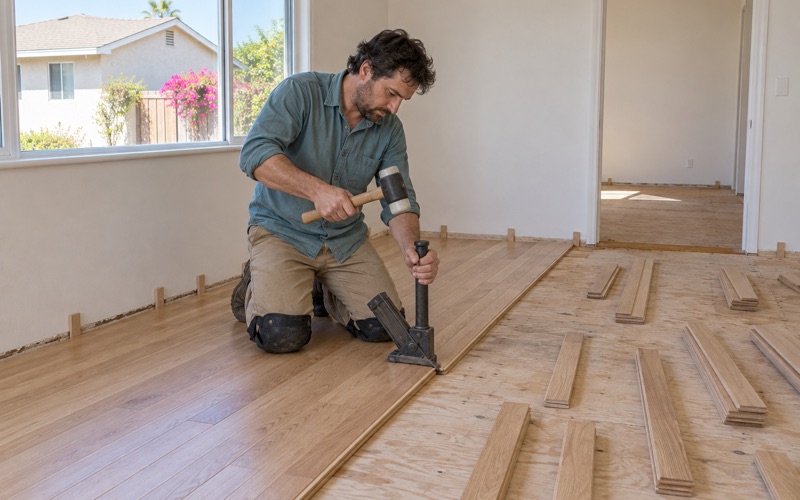
Alhambra Wood Flooring brings more than 20 years of experience to wood-flooring in South San Gabriel, from full sand-and-finish jobs to single-board repairs. We refinish tired red oak and white oak, correct cupping and crowning, quiet squeaks, and install new solid or engineered hardwood. The first step is always the same: we look at the floor, the rooms around it and how the house is built before we talk about price.
That inspection shapes the quote. A bouncy floor, a sloping hallway or a hollow spot near a doorway can come from the structure below, and sanding a floor like that only hides the cause for a while. We would rather tell you that up front than put a fresh finish over a problem that is still moving.
Once the work is scheduled, you get a written plan for each room that shows when furniture, rugs and pets can go back on the new finish. If the floor was damaged by a leak or a kitchen fire, we photograph the loss, take moisture readings and write the repair as matching boards and matching finish, so an adjuster has something usable.
Unincorporated South San Gabriel and What It Changes
South San Gabriel is a census-designated place in the San Gabriel Valley, not a city and not a neighborhood of one of the cities around it. It covers 0.834 square miles of unincorporated Los Angeles County, and there is no city hall, city council or city building counter. The community first appeared as an unincorporated place in the 1970 census. For a floor project, that status shifts who writes the rules that apply to your house.
The County Is the Local Authority
When a question about building work comes up here, the answer runs through Los Angeles County Public Works, Building and Safety, which serves unincorporated communities from its headquarters and a network of district offices. A neighboring city’s building department has no role, even when that city sits a few blocks away. We don’t guess at which office handles a particular address or what it will say about a given scope.
Refinishing a floor is rarely where these questions start. They come up when a project grows, for example when a floor repair turns into structural work under the house or when a remodel moves walls. If your plans head that direction, we flag it early so you can check with the County before work is booked rather than partway through.
Preservation Rules Written for Unincorporated Areas
The Los Angeles County Historic Preservation Ordinance, adopted September 1, 2015, applies only to unincorporated areas and County-owned land, which places South San Gabriel within the County’s framework rather than a city program. The County also runs a Mills Act Historical Property Contract Program. We have no research showing a designated landmark in this community, so for most owners this is background, but it is the County’s framework that would apply.
Schools and Services That Cross City Lines
Living in an unincorporated pocket means services arrive from several directions. Students here are served by three districts, Montebello Unified, Garvey School District and Alhambra Unified, with assigned schools located across neighboring city lines, and the Los Angeles County Sheriff’s Department covers the area from its Temple Station. That spread is one reason people are sometimes unsure which city’s rules apply to their house. The short answer is none of them: it is the County.
Looking for wood-flooring closer to East San Gabriel? See Wood-Flooring in East San Gabriel.
Wood Floors in South San Gabriel’s Mid-Century Houses
This is a community of houses. Of 2,384 housing units in the Census Bureau’s 2024 five-year estimates, 86.7 percent are one-unit detached homes, and 52.9 percent of all units were built between 1940 and 1969. Houses of that era commonly have solid hardwood over a board or plywood subfloor, and a floor that old may have been sanded more than once already.
Checking Underneath Before We Quote
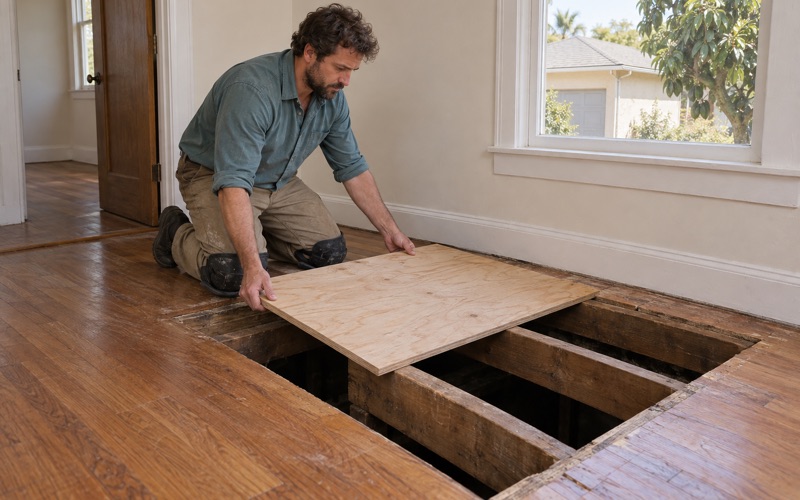
On a house with a raised floor over a crawl space, we go below before pricing any repair. A sagging floor or a soft spot in a hallway can trace back to a cracked floor joist, a settled pier post or a girder that has lost support, and a sister joist or a new post may be the actual fix. Sanding a floor that still moves just gives the problem a fresh finish.
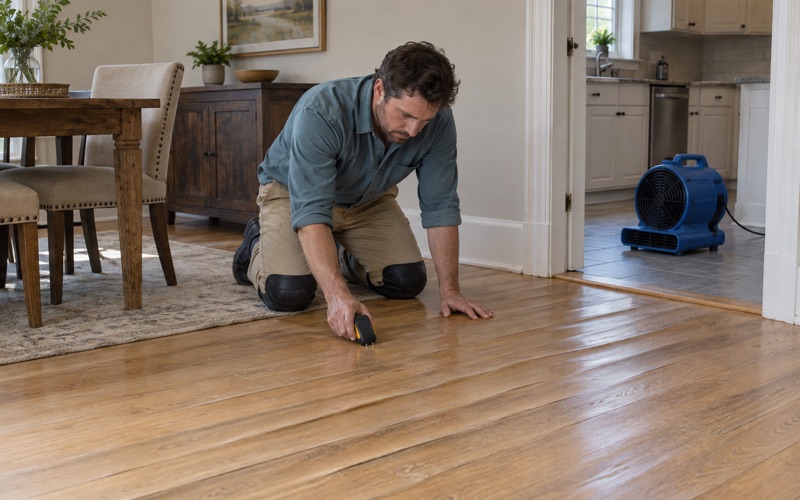
If the house sits on slab-on-grade instead, the checks change. We test the boards and the slab with a moisture meter, look for cupping or buckling near exterior walls, and plan around what the readings show. In both cases the goal is the same: find out why a floor looks the way it does before choosing a repair.
Build Year and Old Finish Layers
With so many homes in South San Gabriel built before 1980, we confirm the build year before any sanding goes on the calendar. Pre-1978 housing falls under the U.S. EPA Renovation, Repair and Painting Rule, and old paint on baseboards, shoe molding and stair stringers can be disturbed when a floor is worked. Knowing the year first decides how the job is set up and contained.
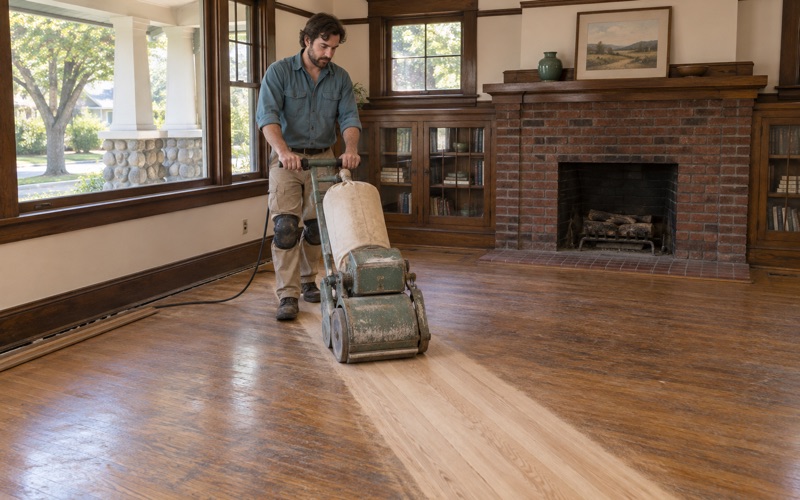
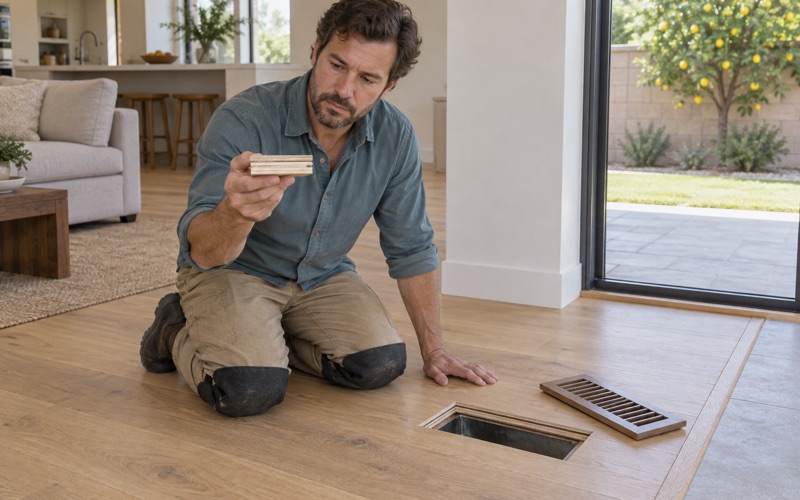
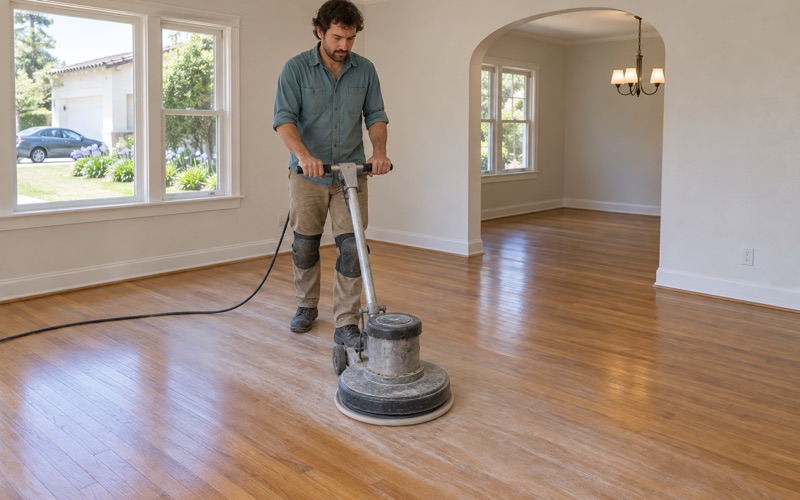
The sanding itself calls for care on a floor this age. Earlier refinishes can leave boards thinner than they look, and aggressive passes with a drum sander risk sand-through down toward the tongue. We read the board edges at a floor register or threshold and plan the abrasive grit sequence around what remains.
Termite Evidence Before Board Replacement
Small round kick-out holes and little piles of pellets near a baseboard can be drywood termite frass. We identify that evidence, or rule it out, before replacing any board, because a new board laid over an active colony will not stay sound. When treatment is needed, whether a localized termite treatment or a tent fumigation, that decision belongs to a pest control company, and we schedule the flooring around it.
Newer Homes From the 2000s
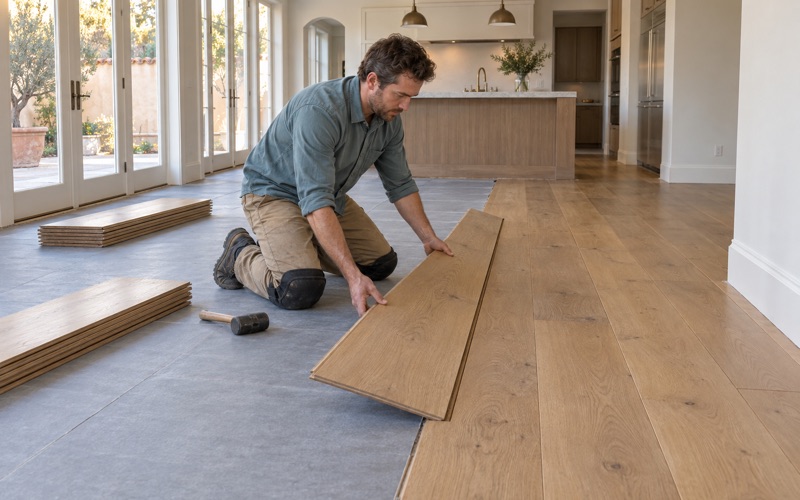
Not every house here is mid-century. The same estimates count 224 homes built between 2000 and 2009, about 9.4 percent of the housing, forming a newer layer mixed in with the older streets. Homes from that decade can carry engineered hardwood, a glue-down or floating installation, or a factory finish, and each of those changes what a refinish can do.
Measuring the Wear Layer First
Engineered hardwood is a real wood veneer bonded to a plywood core, and the wear layer thickness decides its options. We measure it before promising a sanding. A thicker veneer can take a full sand and new finish; a thin one can take a screen and recoat, and pushing further risks delamination or sanding into the core.
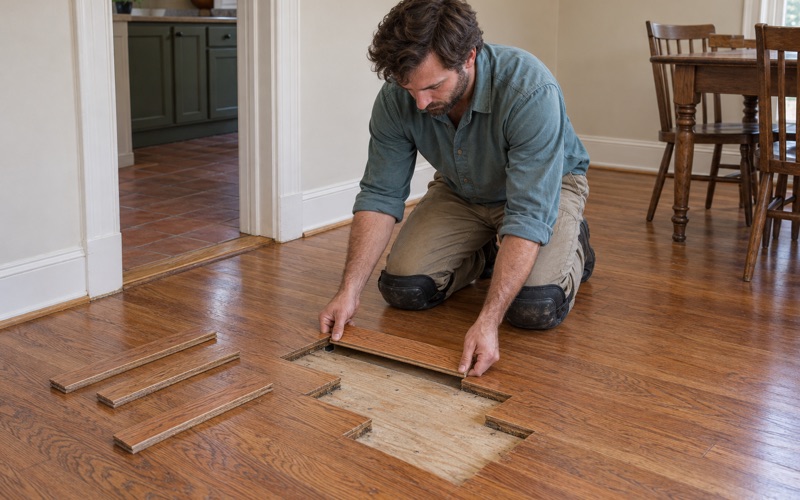
When a floor is past that point, board replacement or a new floor may make more sense than a refinish. We walk through the options side by side, including how a replacement will meet existing tile or carpet with a reducer or T-molding.
Seasonal Movement in a Valley House
South San Gabriel falls in the National Weather Service forecast zone for the Los Angeles County San Gabriel Valley. Wood floors respond to relative humidity through the year, and seasonal gapping in dry months or slight cupping in humid ones is common and usually not a defect.
What we watch for is movement beyond that pattern. Crowning after a floor was sanded while cupped, buckling at a wall with no expansion gap, or popping in a floating floor points to a moisture source or an installation problem. New flooring is given time for acclimation toward equilibrium moisture content before it goes down.
Finishes Legal in the South Coast Air District
We work from finishes legal to apply in the South Coast air district, whose wood coatings VOC limit is 275 grams per liter, rather than from a national catalog. In practice that often means a waterborne polyurethane or a compliant hardwax oil, picked for sheen level, durability and how the room is used.
Each coat has a recoat window, and a full cure takes longer than dry to the touch, which is exactly what the room-by-room schedule accounts for. Dust containment during sanding keeps the rest of the house usable while one area is worked.
County Rental Rules and Getting Started
Most renter households in South San Gabriel live in detached houses, 76.8 percent by the same estimates, so a rental turnover here usually means a whole house of floors rather than a single apartment.
Rentals and the County Ordinance
The Los Angeles County Rent Stabilization and Tenant Protections Ordinance applies in unincorporated areas, including this one. Rent-stabilized units are on properties with two or more units and a certificate of occupancy issued on or before February 1, 1995. Whether a particular property is covered depends on details we don’t decide, so owners should confirm coverage with the County before planning a turnover.
Where our work fits is the turnover itself. We schedule a refinish or repair between the move-out and move-in dates, and record the floor’s condition on both sides of the tenancy, which helps separate normal wear and tear from damage when a security deposit deduction is discussed. Pet urine stains, black water stains and worn-through finish in traffic lanes are the usual findings.
Stairs, Trim and Transitions
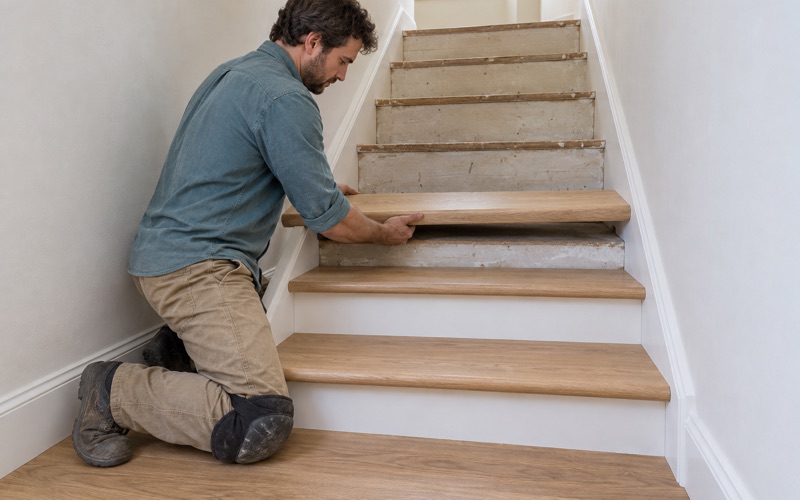
Stairs are quoted by the tread, riser and nosing rather than folded into a square-foot price, because stair work is built differently from open floor. A worn tread may be sanded and refinished, or covered with a retrofit tread when it is too thin for another sanding, and a landing tread has to line up with the floor it meets.
Trim matters too. Quarter round and shoe molding often come off so an edger can reach the perimeter, and we set expectations about which pieces will go back and which should be replaced.
What a First Visit Covers
A first visit starts with a walk through every room in the job. We note species and cut, whether the floor is solid or engineered, any squeaks, hollow spots or soft spots, the condition of the stair nosing, and signs of past water. If the house has a crawl space, we plan time to look beneath it.
From there you receive a written scope and a room-by-room schedule, with stairs priced separately and any items that need a County answer or a pest inspection called out rather than assumed. That way the order of work is settled before any furniture moves.
- 20+ Years in Wood Flooring
- Free Written Estimates
- Room-by-Room Schedules