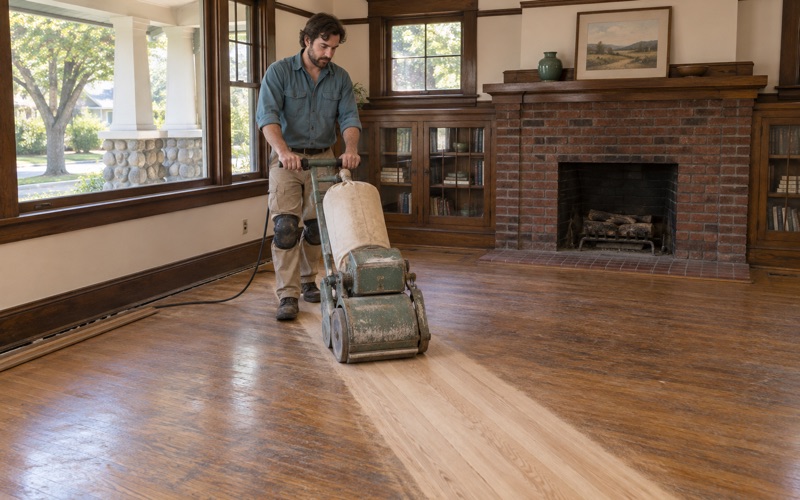
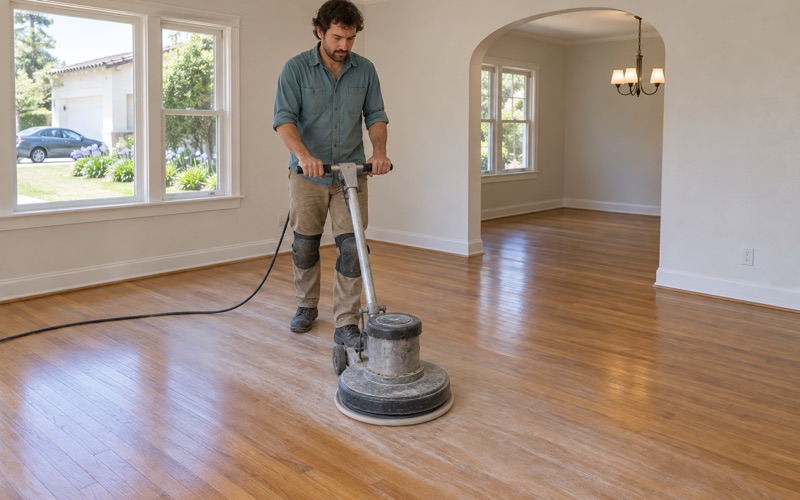
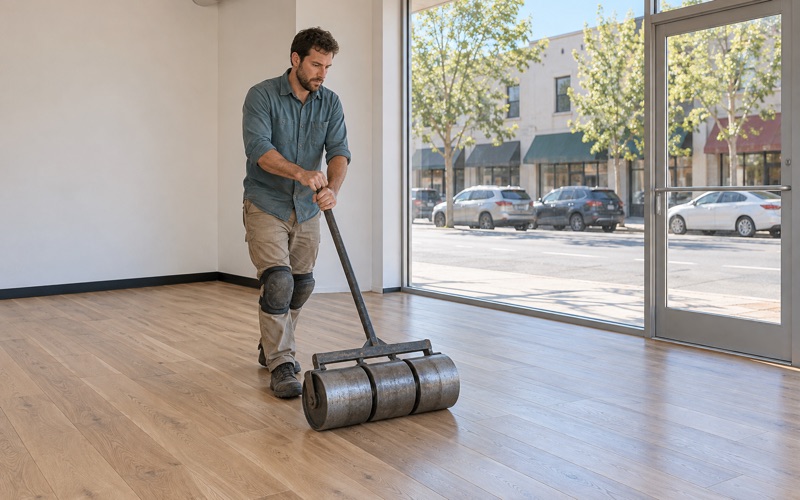
Alhambra Wood Flooring brings more than 20 years in business to wood-flooring in South Pasadena, and much of that work is on floors that have been sanded, patched or covered before. We sand, refinish, repair and replace solid and engineered hardwood, and we quote stairs by the tread, riser and nosing rather than folding them into a square-foot number.
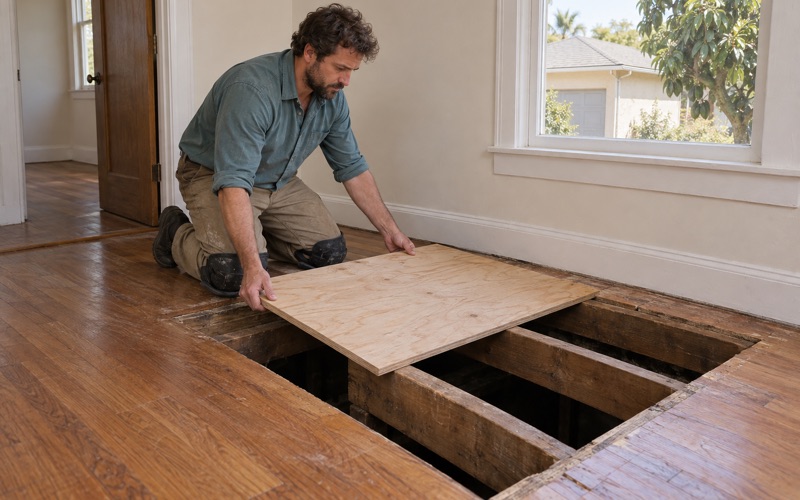
Before we schedule any sanding, we confirm the building’s construction year, because layers of paint and finish applied before 1978 fall under the federal lead-safe renovation rule. Where a house has a raised floor, we look underneath before quoting, since a bouncy or sagging floor is often a joist, pier post or subfloor problem that sanding would only cover up.
Finishes come from products legal to apply in the South Coast air district, where the wood coatings limit is 275 grams per liter. Every job gets a written room-by-room schedule showing when furniture, rugs and pets can return, which matters as much to a tenant planning a week as it does to an owner planning a sale.
Caltrans Corridor Houses Coming Back Into Private Hands
Decades of State Ownership, Now Changing
Caltrans acquired hundreds of properties along the proposed SR-710 right-of-way in the 1960s, and the city’s Caltrans Surplus Properties page counts 68 residential properties owned by Caltrans in South Pasadena, many in a state of extreme disrepair. In 2024 the uncompleted freeway section was deleted from the state highway system, and those houses began moving toward private ownership.
On February 7, 2024, the City Council approved purchase agreements for six unoccupied historic properties, which the city intends to market for private sale. Later reporting describes further purchases as well. For a flooring contractor, that means new owners taking on houses that sat under state ownership for a very long time, and floors that need to be assessed before anyone promises what they can become.
What We Look For in a House That Sat Empty
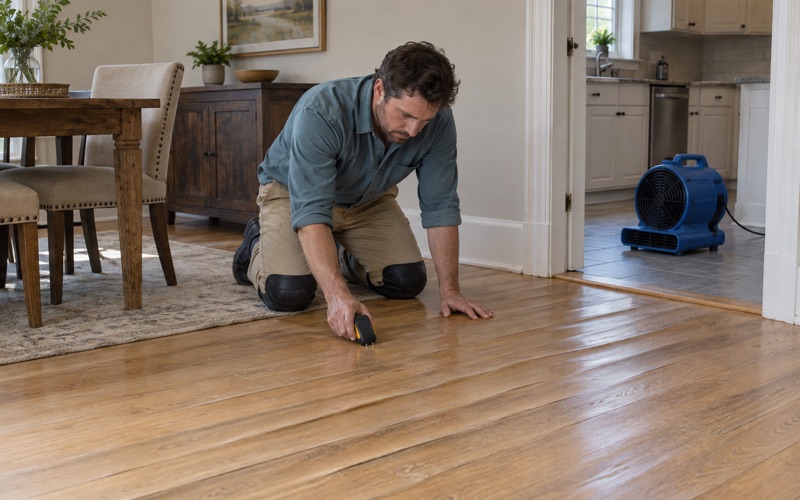
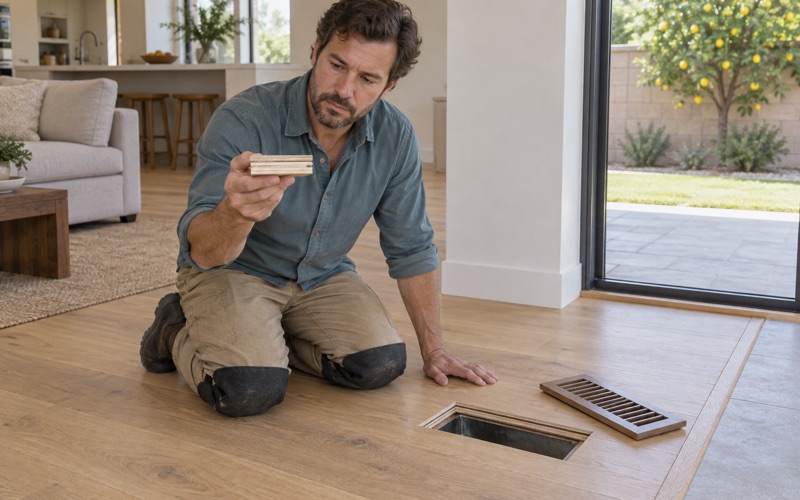
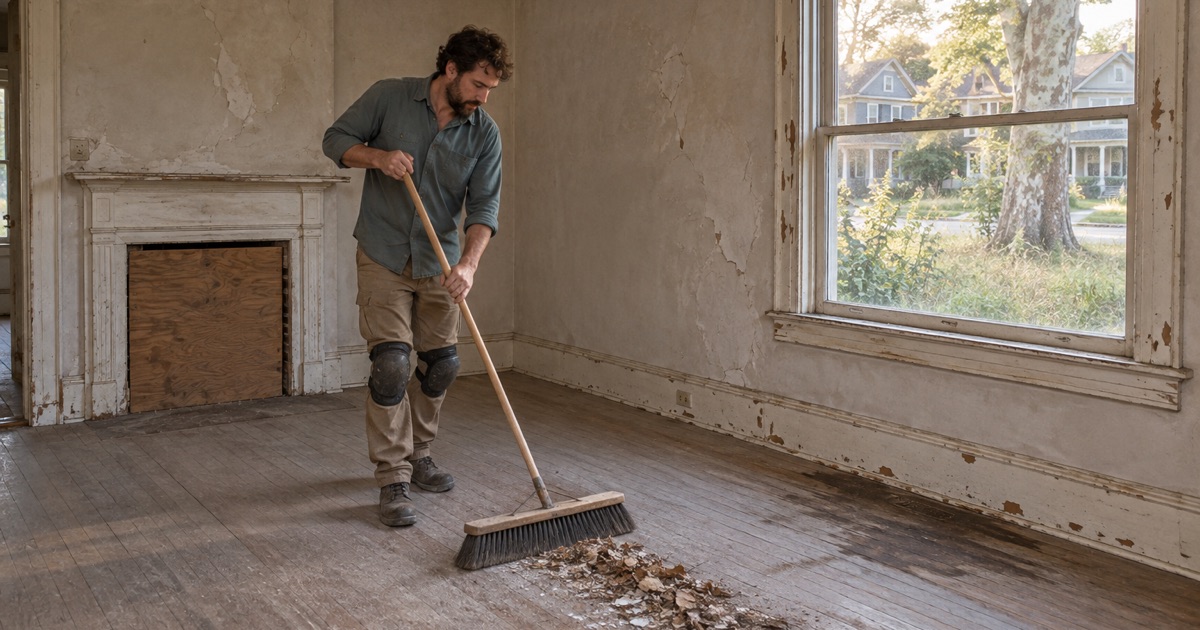
Every one of these houses is its own case, so we do not assume what sits under the carpet or that damage follows a pattern. We walk the rooms with a moisture meter, lift a register or threshold where we can, and note cupping, buckling, soft spots and black water stains room by room.
An empty house has nobody to notice a slow roof leak, a failed supply line or a pest problem until it has run for months. That is why we treat every stain, hollow spot or squeak as a question about its cause, and answer it before we price the surface.
Small round holes and piles of pellets get identified as drywood termite evidence or ruled out before any board is replaced. Laying new boards over an active colony wastes the repair, and buyers who already have a Wood Destroying Pests and Organisms Inspection Report can share it with us before we quote.
Sorting Structure From Surface
Where one of these houses has a raised floor over a crawl space, we check the girders, pier posts and floor joists before quoting the finish work. A sloping floor may need a sister joist or new blocking first; a floor that only looks tired may need nothing more than a sand and a new finish.
Where a house sits on a slab-on-grade instead, the questions change to moisture and the flooring type the slab can take. Either way, the written scope separates what the structure needs from what the surface needs, so a buyer can budget for both.
New owners of a returning corridor house often want the floors done before furniture arrives. Sanding, finishing and cure time fit best in that empty window, and our room-by-room schedule shows which rooms are usable on which day so movers and other trades can be booked around it.
Looking for wood-flooring closer to San Gabriel? See Wood-Flooring Services in San Gabriel.
Wood Floors in a City Built Mostly Before 1960
A Third of the Housing Predates 1940
South Pasadena was incorporated March 2, 1888, the sixth municipality in Los Angeles County, and its housing shows that age. Census figures from the ACS 2024 five-year estimates put 33.0 percent of the city’s 10,817 housing units as built in 1939 or earlier, 64.5 percent before 1960, and only 3.7 percent since 2000, with none reported since 2020.
The postwar decades added their own layer: the same estimates count 1,162 units from the 1940s, 2,237 from the 1950s and 1,574 from the 1960s. A building’s decade narrows what we might find underneath, whether board subfloor, diagonal sheathing or plywood subfloor, but we confirm it at a register opening or from below before the scope is final.
In practice, very little of what we sand here was installed recently. Floors in houses and buildings of that age have often been through more than one refinish, and the question on every older board is how much wood is left above the tongue before the next sanding reaches it.
Old Finish, Old Repairs
Prewar and postwar floors carry the history of whatever was done to them. Common findings on floors this age include worn-through finish in traffic lanes, drum marks and chatter marks from earlier sanding, gray stains under old plant pots, and pet urine stains that have gone black. Each one gets a different answer, from a screen and recoat to a weave-in repair of the affected boards.
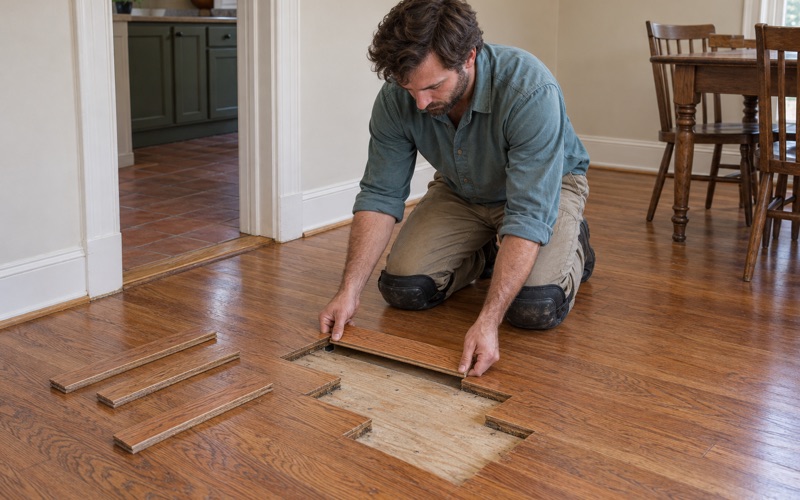
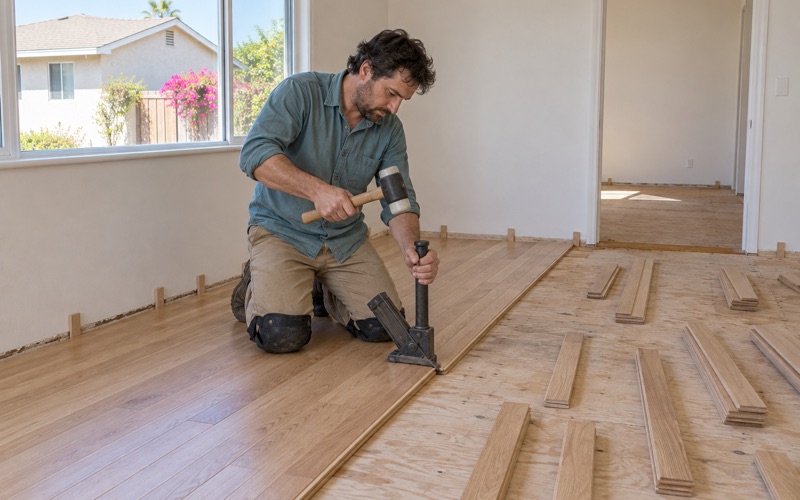
Board replacement on an old floor is a matching exercise. Red oak and white oak read differently under a finish, older strip flooring may be end-matched or narrower than today’s stock, and a patch that ignores either shows the moment the light hits it.
Seasonal Movement in the San Gabriel Valley
South Pasadena sits in National Weather Service forecast zone CAZ548, Los Angeles County San Gabriel Valley. Floors here still move with relative humidity through the year, so seasonal gapping in a drier stretch is normal wood behavior, while cupping that persists usually means a moisture source we have to find before any sanding.
Sanding a cupped floor flat before it has dried is how crowning happens a season later. We take moisture readings, let the floor reach equilibrium moisture content with the house, and only then schedule the sand.
Apartment Buildings, Rentals and Turnovers
Most Households Here Rent
Renters, not owners, are the majority here. Of 10,220 occupied units, 56.0 percent are renter-occupied, and more than half of those renters, 51.8 percent, live in buildings of five or more units. Another 19.5 percent of renters live in three-or-four-unit buildings, so a large share of the city’s homes are apartment units rather than houses.
Working in Multi-Unit Buildings
Refinishing a unit in a five-to-nine or ten-to-nineteen-unit building means planning around neighbors as much as around the floor. We use dust containment and dustless sanding equipment, keep hallways clear, and choose waterborne polyurethane or other compliant finishes whose odor and cure time suit a building where people live on the other side of the wall.
Upper-floor units raise sound questions when a carpeted or resilient floor is being replaced with hardwood. Where an owner’s own rules or a condominium association govern hard flooring and acoustic underlayment, we check those rules before any material is ordered rather than after it arrives.
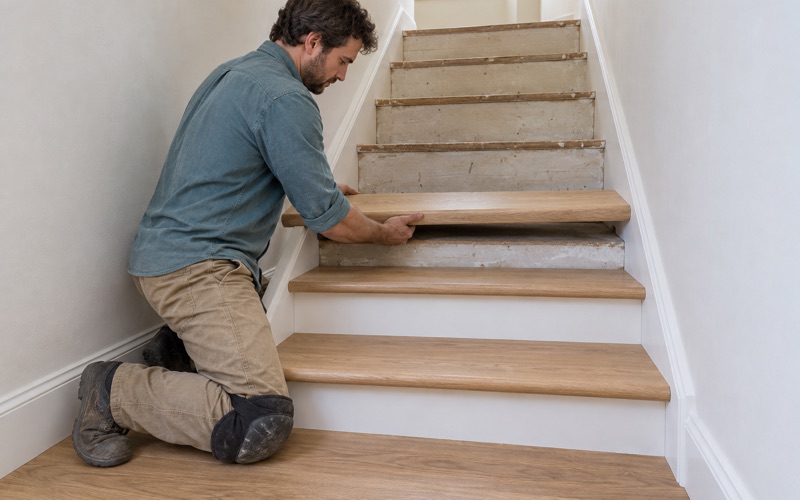
Where a building has wood stairs shared by several units, traffic wears them faster than a house stair. Treads with worn-through finish or loose nosings get quoted piece by piece, and a split or cupped tread may call for a retrofit tread or a matched replacement rather than a sanding that leaves the problem in place.
Turnovers and Tenant Protections
For rental owners, the cleanest window is between tenancies. We schedule turnover work around the move-out and move-in dates and record the floor’s condition on both sides of the tenancy, which helps separate normal wear and tear from damage when a security deposit deduction is on the table.
Some rental owners ask about replacing a worn floor with luxury vinyl plank. We will price both paths, but on a solid hardwood floor with wood left to sand, a refinish can cost less and keep the original floor in service.
Larger work in an occupied unit is a different matter. South Pasadena’s amended Just Cause for Eviction ordinance, effective December 15, 2023, added requirements for substantial-remodel situations, including temporary relocation payments, and the state Tenant Protection Act applies to covered units. We are not the right source for how those rules apply to a given job, but our written schedule gives owners and tenants concrete dates to work from.
Landmarks, Historic Districts and Planning the Work
The Cultural Heritage Ordinance
South Pasadena first adopted a historic preservation ordinance in 1992, and on July 19, 2017 the City Council replaced it with Ordinance No. 2315, the current Cultural Heritage Ordinance, effective August 18, 2017. The city has designated more than fifty local landmarks and five historic districts, listed on the South Pasadena Register of Landmarks and Historic Districts, and offers the Mills Act property tax abatement program.
We do not tell owners whether a given floor project on a designated property needs review. That question belongs to the city’s planning staff, and on a landmark or a house in one of the districts we suggest asking it before work is scheduled, with our written scope in hand.
Matching What Is Already There
On an older or designated house, a repair that reads as a patch undoes the point of keeping the original floor. We match species, board width and cut, whether plainsawn, rift sawn or quartersawn, and we write repair scope for water and smoke losses as matching board and finish, with photos and moisture readings an adjuster can use.
Stain and sheen matter as much as species. Older floors often carry an amber tone that a modern waterborne finish does not always reproduce, so we sample stain and sheen level on a hidden board or closet floor before committing a whole room.
Engineered floors added in later remodels get their wear layer measured before we promise a full sand. A thin veneer can take a buff and coat, but sanding it risks a sand-through that no finish can hide.
Permits, Finishes and the Schedule
Whether a particular floor job needs a permit is a question for the City of South Pasadena Community Development Department, and we point owners there rather than guess. What we control is the plan: transitions such as reducers, T-molding and shoe molding priced separately, and a cure time for each room written into the schedule.
Air quality rules travel with the finish, too. SCAQMD Rule 1113 sets the limits for wood coatings used here, so the hardwax oil or polyurethane we recommend on a prewar floor is chosen from what the South Coast AQMD allows, not from a national catalog.
- 20+ Years in Wood Flooring
- Free Written Estimates
- Room-by-Room Schedules