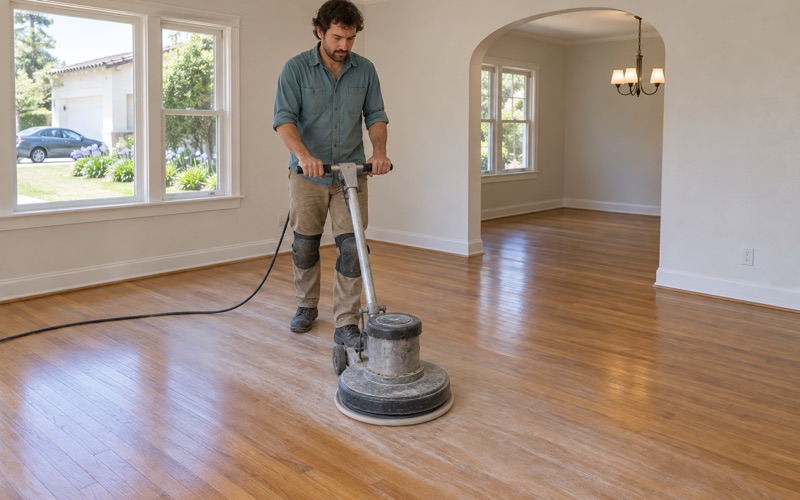
Alhambra Wood Flooring takes on wood-flooring in Santa Fe Springs with more than 20 years in the trade and a plain working rule: before a drum sander touches a board, we want to know what that board is sitting on and whether anything has been eating it. Sanding a floor that hides a structural or pest problem only produces a smooth surface over the same trouble.
Much of what we see in older houses starts as a cosmetic request. A homeowner wants gray stains gone, a worn-through finish renewed or a squeak quieted, and the right answer depends on whether the wood underneath is sound. A soft spot near a doorway or a board that crumbles at the edge changes the job from refinishing to repair.
This page explains how we handle that order of work: finding damage, repairing it with matching boards, then sanding and finishing with products legal in this air district. It also covers what to ask any flooring crew before a start date goes on the calendar, so the quote you compare reflects the floor you actually have.
When Termite Damage Reaches the Floor
What the City’s Own Housing Plan Lists
The City of Santa Fe Springs addressed its older housing in a 2013 housing element draft. In it, city housing staff describe much of the aging stock as needing rehabilitation and list typical improvements that include roof replacements, pipe and sewer line replacements, and termite damage repairs and extermination. That is the city’s own planning document naming pest damage as routine upkeep, not a contractor’s sales pitch.
The draft names repairs, not a species or a count of affected houses, and we read it the same way. It does not tell us that a particular floor has a problem. It tells us that where so much of the housing is older, checking for past or active damage belongs at the start of a floor quote rather than after the old finish is already sanded away.
Reading the Evidence in the Boards
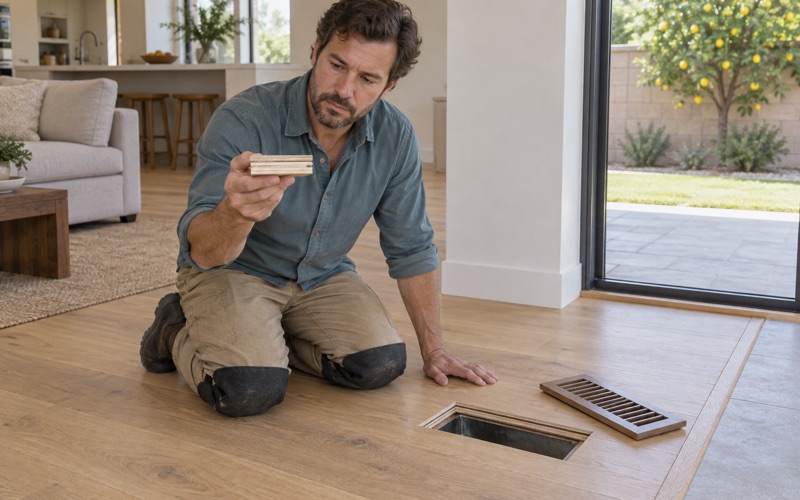
Termite damage in a wood floor rarely announces itself from the middle of the room. We look at board edges along baseboards, thresholds and closet floors, and we press on areas that sound hollow or give underfoot. Small round kick-out holes and piles of pellet-shaped termite frass are the classic drywood termite signs, and we identify them or rule them out before any board is replaced.
Not every hole or soft board means termites. Powderpost beetle exit holes, old nail holes, water rot and compression set from heavy furniture can each look similar at a glance. Naming the actual cause matters, because a board replaced over an active colony will need replacing again, and a pest treatment ordered for water damage fixes nothing.
Treatment Comes Before Carpentry
When we find evidence of live activity, we stop at diagnosis. Pest treatment, whether tent fumigation or a localized termite treatment, is the work of a pest control operator, and a Wood Destroying Pests and Organisms Inspection Report gives everyone a written record of what was found and what was done. We schedule board replacement after that work is finished.
If the damage is old and the activity is gone, repair can begin right away. Either way, the homeowner gets a clear sequence instead of a surprise halfway through a sanding job, and our quote lists the damaged area, the replacement scope and the finish work as separate lines rather than one blended price.
Looking for wood-flooring closer to Artesia? See Artesia Wood-Flooring.
Floors in a City Built Mostly in the 1950s
An Older, Owner-Occupied Housing Stock
According to the American Community Survey 2024 five-year estimates, 45.3 percent of the city’s housing units were built between 1950 and 1959, and 50.6 percent were built before 1960. The housing element draft likewise says the city incorporated in 1957 with most of its residential growth occurring during the 1950s. That is a great deal of floor that has seen decades of foot traffic, refinishing and repairs.
Most of those homes are lived in by the people who own them. The same survey shows 60.6 percent of occupied homes are owner-occupied, and 84.2 percent of owner households live in detached houses. For a flooring job that usually means one household deciding about its own rooms, hallways and bedrooms, with every reason to fix a problem properly rather than cover it up.
Homes Set Inside an Industrial City
Santa Fe Springs is one of the Gateway Cities of southeast Los Angeles County, and the housing element draft says less than ten percent of its roughly nine square miles is designated residential. Neighborhoods sit mainly in the western portion of the city, with small pockets along the eastern boundary, surrounded by commercial and industrial land.
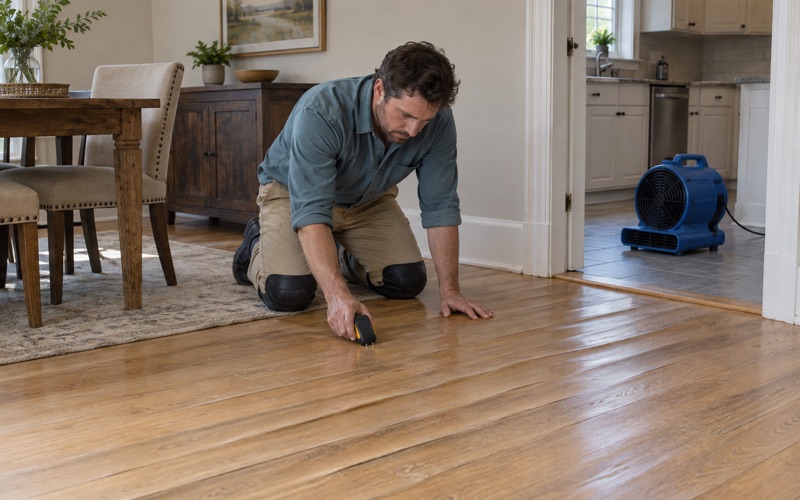
The city is also split between two National Weather Service forecast zones, with a northern point in the San Gabriel Valley zone and a southern point in the Inland Coast zone. We do not treat that as a reason one side of town needs different flooring. It is a reminder to measure the house itself, so we check relative humidity and board moisture with a moisture meter and allow acclimation before new wood goes down.
Old Finishes and Pre-1978 Paint
A house built in the 1950s predates 1978, and that matters when sanding happens next to painted baseboards, door casings and stair stringers. We confirm the build year before any sanding is scheduled, so work that disturbs older painted surfaces is handled under the EPA Renovation, Repair and Painting Rule rather than discovered after the fact.
Old floor finishes raise their own questions. Decades of wax, oil-modified polyurethane or a later recoat can peel, haze or refuse to bond with a new coat. We test a small area before recommending a screen and recoat, because a finish that will not bond sends the job to a full sand no matter what the first quote assumed.
Repair Before Refinishing
Matching Boards and Weave-In Repairs
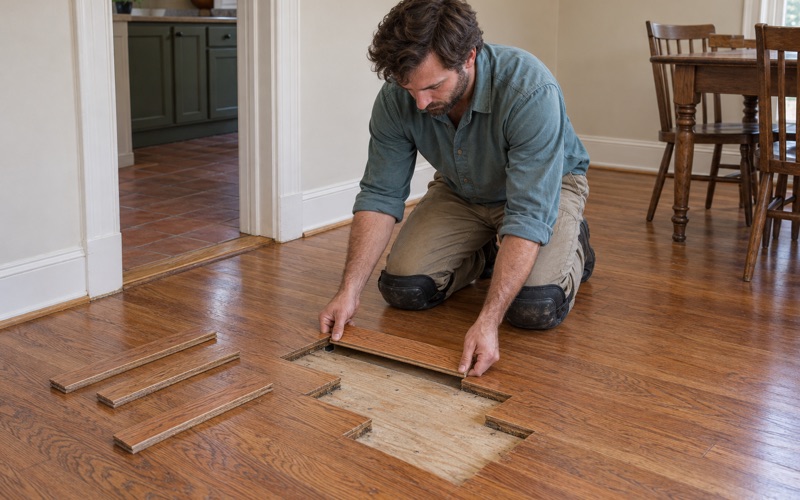
Once the cause is settled, damaged boards come out. We cut back to sound wood and use a weave-in repair, staggering the new board ends into the existing floor so the patch does not read as a rectangle. Replacement stock is matched by species, width and cut, whether the original is red oak, white oak or something else, so the repaired area sands and stains with the rest of the room.
A repair left unfinished is the most visible kind. That is why we write repair scope as matching board and finish rather than patch, and why the finish decision usually covers the whole room. Sanding a repaired section alone tends to leave a lighter rectangle, while refinishing the room ties old and new boards together.
What Sits Under the Damaged Area
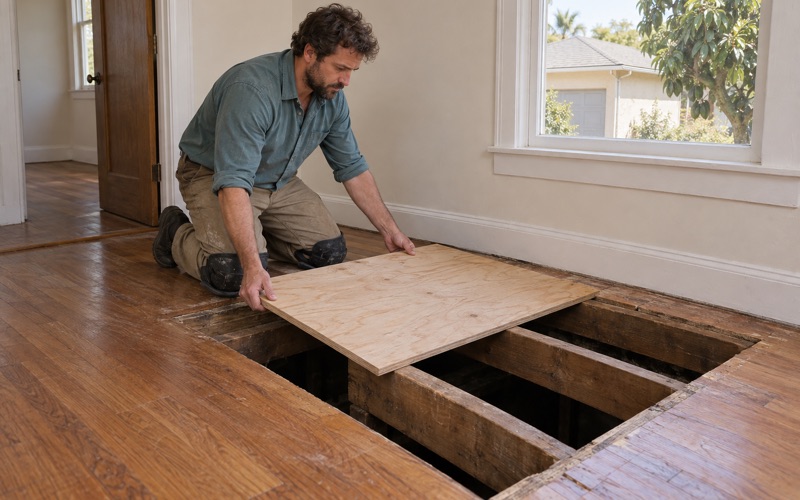
Termite damage and long-term moisture do not always stop at the top layer. When boards come up, we look at the subfloor, whether plywood, board subfloor or diagonal sheathing, and at any floor joist we can reach. A soft or sagging floor is often a structural problem, and sanding it would only hide the issue until it got worse.
We check the house from underneath where access allows before quoting a floor that feels bouncy or sloping. If a joist needs a sister joist, or a girder or pier post has problems, we describe that plainly and sequence it ahead of the flooring. We do not price a refinish as though the structure below were sound when we have not looked.
Sanding and Finishing a Sound Floor
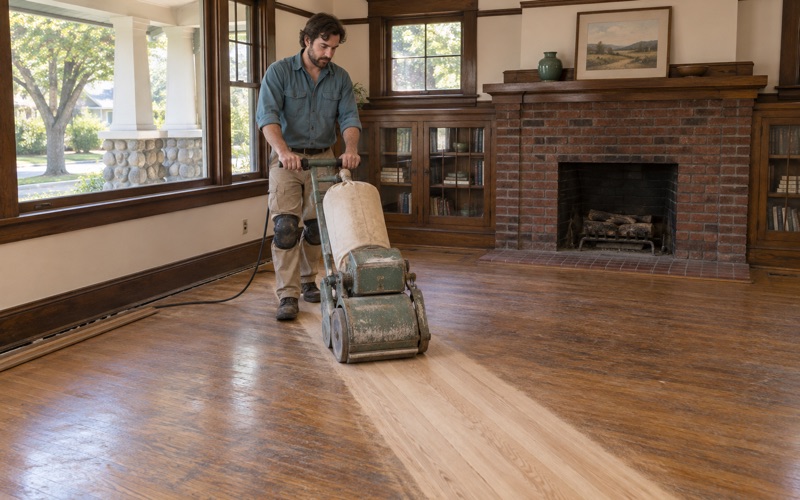
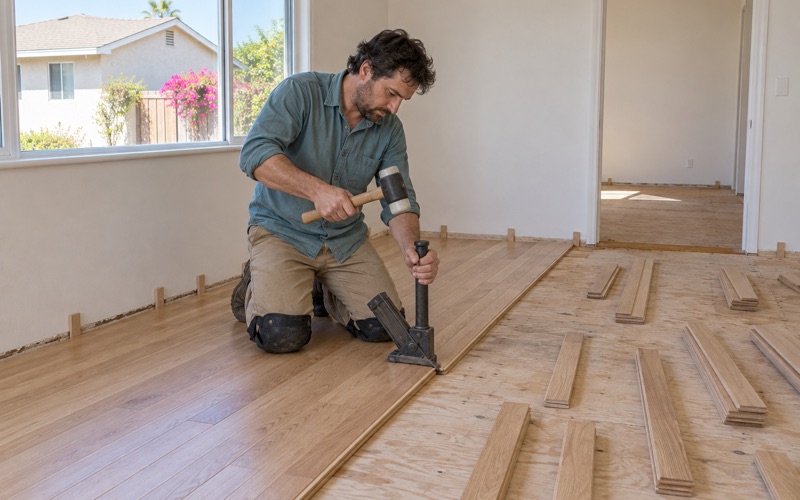
With repairs complete, sanding follows an abrasive grit sequence, with a drum sander for the field, an edger for the perimeter and an orbital sander to remove edger swirl and chatter marks. On a solid hardwood floor that has been sanded several times before, we look at the wood remaining above the tongue so we do not cause sand-through.
Finishes come from products legal to apply in the South Coast Air Quality Management District, which covers the urban portions of Los Angeles County. Under SCAQMD Rule 1113 the wood coatings limit is 275 grams per liter, so we choose waterborne polyurethane or another compliant finish from what that rule allows rather than from a national catalog.
Newer Homes and Questions to Ask First
Floors at The Villages at Heritage Springs
Not every house here dates from the 1950s. The housing element draft describes how the city and its former Community Development Commission assembled 101 prior oilfield parcels for The Villages at Heritage Springs, with 384 single-family homes and townhomes and 150 apartment units. Recent housing came that way because the older residential neighborhoods were already fully developed.
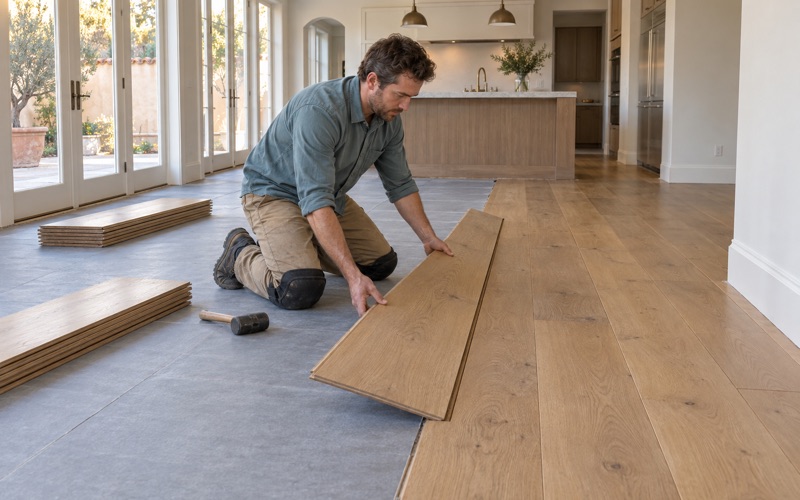
Newer homes raise different floor questions. Where a home has engineered hardwood, we measure wear layer thickness before promising a sanding, since a thin veneer can take a screen and recoat but not a full sand. For townhomes, we check the association’s rules for hard flooring and acoustic underlayment before any material is ordered.
Questions Worth Asking Any Flooring Crew
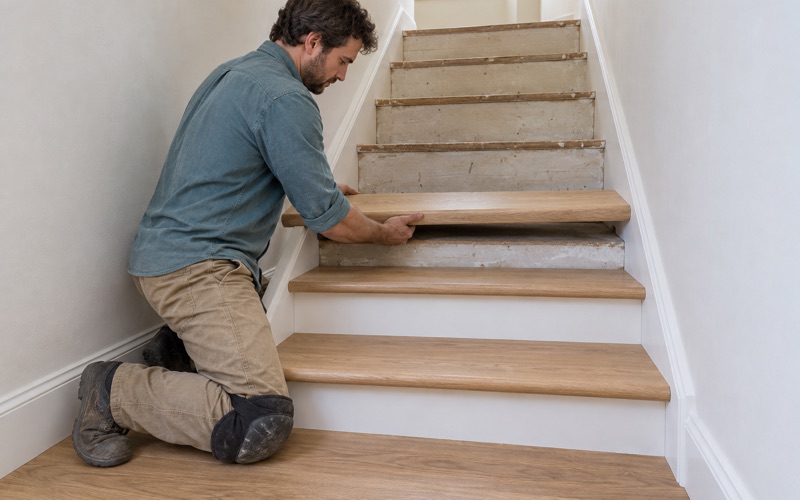
Before signing, ask how the crew will look for termite damage and what happens if they find it mid-job. Ask whether the quote separates repair, sanding and finishing, and whether stairs are priced by the tread, riser and nosing instead of being folded into a square-foot price. A clear answer to each shows how surprises will be handled.
Also ask which finish they plan to use and whether it meets the South Coast air district limit, how dust will be contained, and how they confirmed the house’s build year. A crew that cannot answer these before starting is likely to find the answers during the job, which is the most expensive time to learn them.
Planning Around Cure Time and Records
A new finish needs cure time before rugs and heavy furniture return. We provide a written room-by-room schedule showing when furniture, rugs and pets can come back, so a household can plan meals, sleep and work around the floors instead of guessing.
If a home has water or smoke history, we document the loss with photos and moisture readings an adjuster can use. For owners who rent out a house, we can schedule around move-out and move-in dates and record the floor condition on both sides of the tenancy.
- 20+ Years in Wood Flooring
- Free Written Estimates
- Room-by-Room Schedules