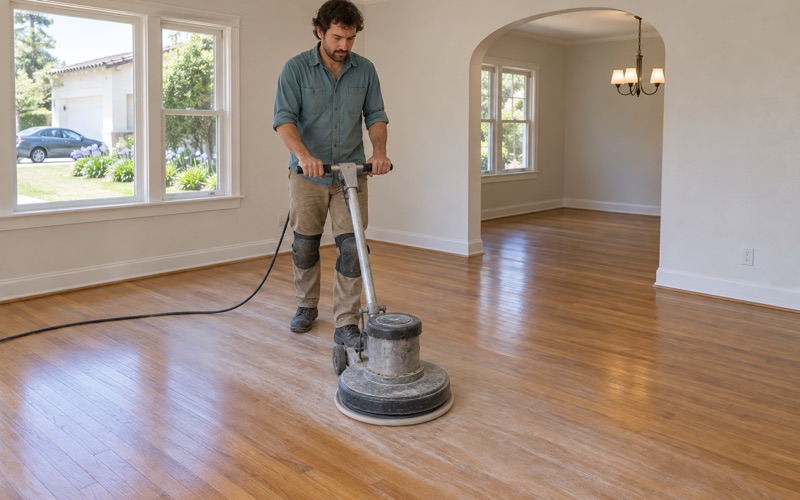
Alhambra Wood Flooring has handled wood-flooring in San Gabriel for more than 20 years, and most of that work starts the same way: we look at the floor, the room and the house before we talk about a price. A worn hallway, a gray stain by the back door or a board that pops underfoot can come from very different causes, and the fix depends on which one is at work.
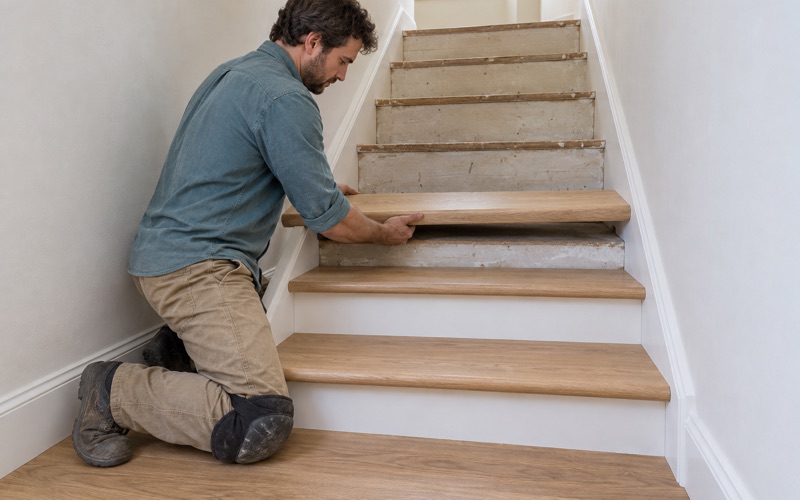
We refinish, repair and install solid hardwood and engineered hardwood, and we build stairs as their own line item rather than tucking them into a square-foot figure. Each tread, riser and stair nosing is counted, because a staircase takes different tools, different time and different care than an open living room.
Before anyone moves a couch, you get a written schedule that goes room by room. It shows when sanding happens, when each coat of finish goes down and when furniture, rugs and pets can return, so an owner living in the home or a tenant between leases can plan around the cure time instead of guessing at it.
Floors from San Gabriel’s 1940s building peak
What the housing count shows
San Gabriel’s housing record has a clear high point. Census estimates (ACS 2024 5-year) put 2,872 of the city’s 13,818 housing units in the 1940s, which makes that decade the largest single building period at 20.8 percent. More than half of all units, 55.0 percent, were built before 1960.
That tells us something useful before we arrive. A large share of the floors we see in San Gabriel have been in service for decades, and many have been sanded, stained and recoated by several owners along the way. The age of the building is the first question, not the last.
That history tends to show up in ways a homeowner notices: uneven color left by past stain jobs, board edges rounded by earlier sanding, or older patches that never quite matched the rest. Squeaks and hollow spots belong on the same list, and they are worth diagnosing before a refinish seals them under fresh finish.
Old boards, thin margins
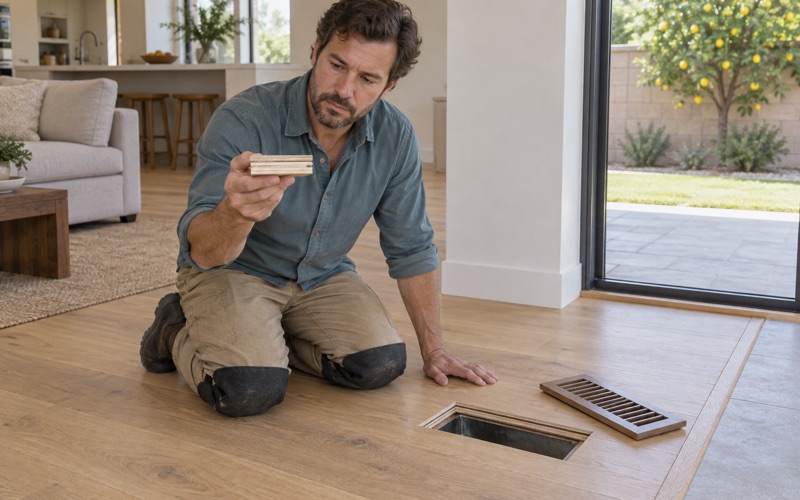
A strip floor from the 1940s may have been refinished more times than anyone remembers. Each full sand removes wood above the tongue, and a floor that has already lost too much can show exposed nails, splintering edges or a tongue coming through. We check board thickness at a floor register or a threshold before we promise a full sand.
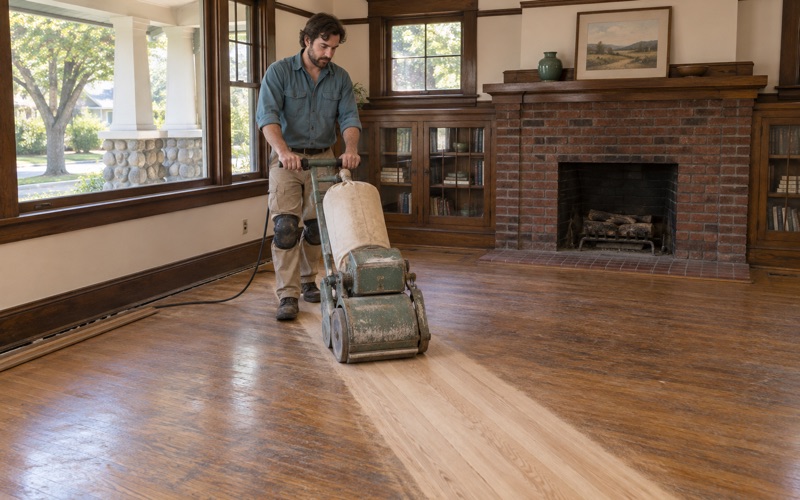
Where there is room, a careful abrasive grit sequence with a drum sander, edger and orbital sander brings the surface back without chatter marks or edger swirl. Where there is not, a buff and coat or targeted board replacement may be the honest answer. Worn-through finish at a doorway, cupping near a kitchen and a pet urine stain in a bedroom corner each call for a different plan.
Paint, finish layers and the build year
Using the same census count, 74.8 percent of San Gabriel’s units went up before 1980. Homes built before 1978 can carry lead in old paint on baseboards, shoe molding and stair stringers, and sanding near those surfaces falls under the EPA Renovation, Repair and Painting Rule.
So we confirm the build year before sanding is put on the calendar. That decides how we set up dust containment, what we do around trim and how the work area is cleaned afterward. It is a short conversation at the start that shapes the whole job.
Looking for wood-flooring closer to Monterey Park? See Monterey Park Wood-Flooring.
Townhomes, renters and owners in near-equal numbers
An even split across the city
San Gabriel’s occupied homes divide almost down the middle. Of 12,612 occupied units, 6,351 are owner-occupied, or 50.4 percent, and 6,261 are rented, or 49.6 percent. That is about as close to an even split as a housing count gets.
In practice, our calls come from two kinds of clients in roughly equal measure. One is a household deciding how a floor should look for years to come. The other is a property owner who needs a unit ready for the next tenant by a fixed date. Both get the same inspection; the priorities that follow are different.
Attached homes, more often rented
Townhomes and other one-unit attached homes make up 12.1 percent of San Gabriel’s housing, or 1,672 units. In that group the balance tips toward renting: 999 attached homes are occupied by renters and 411 by owners, based on the same census tables.
Attached units bring their own questions. Floors sit against a shared wall, and an association may have its own rules for hard flooring and underlayment. We ask for those documents and check the plan against them before any material is ordered, rather than learning about a conflict after the boxes arrive.
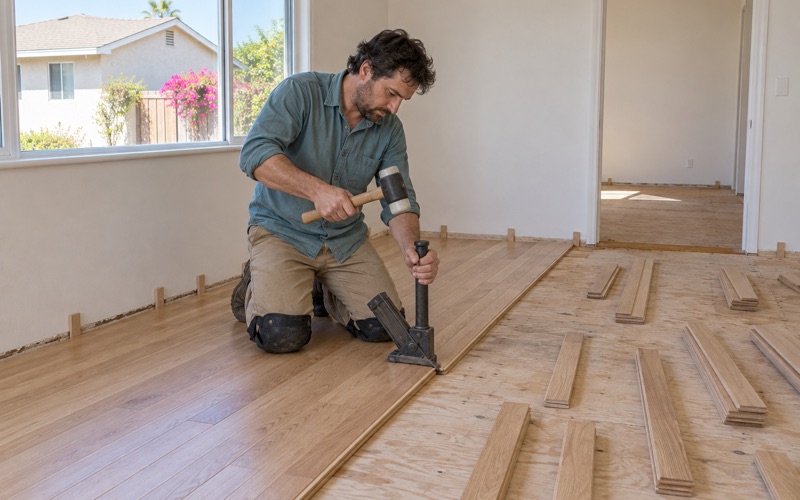
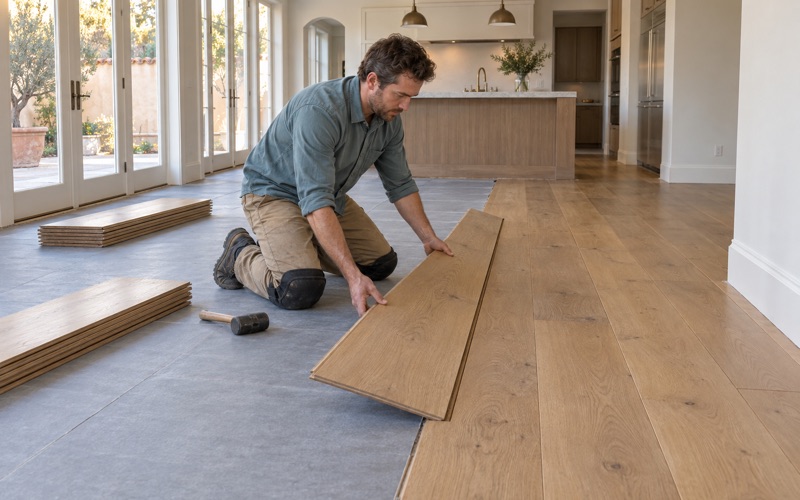
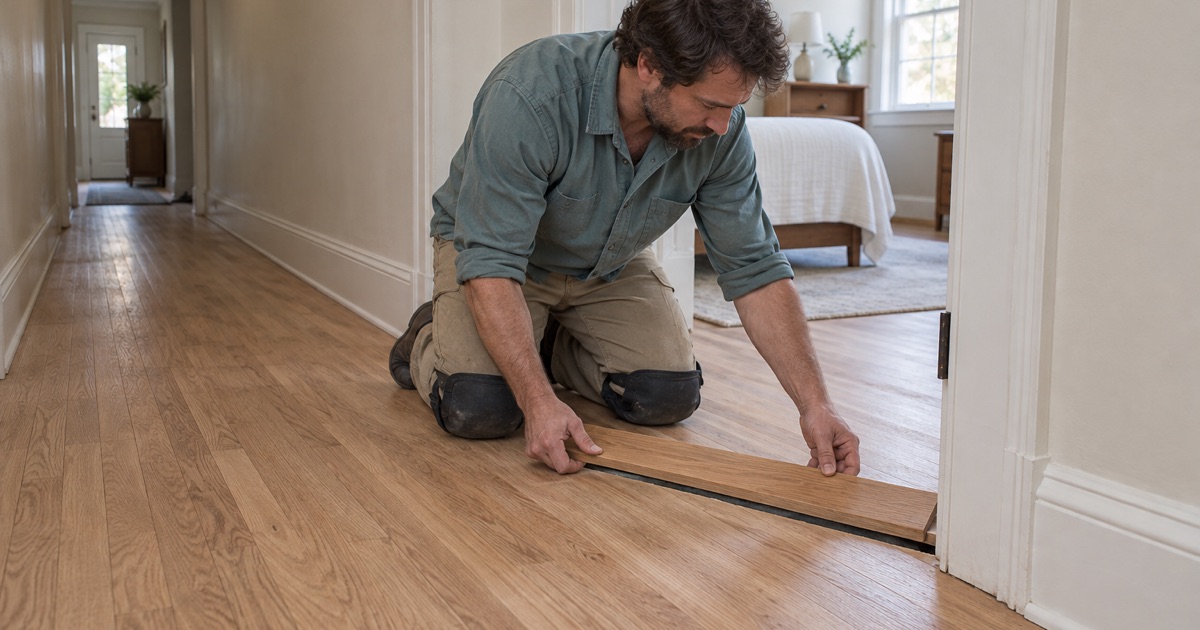
The choice of system matters here too. A floating floor, glue-down engineered hardwood and nail-down solid hardwood each sit differently on the subfloor, and in an attached unit the decision often turns on what the association allows and the height available at doorways, where a reducer or T-molding has to meet the next surface cleanly.
Turnovers between tenants
For a rental, timing matters as much as finish. We schedule the work between the move-out and the move-in dates and record the floor’s condition on both sides of the tenancy with dated photos, so questions about normal wear and tear or a security deposit deduction have something to rest on.
A turnover often calls for a screen and recoat rather than a full sand, which keeps the unit off the market for less time. When a floor has deep scratches, a black water stain or finish peeling, we say so plainly and price the repair that will actually hold up through the next lease.
Near the Mission District: historic designation and the Mills Act
A preservation tradition since 1965
San Gabriel adopted a historic preservation ordinance in 1965, the second city in Los Angeles County to do so after Los Angeles, according to the Los Angeles Conservancy. The city passed an updated Historic Preservation and Cultural Resource Ordinance on August 15, 2017, which set out designation procedures and created the Historic Preservation and Cultural Resource Commission.
Historic resource surveys have covered parts of the city from the Mission District to the commercial architecture along Valley Boulevard. If your home is a designated landmark or sits in a historic district, tell us at the first visit. We do not decide for you what review applies to the work; that question belongs to the city.
Our part in an older or designated home is practical. We save original boards wherever they can be saved, match species, width and grain when one has to be replaced, and keep the new finish close to the existing sheen level so the room reads as one floor rather than a floor with repairs in it.
What the Mills Act program covers
Some owners ask whether a Mills Act contract can help pay for floor work. The city’s Mills Act guidelines, dated December 3, 2021, say the tax savings are meant for the exterior rehabilitation and maintenance of the historic property, and only designated properties are eligible. Applications are due June 30.
We mention this so a restoration budget is built on the right assumptions. A floor project in a designated home is planned and paid for on its own terms, and questions about a contract or eligibility go to the city’s program staff rather than to a flooring crew.
Asking the city directly
The City of San Gabriel Building and Safety Division, part of the Community Development Department, is at 425 S. Mission Drive. Walk-in hours run from 8:00 a.m. to 11:30 a.m., and appointments are held from 1:00 p.m. to 5:00 p.m. The city adopted the 2025 California codes, including the Existing Building and Historical Building codes, by Ordinance No. 726, effective January 1, 2026.
We encourage owners of older or designated homes to confirm what the city expects for their project before work begins. We will provide a written scope of the proposed work to bring along, which makes that conversation shorter and more specific.
Getting a San Gabriel floor project scoped
Looking underneath first
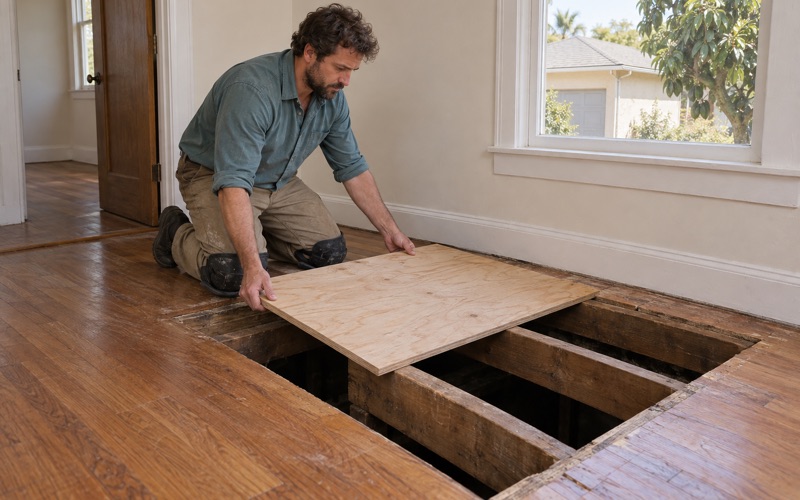
When a floor sags, slopes, feels bouncy or has a soft spot, the cause is often below the boards. On a raised floor we check the crawl space before quoting, looking at floor joists, girders, pier posts and the subfloor, because sanding a floor that moves would only hide a structural problem for a while. If a cracked joist needs a sister joist or a girder needs added support, the scope says so and notes whether that repair comes before any work on the floor above.
While we are there, we look for drywood termite evidence. Small round kick-out holes and piles of pellet-shaped termite frass need to be identified or ruled out before any board is replaced. Setting new wood over an active colony wastes the repair and the money spent on it.
Moisture, season and finish choice
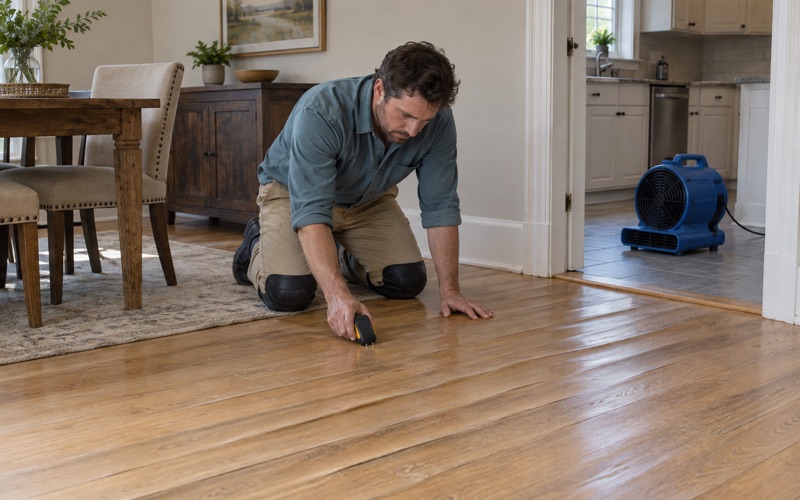
San Gabriel sits in the National Weather Service forecast zone for the Los Angeles County San Gabriel Valley. Wood responds to relative humidity through the year, so seasonal gapping in a dry stretch or mild cupping after a damp one is not always a defect. We take moisture meter readings before we call it one.
For finishes, we choose from products legal to apply under South Coast AQMD rules, where the wood coatings limit is 275 grams per liter. That still leaves good options, including waterborne polyurethane, oil-modified polyurethane and hardwax oil, each with its own sheen level, cure time and recoat window.
When new boards go in, whether nailed over a plywood subfloor or glued over concrete, we check moisture in both the wood and what it sits on, and give the flooring time for acclimation first. On concrete, an ASTM F2170 in-situ relative humidity test gives us a reading from inside the slab rather than a guess from its surface.
Water, smoke and the written scope
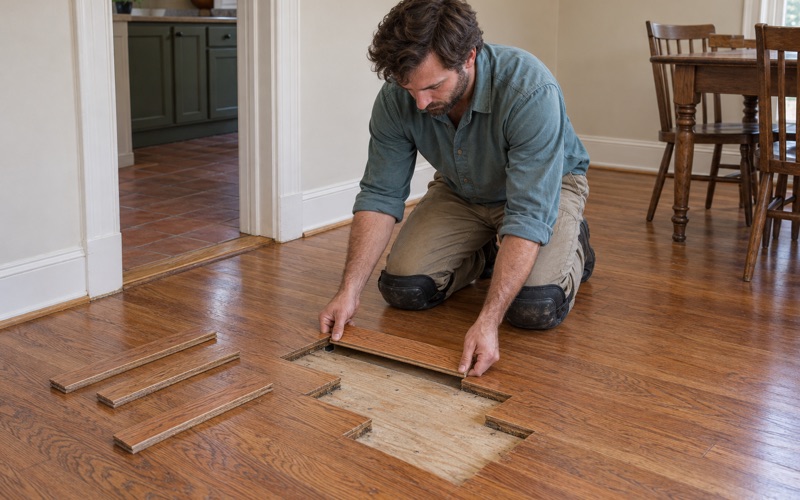
After a leak or a fire, we document the loss with photos and moisture readings an insurance adjuster can use. The repair scope is written as matching boards and matching finish, with weave-in repair where it fits, rather than a patch that shows in raking light. Smoke damage adds steps of its own: soot and ash residue come off the surface first, and odor sealing may be needed before a new finish goes down.
Every quote we send lists the rooms, the stairs by piece, the finish system and the schedule. On an engineered floor, it also records the measured wear layer thickness, since a thin veneer can take a screen and recoat but not a full sand. You see what we found and what we plan to do before any work is booked.
- 20+ Years in Wood Flooring
- Free Written Estimates
- Room-by-Room Schedules