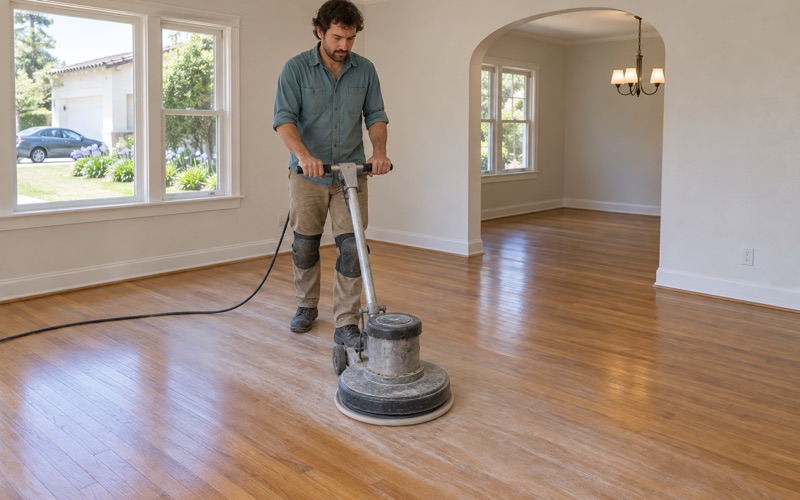
Alhambra Wood Flooring has handled wood-flooring in Rosemead for more than 20 years, and most of our calls here start with a floor that has already carried several households. We sand, refinish, repair and install solid and engineered hardwood, and we quote stairs by the tread, riser and nosing instead of burying them in a square-foot number.
The work in this city is shaped by who lives in the house and how long the floor has been down. Before a sanding date goes on the calendar, we confirm the build year, measure the wear layer on any engineered floor, and look for the damage that sanding would only disguise, from termite kick-out holes to a bouncy floor over tired framing.
Homeowners get a written room-by-room schedule showing when furniture, rugs and pets can return. Property owners turning over a rental get the same schedule built around the move-out and move-in dates, plus a condition record on both ends of the tenancy. Below is what we have learned about the houses here and how that changes the job.
Floors in Rosemead’s Rented Houses
A Rental Market Made of Houses
Rosemead leans toward renting: of 14,434 occupied homes, 7,613 are rented, or 52.7 percent, against 47.3 percent owner-occupied. What sets the city apart is where those renters live. Census estimates put 4,717 renter households, 62 percent, in detached single-family houses, while only 1,130 live in buildings with five or more units.
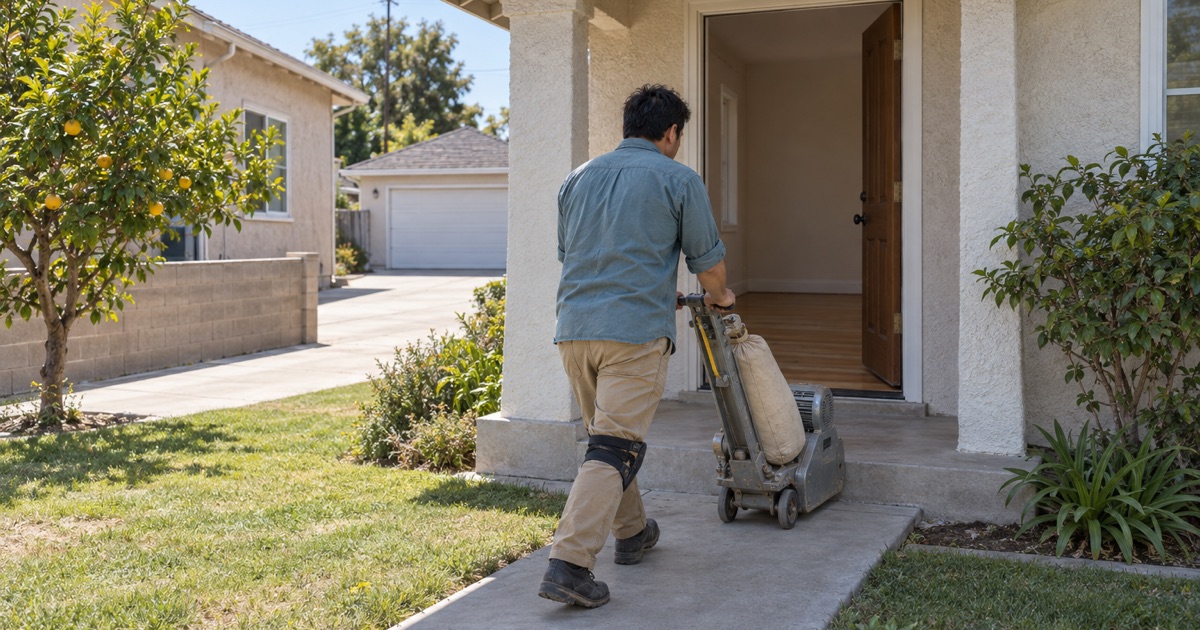
That means tenant turnover here is rarely a corridor of identical units. It is a three-bedroom house with its own traffic pattern, a kitchen entry worn gray and bedrooms that barely show use. We plan it as house work, room by room, because one room may need a full sand while the next needs only a fresh coat. Owners live mostly in detached houses too, so the same street can hold a long-term refinish and a landlord racing a move-in date.
What Years of Tenancy Leave Behind
A house that has changed hands several times tends to show a predictable set of problems. Traffic lanes wear through the finish to bare wood, which then grays as moisture and dirt get in. Pet urine stain shows up as dark rings near doors and under windows, and a black water stain from a leaking planter or appliance can reach deep into the board.
Gray stain often sands out, but black stains usually mean board replacement. We test the depth before we promise anything, because telling an owner a floor will come back clean and then finding stains through the final coat costs everyone a second visit and a delayed move-in.
A Condition Record at Both Ends
On rental turnovers we photograph and note the floor at move-out and again when the work is finished, room by room. The record shows the scratches, stains, cupping or seasonal gapping that existed before, and the state of the finish we left behind for the next tenant.
That documentation helps an owner sort normal wear and tear from damage when a tenancy is settled, though how that settlement works is between owner and tenant. For us it means the next time we are called to that house, we know exactly what the floor looked like on day one.
Looking for wood-flooring closer to South San Gabriel? See South San Gabriel Wood-Flooring.
Homes Older Than the City Itself
Prewar Houses Under a 1959 City
Rosemead incorporated on August 4, 1959, but a real share of its housing is older than the city. Census figures count 1,757 homes built in 1939 or earlier, 11.4 percent of the stock, and settlement here goes back much further. John and Harriet Guess founded the Savannah settlement in the 1850s, and the city’s name comes from Leonard John Rose’s Rose’s Meadow.
The Dinsmoor Heritage House museum occupies a late-1920s residence, a reminder of the era some of these prewar floors come from. Houses of that age often carry narrow solid oak strips over board subfloor or diagonal sheathing, refinished more than once already. Before scheduling a sand, we check how much wood is left above the tongue so a worn floor is not sanded through.
The Postwar Build-Out
The 1950s were the largest single building decade here, producing 26.5 percent of today’s homes, and together with the decades before it they put 52.9 percent of the housing stock before 1960. Many of those houses have seen decades of refinishing, patching and material swaps, sometimes with carpet laid over oak that has not been touched since it was installed.
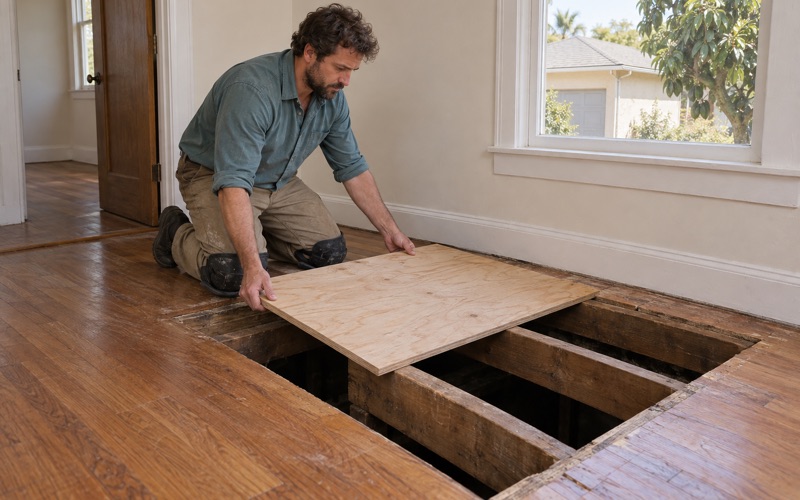
Where a house sits on a raised foundation, we go into the crawl space before quoting. A sagging floor, a soft spot or squeaks that follow a line across the room often trace to a floor joist, pier post or girder rather than the boards, and a sister joist or a new post fixes what no amount of sanding can hide.
Lead-Era Finish Layers
Of Rosemead’s 15,447 housing units, 77.4 percent were built before 1980, so many floors sit beside painted baseboards, shoe molding and finish layers from before 1978. We confirm the build year first and handle that work under the EPA Renovation, Repair and Painting Rule for pre-1978 housing, with dust containment and cleanup set to the rule rather than to habit.
For a rental owner this matters on the calendar as much as on the job. Setting up containment and verifying cleanup adds time, and we build that time into the turnover schedule from the start instead of discovering it on the first morning of sanding.
Refinishing Between Tenants
Screen and Recoat or a Full Sand
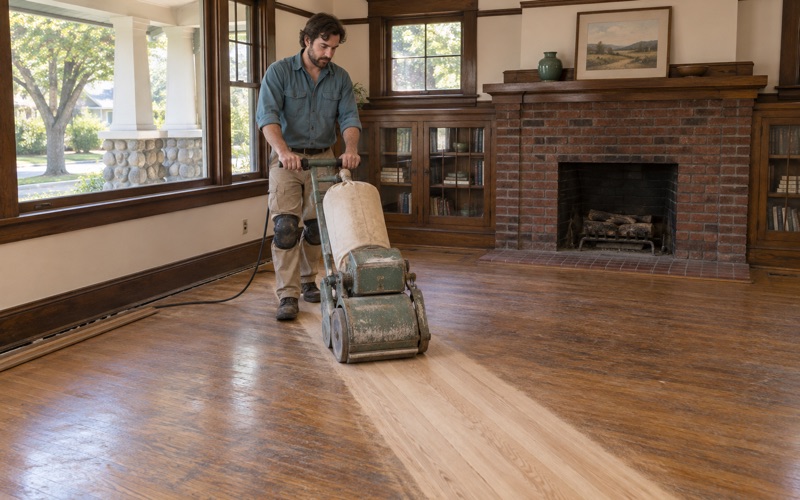
Not every turnover needs the floor taken down to bare wood. If the finish is dull and lightly scratched but intact, a screen and recoat can restore it quickly and cure far sooner than a full refinish. If the finish is worn through, peeling or hiding grayed wood, a full sand with a proper abrasive grit sequence is the honest answer.
Engineered hardwood needs a measurement first. We check the wear layer thickness before a sanding is promised, because a thin veneer can take a screen and recoat but will show sand-through under a drum sander. Solid hardwood gives more room, but every earlier refinish still counts against it.
Repairs Before Finish
Small round holes in a board with a pile of pellets beneath are classic drywood termite kick-out holes and frass. We identify that evidence, or rule it out, before a single board is replaced, so new wood does not go down over an active colony. Treatment itself belongs to a pest control operator and their inspection report.
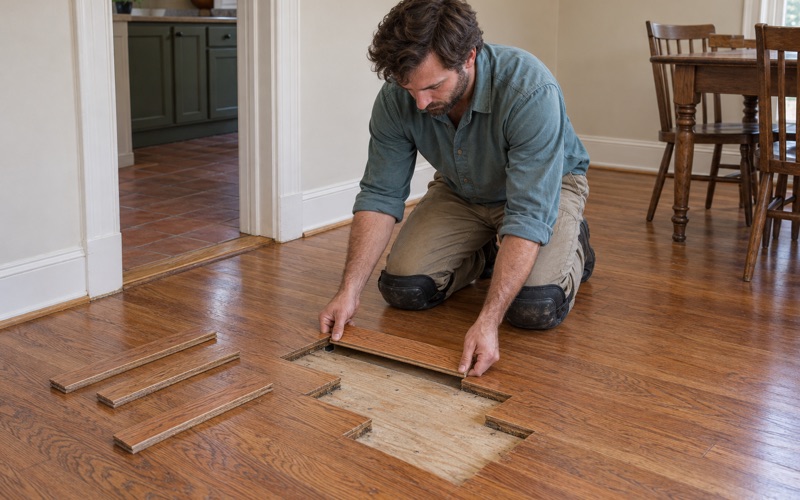
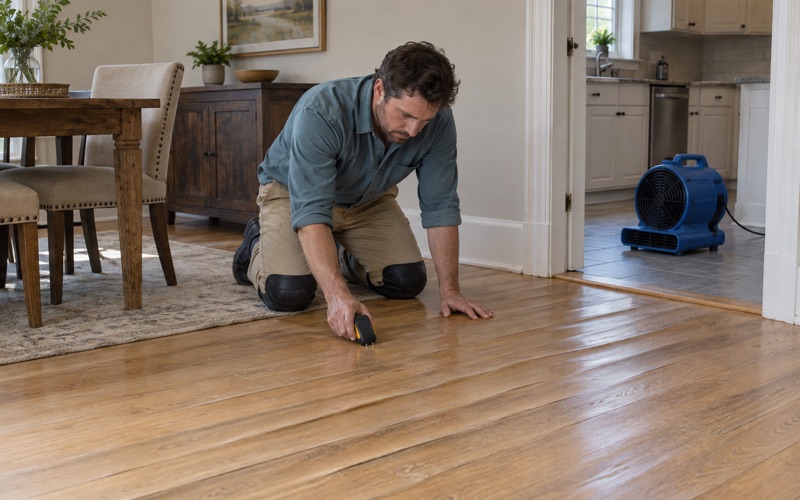
Once the floor is sound, board replacement and weave-in repair follow the direction and width of the existing strips so the patch disappears after sanding. Squeaks and popping get fastened from above or below. Cupping near a kitchen or bathroom points to moisture that has to be found and dried first, or a floor sanded flat while cupped will crown once it dries.
Cure Time and the Move-In Date
A tenant cannot carry boxes across a floor that is still curing. Our written schedule marks when light foot traffic is fine, when furniture can return and when rugs can go back down, which is usually the longest wait. Rugs slow the cure underneath them, so we put that date in writing rather than guess at it.
We choose finishes from products legal to apply in the South Coast air district, where the wood coatings limit is 275 grams per liter, instead of ordering from a national catalog. Waterborne polyurethane suits most turnovers because its recoat window is short, while an oil-modified finish or hardwax oil fits owners who prefer a warmer tone and can wait longer.
Attached Homes and Planning a Rosemead Project
One-Unit Attached Homes
Townhomes and other one-unit attached homes make up 14.0 percent of Rosemead’s housing, 2,158 units, and they hold 16.2 percent of renter households. Many sit inside an association with its own rules on hard flooring and underlayment, and those rules can differ from one complex to the next.
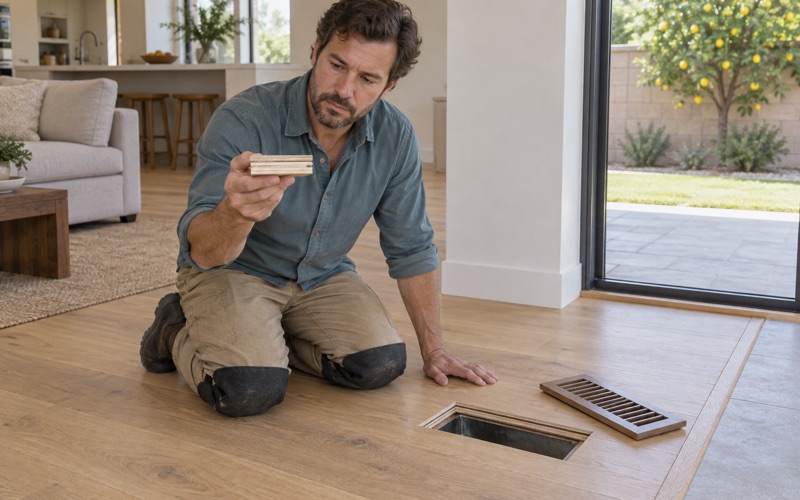
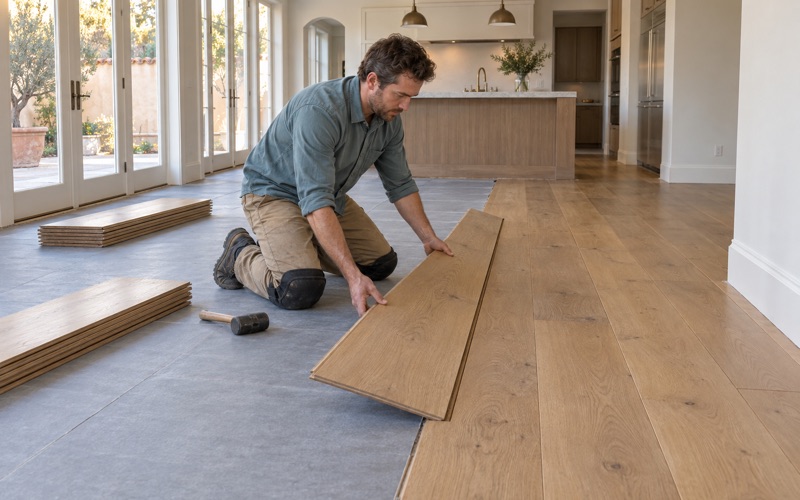
Before material is ordered for an attached home, we check the association’s requirements for flooring type and acoustic underlayment. A floating engineered floor over the wrong pad can mean tearing it out after a neighbor complains, so we settle the underlayment question on paper before the first carton arrives. Shared walls also make dust containment a courtesy to the neighbors as much as to the occupants.
Stairs in Two-Story Homes
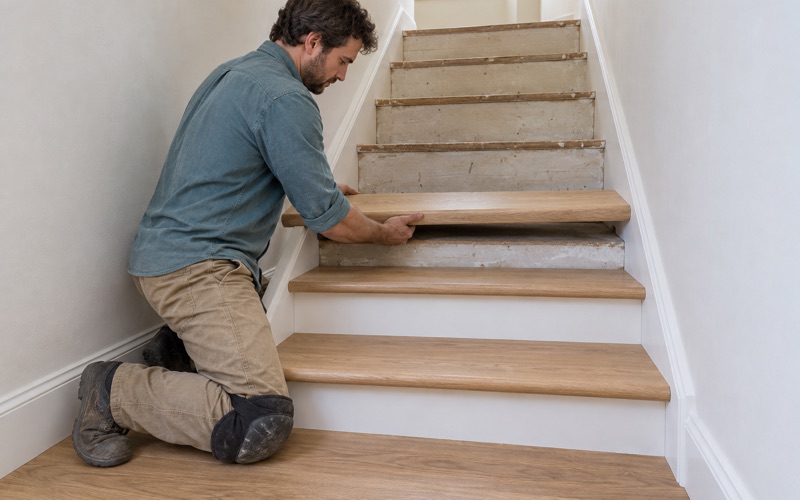
Attached homes often put the living area and bedrooms on separate floors, which puts the staircase at the center of the job. We quote stairs by the tread, riser and stair nosing, because a stair is cut, fitted and finished piece by piece rather than rolled out like open floor.
Carpeted stairs often hide plain treads never meant to show, and a retrofit tread with a matching riser is usually the cleaner route. The landing tread where the stairs meet the upstairs hallway needs a matched nosing or reducer so the transition does not become a trip point.
Before We Visit
Tell us the year the house was built if you know it, whether the floor sits over a crawl space or a slab, and the dates the house must be empty and ready. For water or smoke losses, we document the damage with photos and moisture readings an adjuster can use, and we write the repair scope as matching board and finish rather than patch.
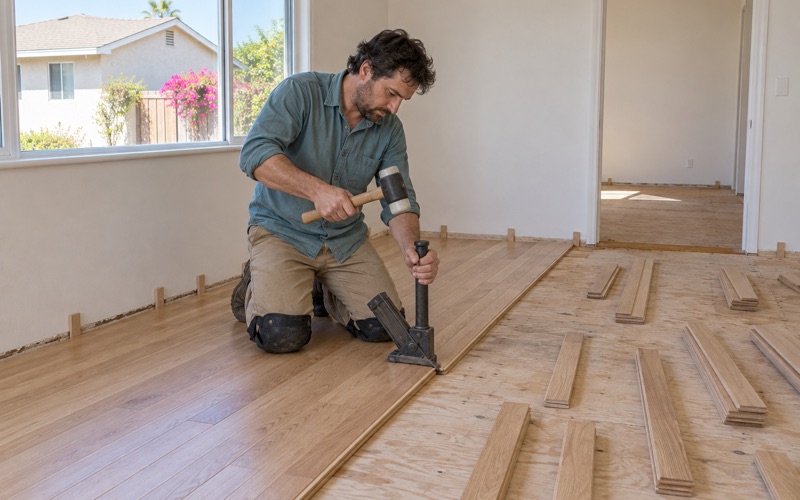
Questions about permits for a particular scope of work belong with the City of Rosemead Building and Safety Division at Rosemead City Hall, 8838 East Valley Boulevard, and we encourage owners to call that office before larger structural repairs. For new installations, we acclimate the wood and read moisture levels in the house itself before a board is fastened.
- 20+ Years in Wood Flooring
- Free Written Estimates
- Room-by-Room Schedules