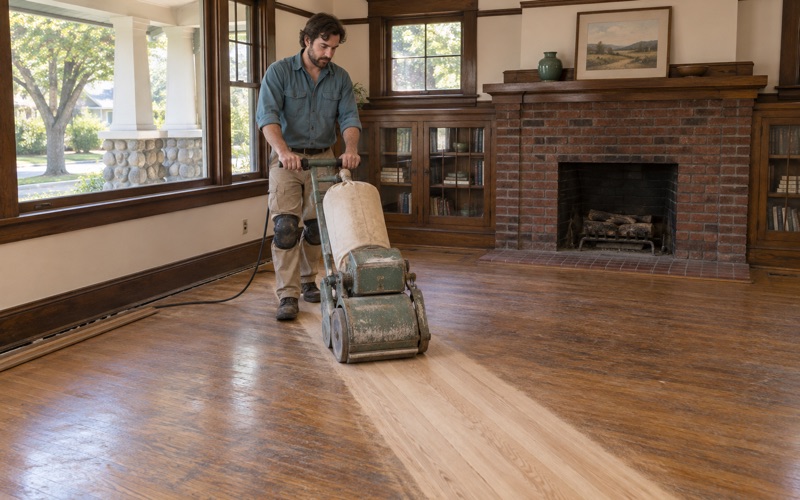
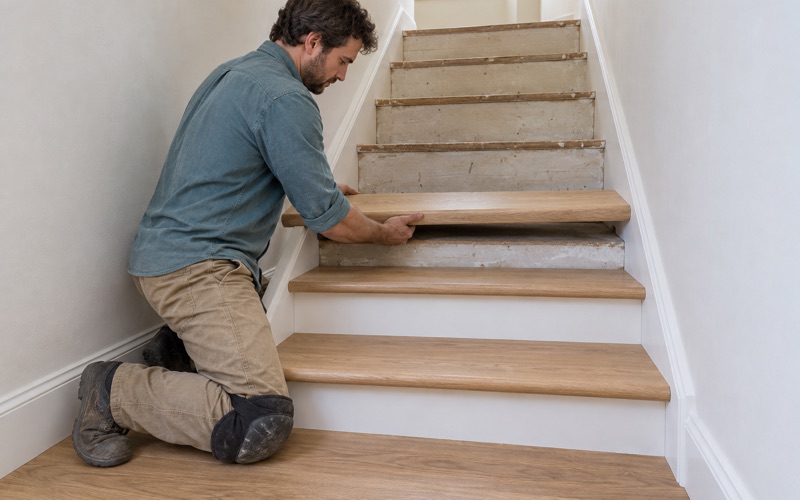
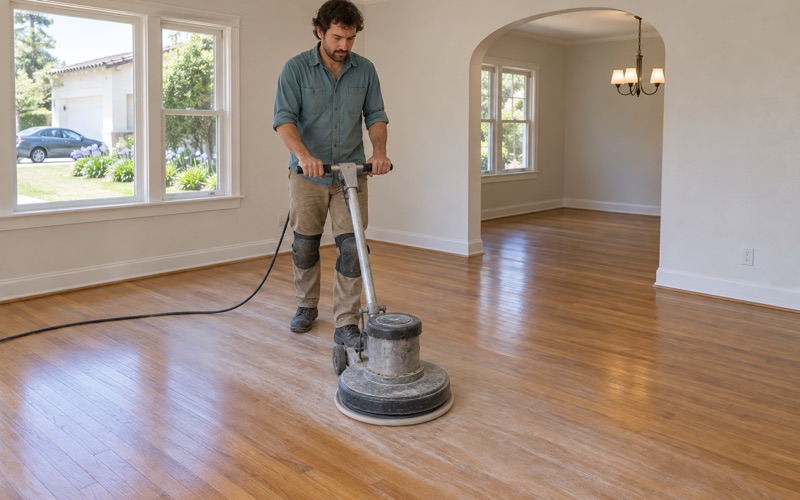
Alhambra Wood Flooring brings more than 20 years of experience to wood-flooring in Pasadena, and much of that work starts with a floor someone wants to keep rather than replace. We sand, repair and refinish solid and engineered floors, weave in replacement boards, rebuild worn stair treads and install new floors where the old ones cannot be saved. Every job begins with an inspection, not a price per square foot.
Before a sander touches a board, we confirm when the house or building was built. Pre-1978 paint and finish layers are handled under the federal EPA Renovation Repair and Painting Rule, so the build year shapes the dust containment plan from day one. On an engineered floor, we measure the wear layer first, because a thin veneer can take a screen and recoat but not a full sand.
Finishes come from products legal to apply in the South Coast air district, where the wood coatings limit is 275 grams per liter. You also get a written room-by-room schedule showing when furniture, rugs and pets can return, which matters whether the people waiting are a household or a tenant moving in on a fixed date.
Bringing Back the Floors in Pasadena’s Prewar Houses
Where the Oldest Floors Are
Pasadena’s housing stock skews old, and the census numbers make that plain. ACS 2024 five-year figures count 18,066 of the city’s 63,203 housing units, or 28.6 percent, as built 1939 or earlier. That is the largest single year-built group in the city, and 49.3 percent of all units went up before 1960.
Bungalow Heaven, with about 800 small Craftsman homes built between 1900 and 1930, shows what that prewar share looks like on a single street. A floor in a house that age may have been through several finishes, patch repairs and decades under carpet, and each of those leaves its own evidence in the wood.
What We Look For Before Sanding
An old floor tells us what it can take before we commit to a full sand. We look for overwood at board edges, earlier sand-through and boards already thinned by past refinishing, since a tongue and groove floor only has so much wood above the tongue. Raised nail heads, pet urine stains and black water stains near doors and sinks all change the plan.
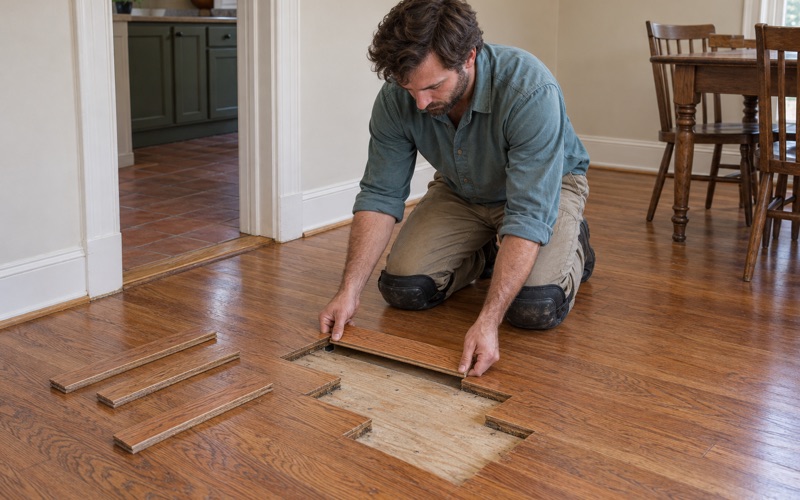
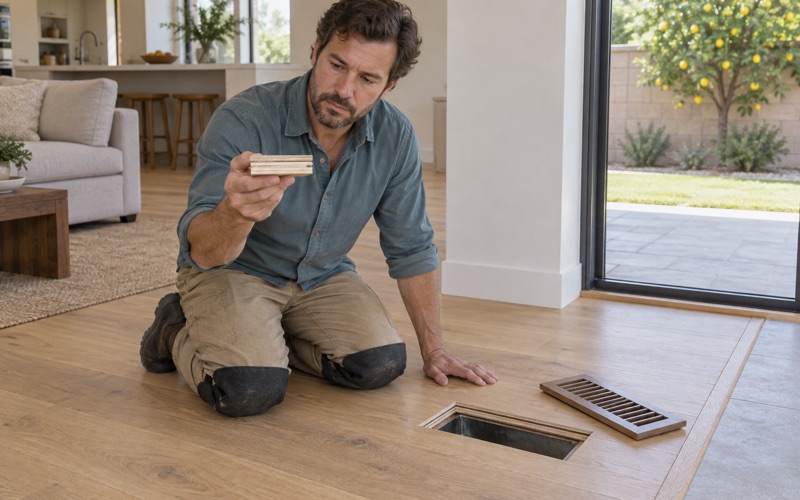
We also make no assumption about what wood is down there. Species, cut and grade get identified in the house, and that answer decides the stain match for any weave-in repair where damaged boards are replaced.
Checking From Underneath
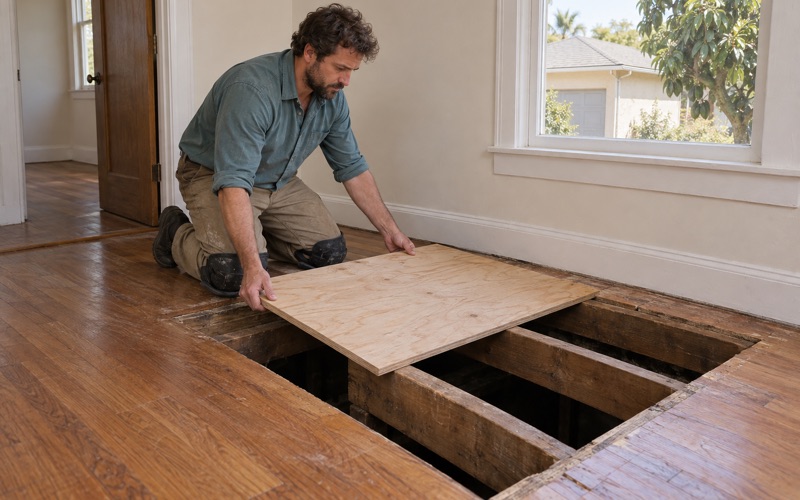
Where a house sits on a raised foundation, we go into the crawl space before quoting. A sagging floor, a bouncy floor or a soft spot is often a floor joist, pier post or girder problem, and sanding over it only hides the cause for a while. Sister joists or subfloor repair come first, then the finish work.
The same visit is when we look for drywood termite kick-out holes and pellet piles of termite frass, identifying that evidence or ruling it out before any board is replaced. Owners of wood-framed, pre-1980 homes on raised foundations can also check the Earthquake Brace + Bolt program. Pasadena ZIP codes 91101 and 91103 through 91107 were on the 2025 list, so confirm the current year before counting on it.
Looking for wood-flooring closer to South El Monte? See South El Monte Wood-Flooring.
Landmark Districts, Mills Act Contracts and the Rooms Inside
What Design Review Covers
It is easy to assume that owning a house in a landmark district puts every project under review. The city’s own description of its historic preservation program says otherwise. Certificate of Appropriateness review covers demolitions, exterior alterations and new construction, while interior alterations are listed as exempt from review in landmark districts, alongside paint colors, landscaping and routine maintenance.
Bungalow Heaven became Pasadena’s first landmark district in 1989, and its neighborhood association’s FAQ repeats the same exemption. For a floor restoration inside a landmark-district house, preservation design review is not a step in the job. Building questions are a separate matter for the City of Pasadena Building and Safety Division, and we do not guess at those on your behalf.
Why the Interior Still Deserves Care
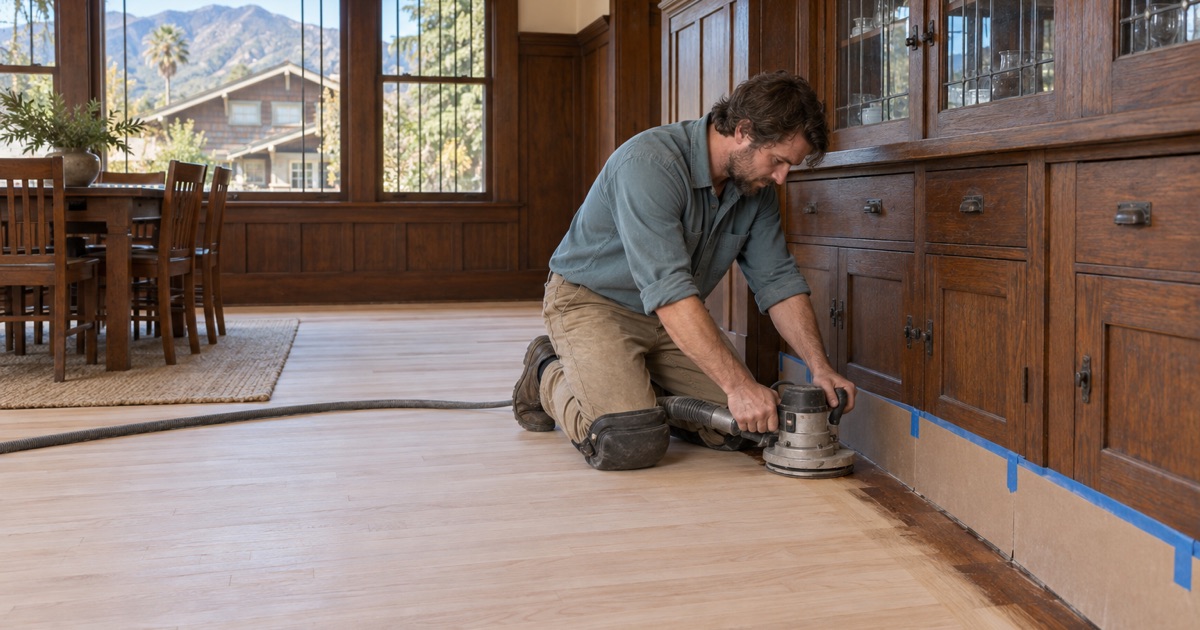
An exemption from review is not a reason to tear out an original floor. The city notes that the State Historical Building Code applies to both the interior and exterior of a qualifying historic building, and an original floor is one of the few surfaces in the house that cannot be bought again. We default to repair: matched board replacement, weave-in repairs at old wall lines and hand work around built-ins.
Refinishing choices follow the same restraint. We sample stain and sheen on a hidden board, keep the abrasive grit sequence conservative to save wood, and watch for chatter marks, drum marks and edger swirl, which show quickly under low-angle light.
Mills Act Homes
Pasadena’s Mills Act Historic Property Contract Program dates to October 2002. Eligible properties include designated landmarks, Greene and Greene buildings, National Register properties and contributing properties in landmark or National Register districts. The city reports that past participants saved between 20 and 75 percent on property taxes, around 50 percent on average.
We make no claim about what an individual contract says about interiors, because each one is its own document. What we can do is photograph the floor before and after, keep original boards wherever they can be saved, and write the scope so it reads plainly as restoration if you need to show it to anyone.
Floor Work in Pasadena Rental Buildings
A City Where Most Households Rent
Of Pasadena’s 57,425 occupied housing units, 33,016, or 57.5 percent, are renter-occupied, and 64.8 percent of renter households live in buildings with five or more units. That puts a large share of the city’s wood and engineered floors in apartments and small complexes, where the work often falls between one tenant and the next.
Owners and property managers have fixed dates to work around. We schedule sanding and finishing between move-out and move-in, and the written schedule shows when the unit can be cleaned, shown and occupied once the finish reaches its cure time.
Recording Condition Between Tenancies
We record the floor condition on both sides of a tenancy with dated photos. That record helps separate normal wear and tear, such as traffic lanes and a worn-through finish at a doorway, from deep gouges, pet urine stains or a black water stain under a plant stand. How any of it bears on a security deposit deduction is between owner and tenant.
Where the finish is dull but intact, a buff and coat or screen and recoat can often turn a unit faster than a full sand. Where wear has cut into bare wood, a full sand is the honest answer, and we say so at the walkthrough.
Measure H and Rented Condos
Pasadena’s Measure H charter amendment took effect December 22, 2022, and places rent limits on multi-unit rental property built before February 1, 1995. Single-family homes and condominiums are exempt from the rent limits, though nearly all rental units, condos and single-family homes included, carry just-cause eviction protection. The City of Pasadena Rent Stabilization Department and Rental Housing Board administer it.
None of that changes how a floor is sanded, and we point owners to the department for rent questions. For rented condos and townhomes, we check the association’s rules on hard flooring and acoustic underlayment before any material is ordered.
After the Eaton Fire: Rebuilds and Smoke-Affected Rooms
What the Fire Left Inside City Limits
The Eaton Fire started January 7, 2025, near Altadena Drive and Midwick Drive and burned 14,021 acres before full containment on January 31. The Center Square reported in July 2026 that 185 structures were destroyed within Pasadena city limits, most of them single-family homes, accessory units and garages in neighborhoods such as Upper Hastings Ranch, Victory-Rose and Dundee Heights.
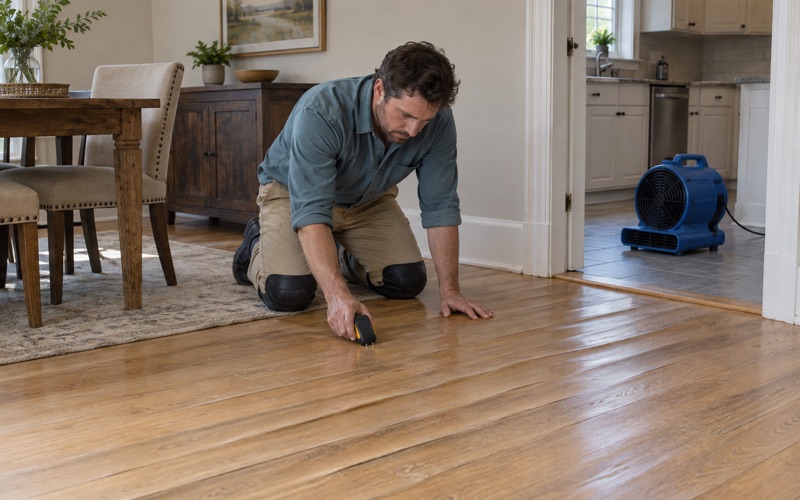
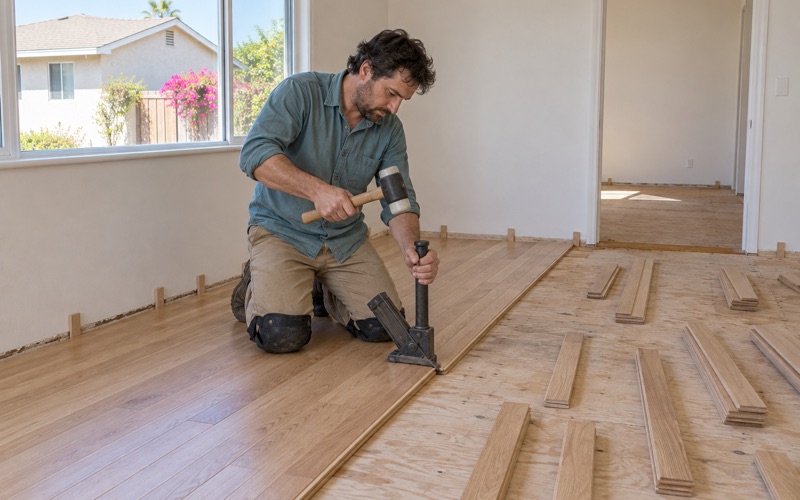
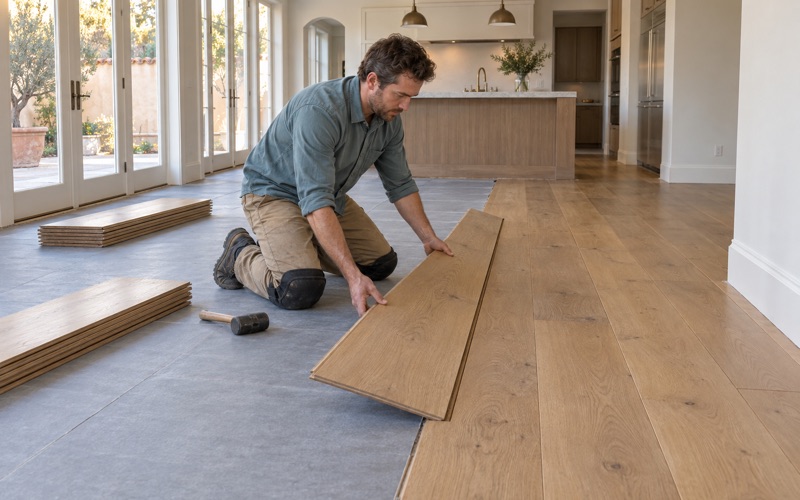
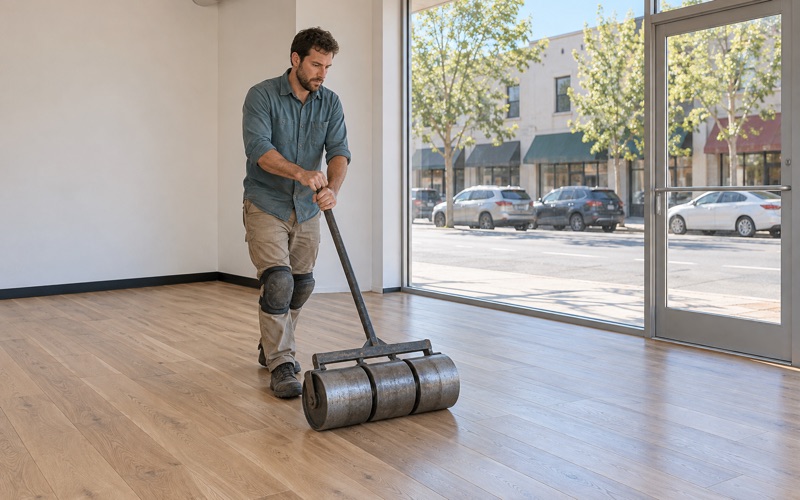
A rebuilt home gets new floors over new framing and subfloors. We check moisture with a moisture meter, allow the wood proper acclimation, and follow the manufacturer’s fastener spacing schedule and expansion gap on a nail-down installation, or its adhesive rules for glue-down work over slab-on-grade.
Houses That Stood but Took Smoke
Homes that survived near the burn area can still hold soot and ash residue in finish pores, board gaps and the crawl space. The City of Pasadena publishes cleaning guidance for ash, soot and smoke after a wildfire, and we suggest reading it before restoration starts. Sanding while ash sits in the gaps can drive residue deeper and spread it through the house.
Where smoke has reached the wood, the scope may run from cleaning and a screen and recoat to a full sand with odor sealing under the new finish. We use dust containment throughout and choose between those options only after testing a section of the floor.
Documenting a Loss for an Adjuster
Smoke and water losses go better with evidence. We document each room with photos and moisture readings an adjuster can use, and we write repair scope as matching board and finish rather than patch, so a partial repair does not leave a visible line across a room that was one continuous floor before.
Where water soaked a floor during or after the fire, we watch for cupping, crowning and buckling as the boards dry, and we hold off sanding until readings settle near equilibrium moisture content. Sanding a cupped floor too early leaves it crowned once it finishes drying.
- 20+ Years in Wood Flooring
- Free Written Estimates
- Room-by-Room Schedules