Alhambra Wood Flooring handles wood-flooring in Montebello with more than 20 years of sanding, refinishing, repair and installation behind the crew. Most of what we see here is a house or an apartment unit from the middle of the last century, and that shapes a quote more than the square footage does. The first thing we pin down is when the building went up, because the answer changes the finish history, the dust plan and what may be hiding under the carpet.
A floor that has been covered, uncovered and recoated over several decades rarely needs the same thing in every room. One bedroom may only want a screen and recoat while the hallway beside it shows worn-through finish, gray stains at a doorway or boards that cupped near an old leak. We walk each room, take moisture meter readings where the wood looks off, and write the scope room by room instead of as one blended price.
Owners, landlords and tenants all call us, and each works to a different deadline. We build the schedule around the day the rooms need to be usable again and put it in writing before any equipment arrives.
Three Decades of Montebello Floors
What the Housing Count Shows
Montebello’s housing was not built in one burst. The American Community Survey 2024 five-year estimates count 20,386 housing units in the city, with 4,543 dating to the 1950s, 3,890 to the 1960s and 4,108 to the 1970s. Together those three decades hold 61.5 percent of the housing units in Montebello, spread almost evenly among them.
That even spread matters on the job. On one street we may be refinishing strip oak in a 1950s house, and a few blocks away we may be pulling carpet in a 1970s unit to see what the builder put underneath. The build year tells us which of those jobs we are walking into before a single board is inspected.
1950s Houses and Oak That Has Been Sanded Before
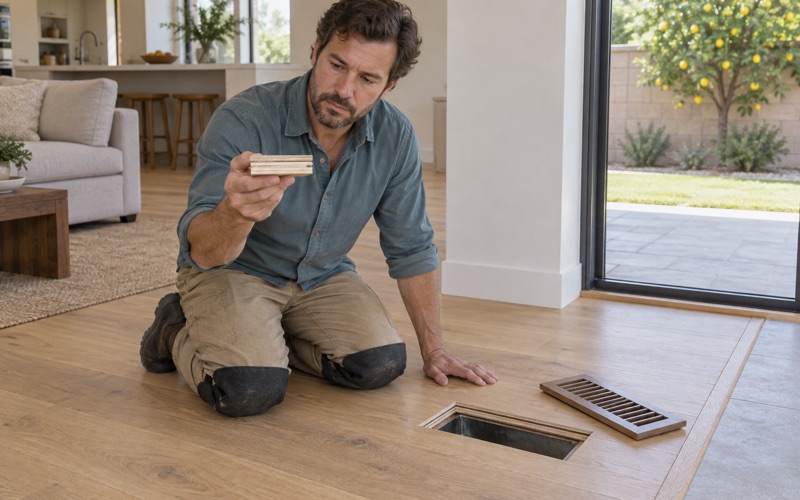
Solid red oak and white oak strip flooring, nailed tongue and groove over a board subfloor or diagonal sheathing, was common in houses of that decade. A floor that old may already have been sanded more than once, and every pass takes wood off the top of the tongue. Before we promise another full sand, we pull a floor register or a threshold to see how much wood is left.
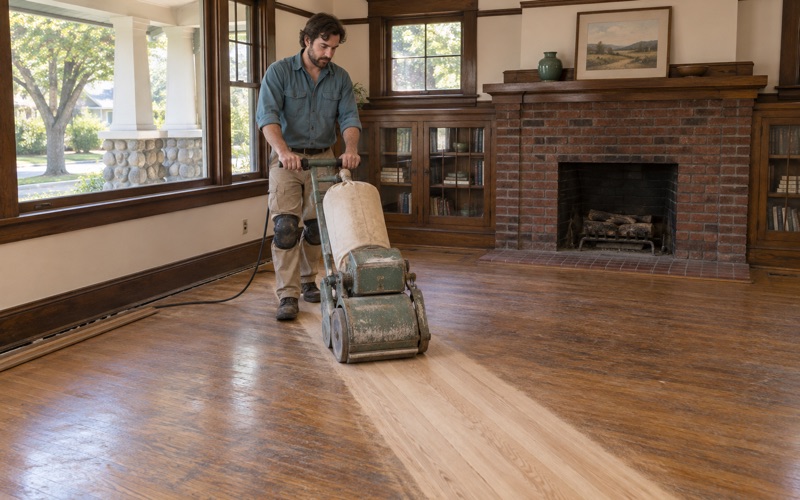
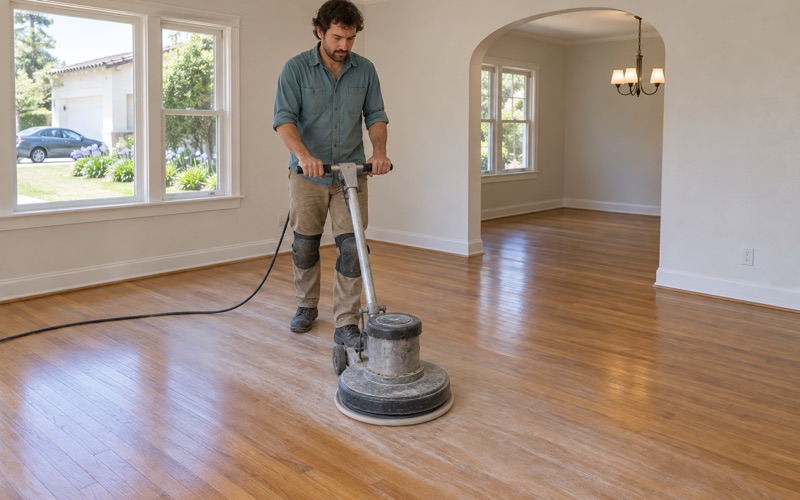
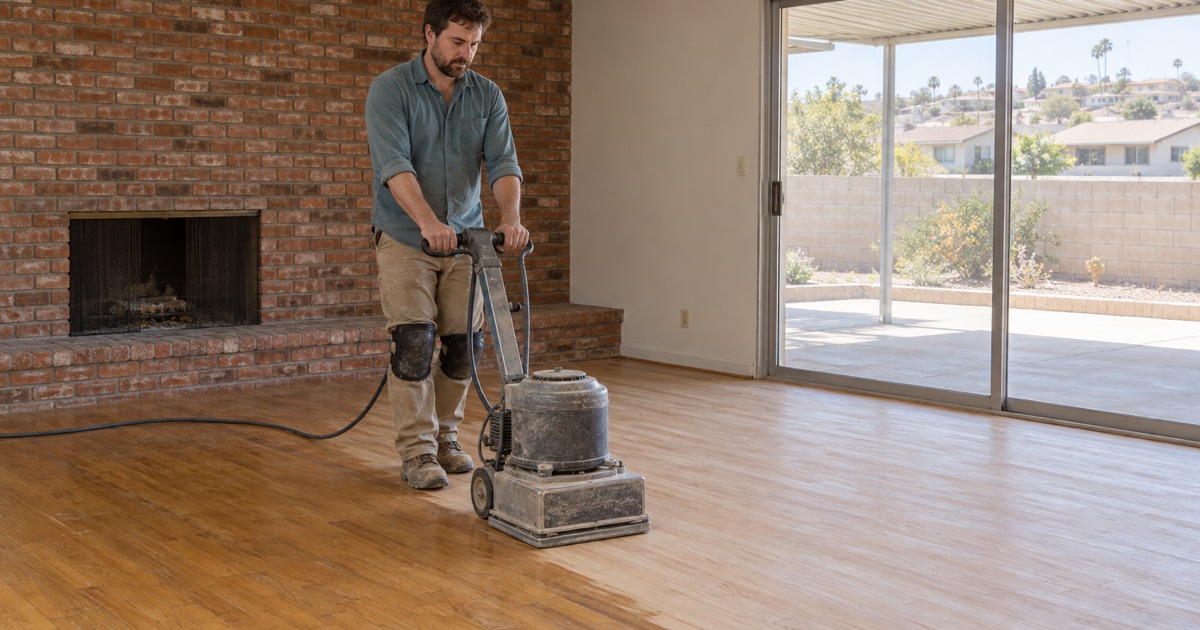
Thin spots show up as sand-through at the edges of old repairs or as nail heads rising through the finish. Where the margin is too thin, a buff and coat is the honest answer, and we say so rather than cut into the tongue and leave boards loose. Where there is wood to spare, a full abrasive grit sequence with a drum sander and edger brings the floor back without chatter marks or edger swirl.
1960s and 1970s Rooms From the Carpet Era
Through the 1960s and 1970s, wall-to-wall carpet was a popular choice for living rooms and bedrooms across Southern California, and some hardwood of that period spent its whole life covered. When a Montebello owner pulls that carpet now, the floor underneath tends to carry tack strip holes around the edges, staple rows, pad adhesive and sometimes a pet urine stain that soaked through the pad years ago.
Some of those rooms reward a full sand, stain and finish. Others hide black water stains, parquet squares coming loose or a gap in the boards where a wall once stood. We test the stains, check the fasteners and tell the owner which rooms can be restored as they are and which need board replacement or a weave-in repair first.
Looking for wood-flooring closer to East Pasadena? See East Pasadena Wood-Flooring.
Fourplexes and Small Rental Buildings
Thousands of Units in Three- and Four-Unit Buildings
Small multifamily housing is a large part of Montebello. The same census estimates count 2,419 units in buildings with three or four units, about 11.9 percent of the city’s housing, and 2,146 renter households live in buildings that size. Owners occupy 45.9 percent of Montebello’s occupied homes, so a good share of our work here is ordered by a landlord for a tenant’s unit.
A fourplex floor job carries limits a detached house does not. Dust has to stay inside one unit, sanding noise has to fit around neighbors who are home during the day, and the finish has to cure while people use the shared stairs and walkways. We plan dust containment and working hours with all of that in mind.
Turnovers Between Tenants
The best window to refinish a rental floor is the gap between one lease and the next, and that gap is often short. We line up the sanding, the coats and the cure time with the move-out and move-in dates the owner gives us, so the unit is not held empty an extra week waiting on finish.
We photograph the floor before work starts and again when it is done. Those records help an owner separate normal wear and tear from damage if a security deposit deduction comes up later, and they give the next tenancy a documented starting condition.
Rental floors take a particular kind of wear. Rolling chairs, pets and furniture dragged out on moving day leave scratches, dents and compression set near doorways, and a floor that has seen several tenants may show finish peeling where cleaning water pooled. A screen and recoat can carry a sound floor through another lease, while deeper damage calls for sanding or board replacement.
Upstairs Units and Floor Sound
In a two-story fourplex, a hard floor upstairs changes what the tenant below hears. Footsteps, dropped objects and chair legs carry through wood or a floating floor differently than through carpet and pad. When an owner wants to replace upstairs carpet with solid hardwood or engineered plank, we talk through acoustic underlayment before any material is ordered. Impact insulation class and sound transmission class figures belong to a specific product and assembly, so we read what the manufacturer publishes instead of guessing.
Where a building sits under an association, as some attached homes and condos do, we read its rules on hard flooring and underlayment first. Installing a floor and then learning the rules called for something else is an expensive way to find out.
Oil Hills, City History and Unusual Jobs
From Oil Field to Incorporated City
Montebello sits about 8 miles east of downtown Los Angeles and is counted among both the Gateway Cities and the San Gabriel Valley cities. Standard Oil discovered oil in the Montebello hills in 1917, and the field eventually produced one-eighth of California’s crude. The city incorporated on October 16, 1920, taking the name Montebello that year on William Mulholland’s suggestion.
Older landmarks remain, from the Juan Matias Sanchez Adobe built in 1844 to the Armenian Genocide Martyrs Monument in Bicknell Park. The homes we are asked to work on, though, mostly come from later decades. With 84.1 percent of the city’s housing built before 1980, the mid-century floor is the one we see most, whether it sits in a detached house or one unit of a small rental building.
The Montebello Hills Plan
The hills where that oil was found are still an operating oil field. On June 10, 2015, the City of Montebello approved the Montebello Hills Specific Plan, which allows 1,200 residential units in five planning areas on about 173.6 acres of a roughly 488-acre site, with about 314.6 acres kept as open space.
We have not established how much of that plan has been built, so we do not plan our work around it. Only 5.1 percent of Montebello’s housing dates to 2000 or later, and our jobs here remain centered on the city’s existing mid-century homes.
Mobile Homes and Floors That Move
Montebello also counts 279 mobile homes, a small slice of its housing but a distinct kind of floor job. We check how the floor feels underfoot, look for soft spots and water damage near baths and kitchens, and choose flooring that suits the structure rather than forcing a heavy nail-down floor onto it. A floating floor over a suitable underlayment is often the better fit there.
When a sagging floor, a bouncy floor or a sloping floor turns out to be a framing issue rather than a surface one, the work reaches past flooring. Questions about structural repair belong with the City of Montebello Building & Safety Division, which provides plan checking and inspections and issues building permits. We raise that with the owner before a repair scope is set.
Wood Floor Services Across Montebello
Sanding, Refinishing and Finish Choices
Before a sanding date goes on the calendar, we confirm the year the home was built. So much of Montebello predates 1980 that the pre-1978 question comes up on most jobs, and old paint and finish layers in that housing are handled under the EPA Renovation, Repair and Painting Rule.
We choose waterborne polyurethane, oil-modified polyurethane or hardwax oil from products legal to apply under South Coast Air Quality Management District rules, where the wood coatings limit is 275 grams per liter. On engineered hardwood we measure wear layer thickness first, because a thin veneer can take a screen and recoat but not a full sand.
Termites, Water and Board Repairs
Small round kick-out holes and piles of pellet-shaped termite frass near a baseboard point to drywood termites. We confirm or rule that out before replacing a single board, so new wood does not go down over an active colony, and we wait on the owner’s pest company when treatment has to come first.
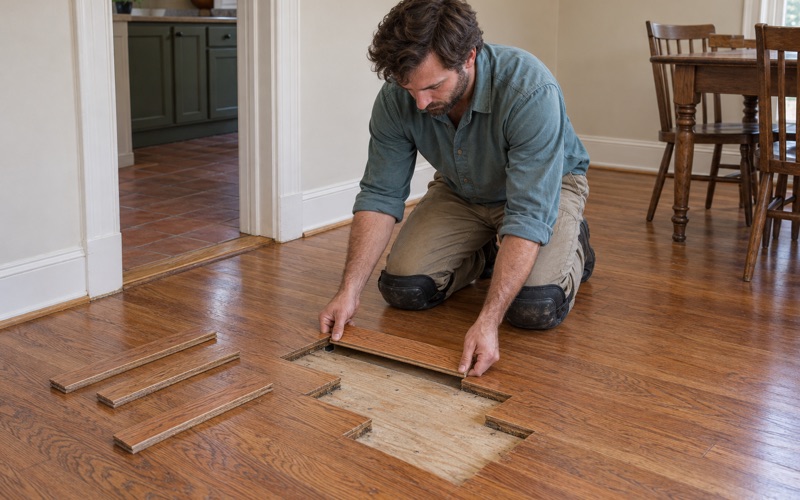
For water or smoke losses, we document the damage with photos and moisture readings an insurance adjuster can work from. The repair scope we write calls for matching boards and a matching finish woven into the existing floor, not a patch that shows every time the light crosses it.
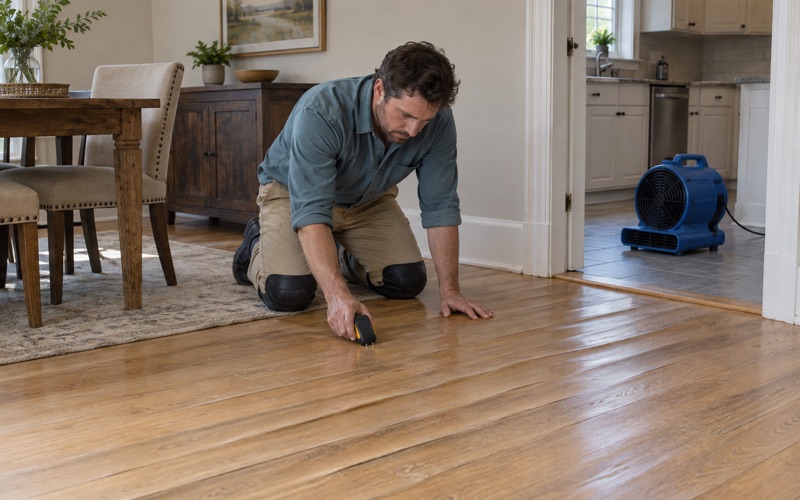
How a damaged floor moved is part of the diagnosis. Seasonal gapping in the dry months points one way, while crowning or buckling after a leak points another, so we compare the wood’s moisture content with the room’s relative humidity before recommending new boards or an acclimation period.
Stairs, Subfloors and the Schedule
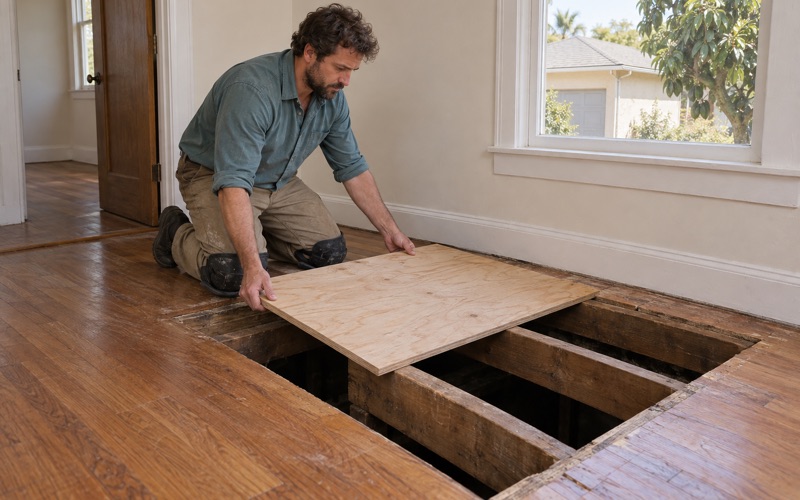
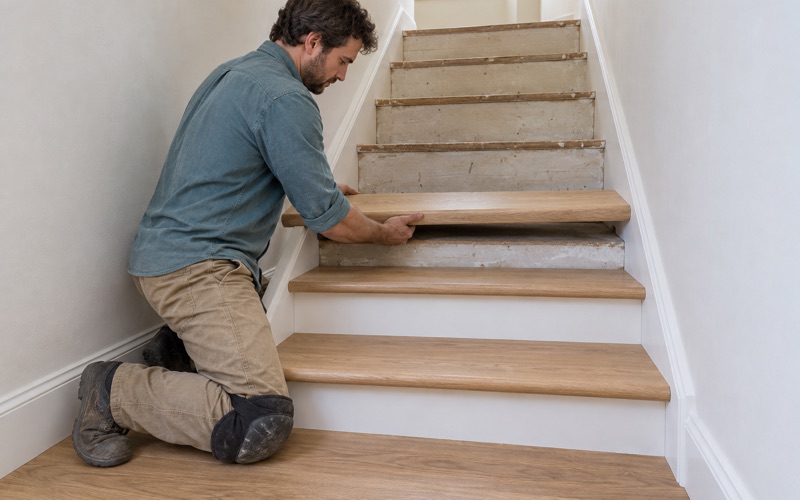
Stairs are priced by the tread, riser and stair nosing rather than folded into a square-foot number, because each step is cut, fitted and finished on its own. In a house that sits over a crawl space, we go underneath before quoting a sagging or bouncy floor, since a tired floor joist, girder or pier post is a problem sanding would only cover.
Every job ends with a written room-by-room schedule showing when furniture, rugs and pets can come back. A family can plan the week around the cure time, and a landlord can pass the same page to an incoming tenant. Waterborne and oil-modified finishes cure on different clocks, so the dates on that page follow the product chosen for each room.
- 20+ Years in Wood Flooring
- Free Written Estimates
- Room-by-Room Schedules