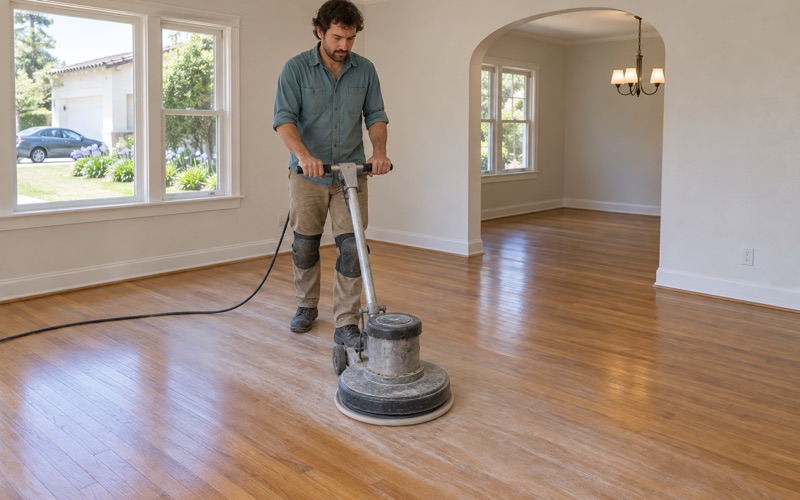
Alhambra Wood Flooring handles wood-flooring in Lomita with more than 20 years of sanding, repairing and installing hardwood behind us, and the work here often starts with a question that has little to do with wood: who lives in the house, and when can the rooms be empty? A floor refinished during a vacancy is planned very differently from one refinished around a household that is staying put through the job.
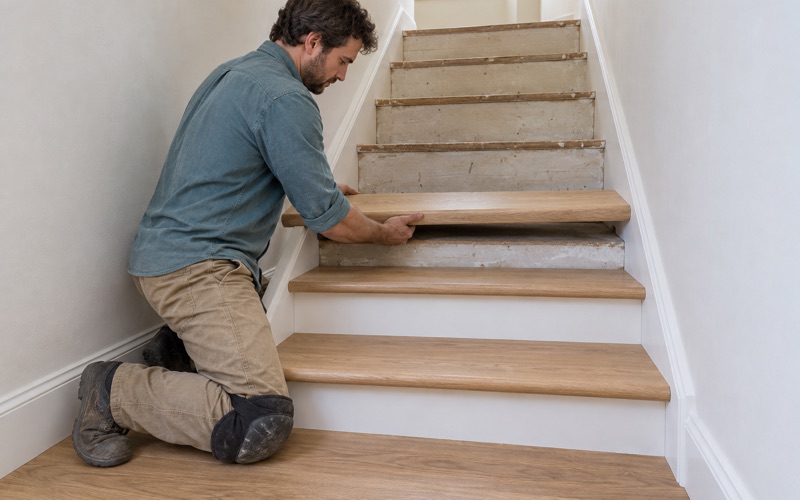
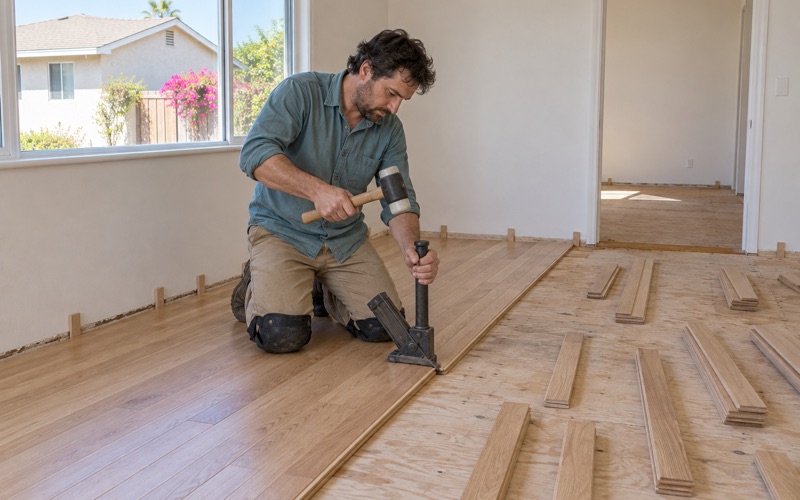
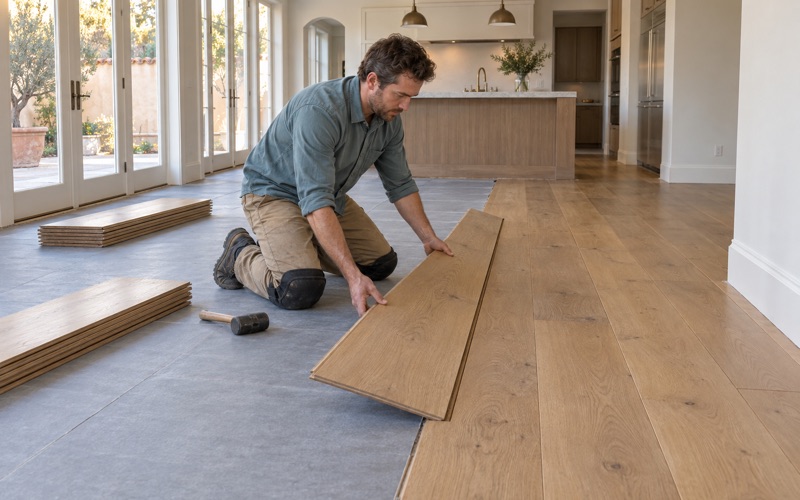
Our work covers full sanding and refinishing of solid hardwood, screen and recoat on floors that only need a fresh top coat, board replacement and weave-in repairs, and new engineered or solid installations. Stairs are quoted by the tread, riser and nosing instead of being folded into a square-foot price. In condos and townhomes, we read the association’s rules on hard flooring and underlayment before any material is ordered.
Below, we cover who reviews building work in Lomita, what the city’s mix of renters and owners means for scheduling, how three mid-century decades show up in the floors we open, and how an owner can decide between refinishing and replacing when a lease ends. Each section sticks to what changes about the job in this city rather than what holds for any hardwood floor anywhere.
A Renter-Majority City With a County Building Office
Plan check and inspections through Los Angeles County
Building permits and inspections in Lomita are handled by Los Angeles County Public Works Building and Safety, working from its Lomita-Lennox office on Narbonne Avenue in the city. The City of Lomita lists its own Building and Safety Division at that same address, and the county department serves a group of cities that contract for its services. For an owner, plan check and inspection questions go to county staff.
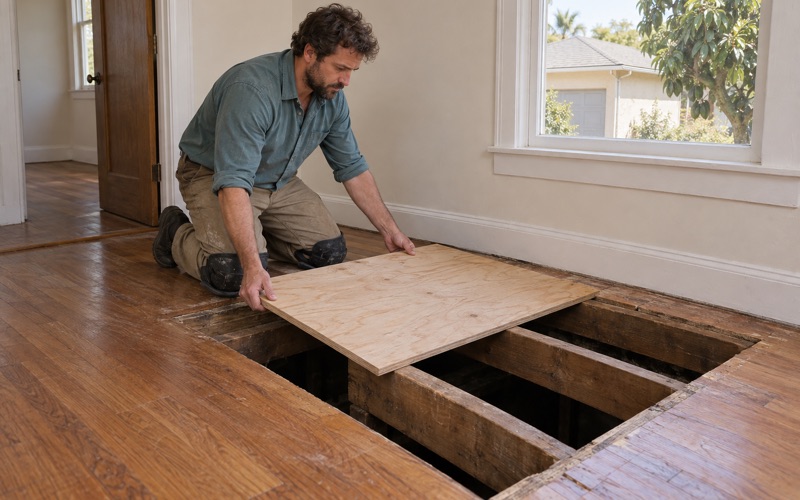
We do not hand out permit answers for floor work. When a project reaches into the subfloor, framing or other work that may call for review, we tell the owner so and suggest asking that office before the schedule is set. The answer belongs to the building department, and a flooring estimate is the wrong place to guess at it.
Most homes here are rented
Of the 7,326 occupied homes in Lomita, 54.1 percent are rented, according to the 2024 five-year American Community Survey, and owners hold the other 45.9 percent. That makes landlords, property managers and tenants a large share of the people who call us about floors. The person approving the estimate and the person living with the work are often two different people.
The rented stock is spread across many building types. There are 1,473 renter households in detached single-family houses, and many more in duplexes, small complexes and buildings of twenty units or more. Each comes with its own approval chain, from a single owner who answers the phone to a management company with a work-order system and a vendor list.
Incorporated in 1964
Lomita incorporated on June 30, 1964, in part to prevent further annexation by neighboring cities and to curtail high-rise apartment development. A good share of today’s houses were already standing by then, and the 1970s added the largest single decade of construction. Today the city’s rentals range from detached houses to buildings of fifty units or more.
Looking for wood-flooring closer to Palos Verdes Estates? See Wood-Flooring Services in Palos Verdes Estates.
Floors From the 1950s, 1960s and 1970s
Three decades on the same streets
Lomita’s housing does not come from one building boom. American Community Survey estimates show 1,600 homes built in the 1950s, 1,576 in the 1960s and 1,763 in the 1970s, each about a fifth of the city’s 7,904 units and 62.5 percent together. The 1970s are the largest single decade at 22.3 percent. On the same street, a house from the 1950s can sit beside one from the 1970s.
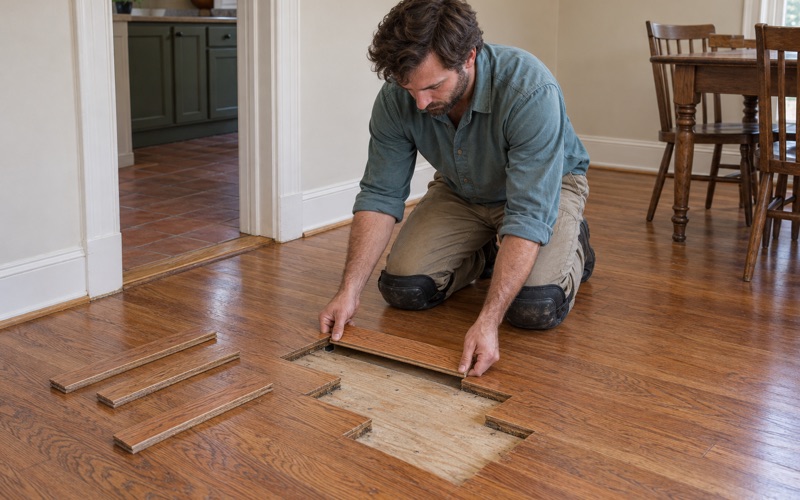
That spread changes what we expect under the carpet. One house may still have its original narrow strip oak, while the next has carpet over a plywood subfloor or a later floating product. We do not guess from the street address; we lift a corner, look at the board width, the fastening and the subfloor, and only then talk about refinishing or new material.
The older tenth of the housing
About one home in ten here, 10.1 percent, was built before 1940, and another 496 date from the 1940s. A floor that old may have been sanded several times, and each pass removes wood above the tongue. We look for exposed nail heads, splits along the groove, and boards worn thin at doorways before we promise a full sand.
Where a floor cannot take another full sand, a screen and recoat can refresh the surface without taking more wood. Where single boards have split, cupped or rotted, a weave-in repair with matching species and width lets new boards run with the old ones. Past sand-through spots, drum marks and edger swirl from earlier refinishing jobs get noted before we price the work, since they affect what the next sanding can fix.
Build year, lead and the local finish limit
With 78.9 percent of Lomita’s housing built before 1980, we confirm the build year before any sanding goes on the calendar. Pre-1978 paint and finish layers are handled under the EPA Renovation, Repair and Painting Rule, and older baseboards, trim and stair parts can carry those layers. Knowing the year first keeps the work plan and the containment right from the start.
Finish choice follows the air district, not a national catalog. South Coast AQMD Rule 1113 limits wood coatings to 275 grams per liter, so the waterborne polyurethane, oil-modified polyurethane or hardwax oil we bring is a product legal to apply here. Odor, cure time and recoat window differ among them, and in an occupied home those differences often decide which one fits.
Floor Work in an Occupied Rental
Coordinating with owner and tenant
In a rental that is still occupied, the owner approves the work while the tenant lives with the schedule. We ask the owner or manager to confirm access dates with the tenant before we book equipment, then keep to the rooms and hours that were agreed. An unannounced crew with a drum sander is how a small refinishing job becomes a complaint.
We do not give legal advice about tenancies. California’s Tenant Protection Act, Civil Code 1946.2, sets just-cause rules statewide, and it states that “cosmetic improvements alone, including painting, decorating, and minor repairs” do not qualify as a substantial remodel. The statute does not name flooring, so any question about how floor work relates to a particular tenancy belongs with an attorney, not a flooring contractor.
Lomita has been through this tension before. In late 2019 the city council adopted an urgency ordinance halting renovation-related evictions until the state law took effect on January 1, 2020.
Room-by-room schedules and cure time
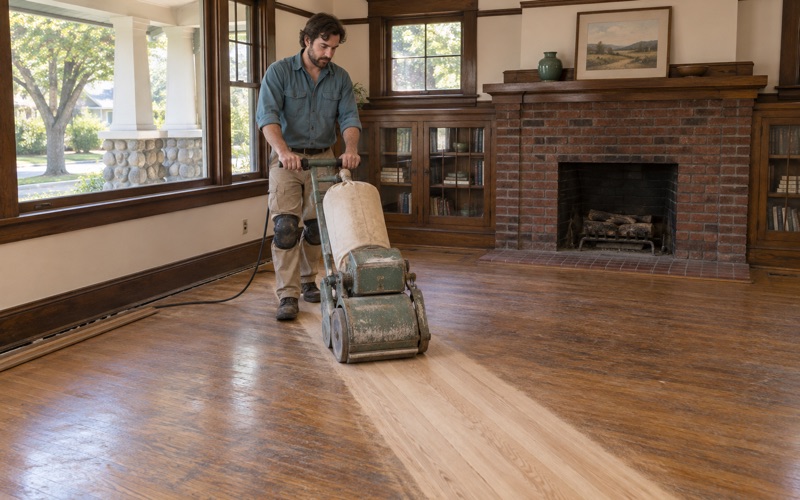
Refinishing around a tenant means working one area at a time, with dust containment at each doorway and a dustless sanding setup where the layout allows. We hand over a written room-by-room schedule showing when furniture, rugs and pets can come back, so the household can plan sleeping, cooking and work around the cure time instead of guessing.
Light foot traffic usually returns well before rugs and heavy furniture can. We put those dates in writing because a rug laid down early can trap the finish while it is still curing and leave marks. Clear dates also give the owner something concrete to pass along to the tenant.
Mobile homes need their own plan
Lomita counts 544 mobile homes, 6.9 percent of its housing, and a floor in one of them sits on a different substrate from a site-built house. We do not quote the two the same way. Before recommending anything, we look at the existing floor panels, the height at doorways and transitions, and how much weight the new material adds.
A soft spot or bouncy floor in a mobile home can point to damaged panels rather than worn flooring, and we check for that first. Engineered hardwood, a floating floor or luxury vinyl plank may suit the space better than solid nail-down boards, and new material laid over a failing panel will only show the problem again later.
Refinishing or Replacing Between Leases
Documenting condition at move-out and move-in
Rental turnovers are a natural window for floor work in a city where most households rent. We plan around the move-out and move-in dates and photograph the floor condition on both sides of the tenancy. That record helps an owner separate normal wear and tear from damage beyond it, though any security deposit deduction is the owner’s call, not ours.
Findings at move-out can include worn-through finish down hallways, pet urine stains by doors, gray stains under plant pots and dents under chair legs. Each points toward a different repair. The photos keep the conversation grounded in what the floor shows rather than what anyone remembers.
When a recoat covers the gap between tenants
If the finish is scuffed but not worn through to bare wood, a buff and coat can restore sheen during a short vacancy without a full sand, stain and finish schedule. It keeps the original boards in service for another lease and fits the days between keys changing hands.
Engineered floors need one more step. We measure the wear layer before promising a sanding, since a thin veneer can take a screen and recoat but not a full sand, and sanding through it leaves a spot no finish can hide. On a rental with an engineered floor, that measurement often decides the whole turnover plan.
When boards need sanding or replacement
Deep pet urine stains, black water stains and cupping from an old leak usually go past what a recoat can reach. Some damage sands out; the rest calls for board replacement or a weave-in repair so new wood runs with the old. Before any board comes out, we check small round holes and pellet piles to identify drywood termite evidence or rule it out, so new boards do not go down over an active colony.
Replacing a whole floor is a larger decision for an owner thinking several leases ahead. Solid white oak or red oak can be sanded and refinished again at a later turnover, while many floating products cannot be sanded at all. We lay out both paths with their tradeoffs in cost, downtime and future refinishing, and the owner picks the floor that fits how the property is run.
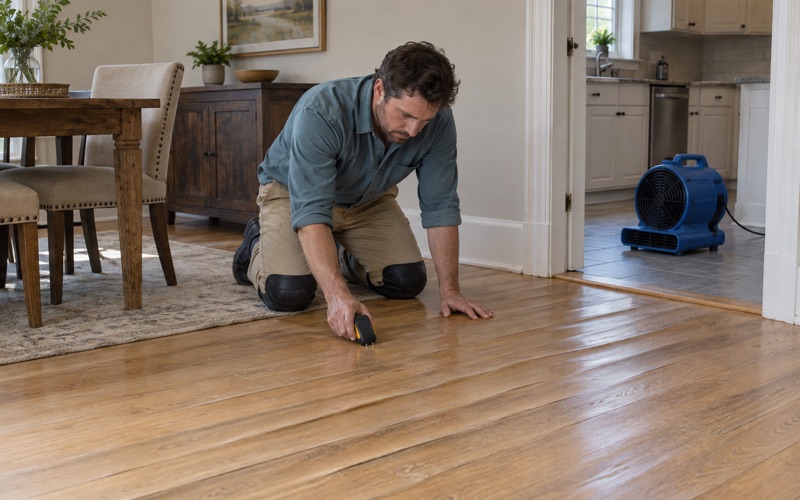
When the damage came from a leak or a fire, we document it with photos and moisture readings an adjuster can use, and we write the repair scope as matching board and finish rather than a patch. That keeps an insurance claim and a turnover on the same page.
- 20+ Years in Wood Flooring
- Free Written Estimates
- Room-by-Room Schedules