Alhambra Wood Flooring brings more than 20 years of hands-on work to wood-flooring in Highland Park, and most of the floors we are called to look at here are ones their owners want to keep. We repair, refinish and match hardwood before we ever suggest tearing it out, because a sound old board is usually worth more to the house than anything we could put down in its place.
A first visit starts with questions rather than a price. We want to know roughly when the house was built, what finish is on the boards, whether the floor moves underfoot and what caused any damaged area. Those answers decide whether a room needs a screen and recoat, a full sand, a weave-in repair or new boards, and they keep the quote tied to the floor in front of us.
The sections below cover how we approach the neighborhood’s older houses, how matching works when a run of original flooring has to be rebuilt, and which checks come before any sander is switched on. The last part covers the rest of the work we take on across Highland Park and Garvanza, from stairs to water and smoke losses.
Craftsman Houses Along the Arroyo Seco
An 1886 Tract That Joined Los Angeles in 1895
Highland Park began as a tract laid out in 1886 by George Morgan and Albert Judson, and it was annexed to Los Angeles in 1895, which makes it one of the city’s first subdivisions. Today it is a neighborhood in the city’s Northeast region, known for the Craftsman homes that survive along the Arroyo Seco and for landmarks such as the Lummis House, Sycamore Grove Park and Judson Studios.
That history shows up on the floor. A house that has stood for more than a century has often been through several owners, more than one refinishing job and at least one remodel of a kitchen or bath, and each of those can leave a mark in the wood. Reading those marks before we touch anything is how we avoid sanding away the evidence of what the floor originally was.
What the Census Numbers Say About Age
The Census Bureau does not publish housing figures for the neighborhood itself, so we use ZIP code 90042 as a labeled proxy, knowing it also takes in part of Eagle Rock and does not follow the neighborhood boundary. In the American Community Survey 2024 five-year estimates, table B25034, 40.7 percent of housing units in that ZIP were built in 1939 or earlier.
For us, that figure means the floor we are asked about is very often an original installation in an early-1900s house rather than a later replacement. It also means the boards have probably been sanded at least once already, so the wood remaining above the tongue matters as much as the look of the surface when we decide what a floor can still take.
Why Old Floors Get Matched, Not Replaced
Floors from that era are often narrow tongue and groove boards with a patina no new plank reproduces straight out of the box. Replacing a whole room to fix one damaged corner throws away wood that cannot be bought again. It can also leave a new floor meeting old trim, thresholds and door bottoms that were fitted around the original thickness, which creates a second job nobody planned for.
So our default is to save what is sound and rebuild only what is not. When a customer does want a fresh floor, we still start by documenting what is there, because the decision is easier to make once you know how much usable wood the house is actually holding and what the original installer put down.
Looking for wood-flooring closer to Temple City? See Wood-Flooring in Temple City.
Matching and Repairing Original Boards
Identifying Species, Width and Cut
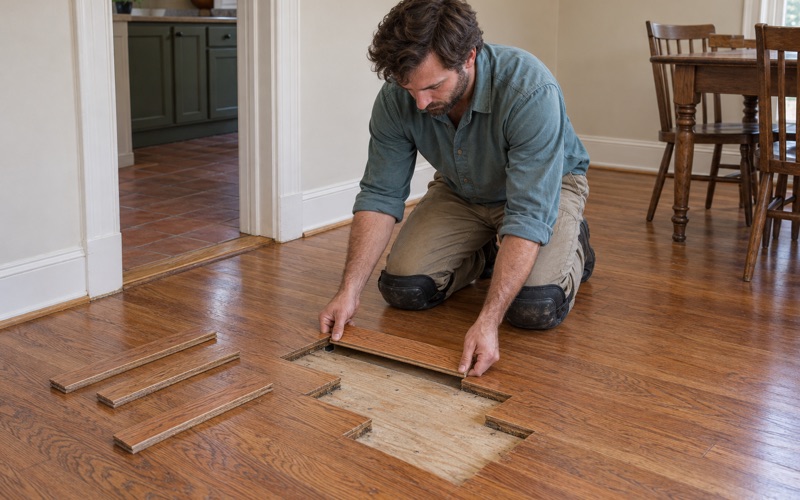
Matching starts with a pulled board or a closet edge where the wood has never met a sander. We identify the species, measure the board width and thickness, and read the grain to tell plainsawn stock from quartersawn or rift sawn. Red oak and white oak can look alike under old finish yet take stain very differently, so a guess at this stage is how a repair ends up visible from across the room.
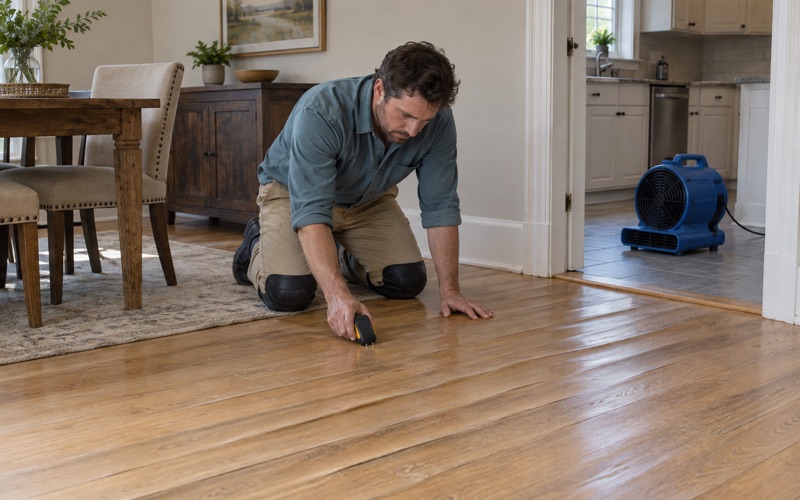
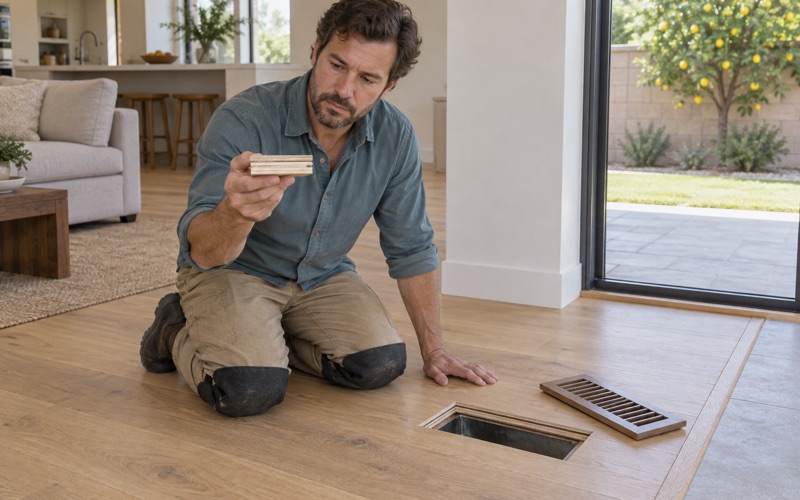
Where the original profile is no longer sold, we look for reclaimed boards or have new stock milled to fit the existing tongue and groove. Replacement wood is brought into the house to acclimate, and we check it with a moisture meter against the surrounding floor so the repair does not shrink away from its neighbors, or push against them, after it goes down.
Weave-In Repairs and Board Replacement
A straight cut line across a floor reads as a patch for as long as the floor lasts. We use a weave-in repair instead, removing damaged boards at staggered lengths and toothing new ones into the existing field so the end joints fall the way the original installer’s did. The same method handles a burn mark, a pet urine stain, a black water stain under a leaking fixture or a doorway worn down to bare wood.
Before any board replacement, we look for small round kick-out holes and piles of pellet-shaped termite frass. Drywood termite evidence is identified or ruled out first. An active colony is a job for a pest control company rather than a flooring crew, and we would rather wait than set new wood down over a problem that will simply work its way into it too.
Floors That Move, Squeak or Slope
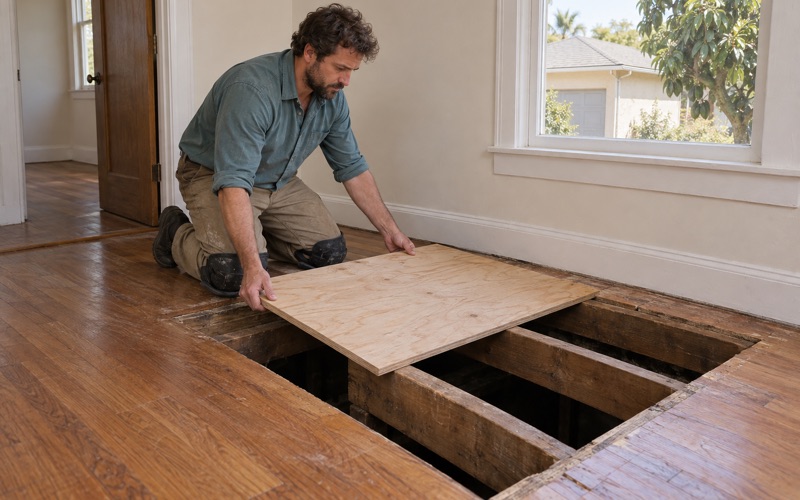
A sagging floor, a bouncy floor or a soft spot near a wall is not something a sander can fix. When a house sits on a raised foundation, we go underneath before quoting, because the cause is often a cracked floor joist, a settled pier post, a failing girder or a section of subfloor that needs a sister joist or fresh fastening from below.
Squeaks and popping usually trace back to boards or fasteners that have loosened over the decades. Some of that can be corrected from above with careful refastening. The rest is better handled from the crawl space, where we can see what the boards are actually resting on and fix the cause instead of hiding the sound for a season.
Sanding, Finishing and the Checks That Come First
Build Year and the Lead-Safe Rule
We confirm the build year before any sanding is scheduled. Homes built before 1978 can carry lead in older paint and finish layers, and renovation work in that housing falls under the federal EPA Renovation, Repair and Painting Rule. Knowing the date up front lets us plan dust containment and cleanup before the first pass rather than after it.
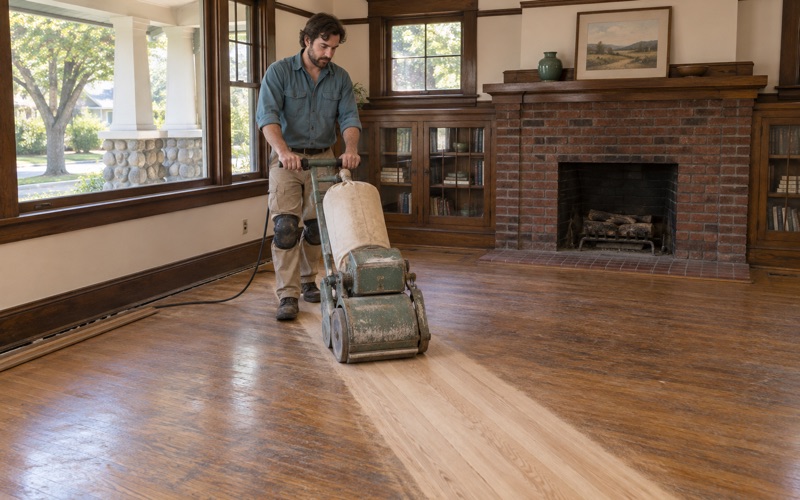
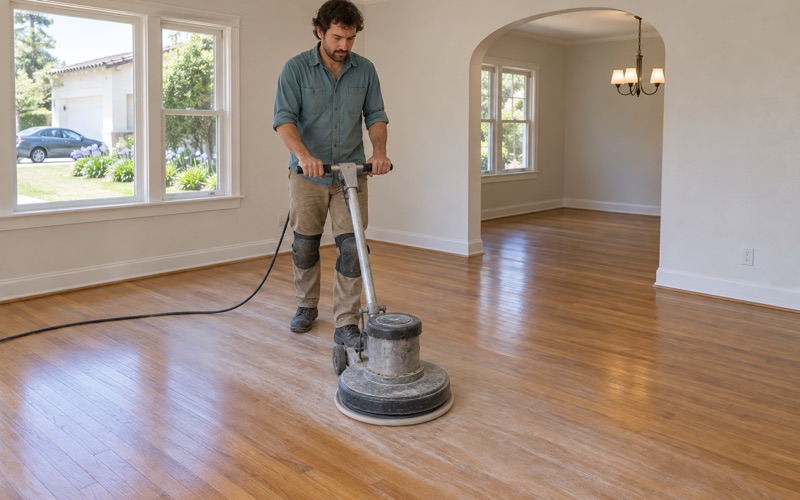
The age of the floor also changes how we sand. On boards that have been refinished before, we use a measured abrasive grit sequence and keep a close eye on the tongue, since sand-through on a thin board cannot be undone. Drum marks, chatter marks and edger swirl are the defects we work hardest to keep off a floor that has already outlasted its earlier crews.
Finishes Chosen for the South Coast Air District
Highland Park sits within the South Coast Air Quality Management District, where Rule 1113 limits wood coatings to 275 grams per liter of volatile organic compounds. We choose waterborne polyurethane, oil-modified polyurethane or hardwax oil from products that are legal to apply here, rather than ordering from a national catalog and hoping the can qualifies.
On an old floor, the choice is as much about appearance as chemistry. Waterborne finishes tend to stay closer to the wood’s natural color, while oil-modified products add the amber tone many owners of an original oak floor expect to see. We coat a sample board with each option and agree on stain and sheen level before a full room is finished.
Screen and Recoat or a Full Sand
Not every tired floor needs to go back to bare wood. If the finish is worn but intact, with no gray stain, finish peeling or worn-through finish in the traffic lanes, a screen and recoat can refresh the surface while leaving the board thickness alone. On a floor that has already been sanded several times, that restraint can add years to its life.
When a full sand is the right call, the household gets a written room-by-room schedule showing when furniture, rugs and pets can come back. Cure time and the recoat window differ from one finish to the next, so the dates on that schedule are set by the product going down rather than by a standard promise.
Highland Park-Garvanza and the Rest of Our Work
The Historic Preservation Overlay Zone
Much of the neighborhood lies within the Highland Park-Garvanza Historic Preservation Overlay Zone, a City of Los Angeles overlay administered by the Department of City Planning. The Highland Park Heritage Trust describes it as the largest historic district in the city, with over 2,500 contributing structures, and secondary sources date the zone to 1994, with Garvanza added in 2010.
HPOZ review is directed at exterior features such as facades, windows, doors, porches, roofs and additions. We do not give rulings on what a specific project needs from historic review or permitting. The Department of City Planning and the Los Angeles Department of Building and Safety are the offices to confirm with before work begins, and we are glad to schedule around whatever they tell you.
Owners, Renters and Condo Associations
On the same ZIP 90042 proxy, table B25003 puts owner-occupied households at 47.4 percent, so slightly fewer than half of homes there are lived in by their owners. That mix reaches us as original floors in single-family houses and as units in multi-family buildings, each with its own set of decisions about timing and access.
For condos and townhomes, we check the association’s own rules for hard flooring and acoustic underlayment before any material is ordered. In a detached Craftsman, the conversation is usually about how much the original floor can still take and which rooms can be closed off while the finish cures.
Stairs, Water Losses and New Installation
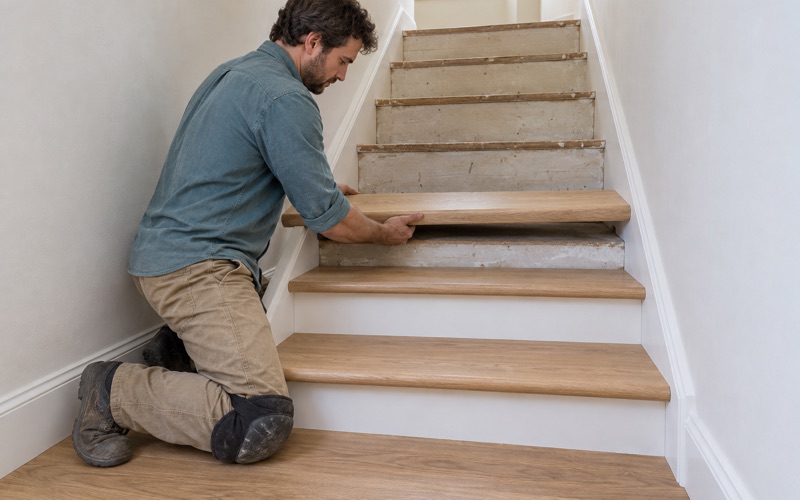
Stairs are quoted by the tread, riser and nosing rather than folded into a square-foot price, because stair work is built differently from open floor. That covers refinishing original stair treads, replacing a split landing tread and fitting retrofit treads where the old ones are past saving.
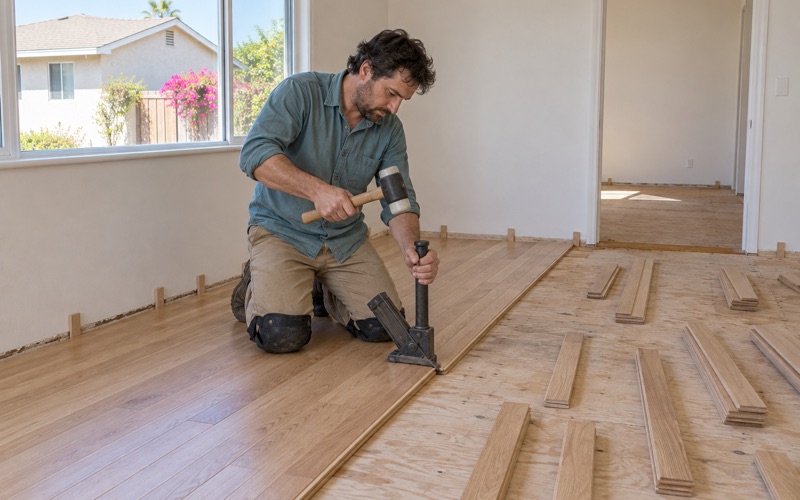
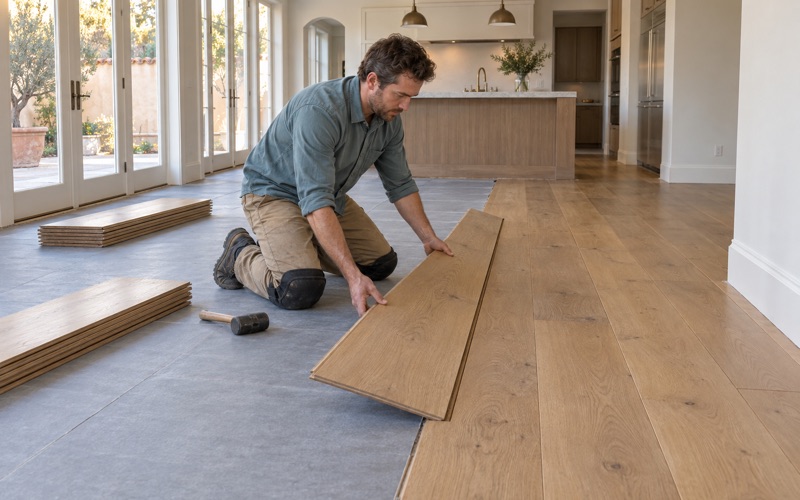
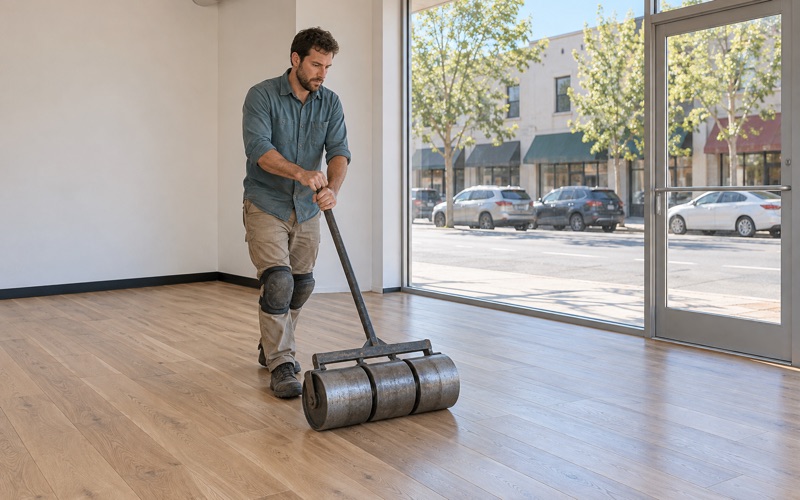
Water and smoke losses are documented with photos and moisture readings an adjuster can use, and we write the repair scope as matching board and finish rather than a patch. For new installation, we measure the wear layer thickness on any engineered hardwood before promising a future sanding, and we choose nail-down, glue-down or floating installation to suit the room it is going into.
- 20+ Years in Wood Flooring
- Free Written Estimates
- Room-by-Room Schedules