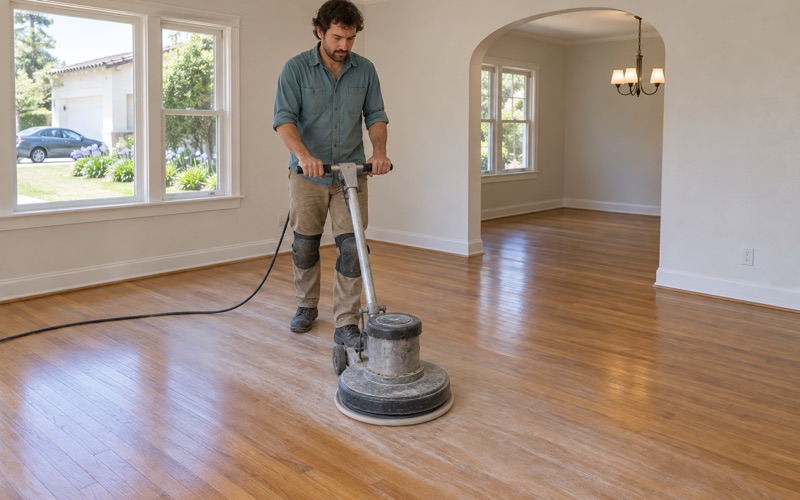
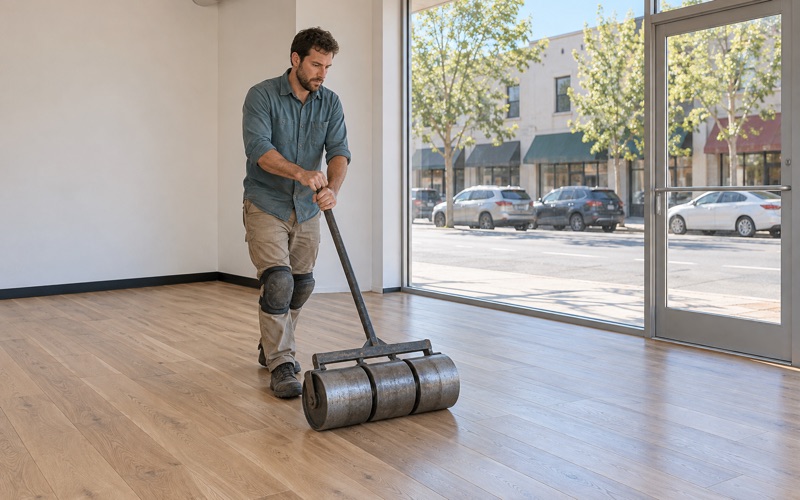
Alhambra Wood Flooring takes on wood-flooring in Hermosa Beach with more than 20 years in the trade behind every quote, whether the job is one cupped board, a worn stair run or a full unit sanded between tenancies. We refinish, repair and replace solid and engineered hardwood, and we plan each job around who lives on the other side of the wall.
That last part carries real weight in a city like this one. A floor job in a duplex or a small building touches more than one household, and sometimes more than one owner. Noise, dust, drying time and access to shared entries all need a plan before the first sander is switched on, so we write that plan down and share it with everyone it affects.
Before we promise a result, we look at what is actually there. That means measuring the wear layer on an engineered floor, confirming the build year before any sanding, and checking under a raised floor when it bounces or sags. The sections below explain how those steps play out in the kinds of buildings this beach city holds.
Wood Floors in Duplexes, Triplexes and Small Beach Buildings
How Much of the Housing Shares Walls
According to the Census Bureau’s 2024 five-year American Community Survey, Hermosa Beach has 10,385 housing units. Of those, 1,076 sit in two-unit buildings and 1,074 in buildings with three or four units, which comes to 2,150 homes, or about one in five. Another 961 are one-unit attached homes, so a large share of floors here have a neighbor directly beside them.
Those numbers shape our scheduling more than our materials. A buckled strip in a duplex hallway is the same repair it would be in a detached house, but the sanding day, the finish odor and the cure time now reach a second household. We treat that neighbor as part of the job rather than an afterthought.
Noise, Dust and Shared Entries
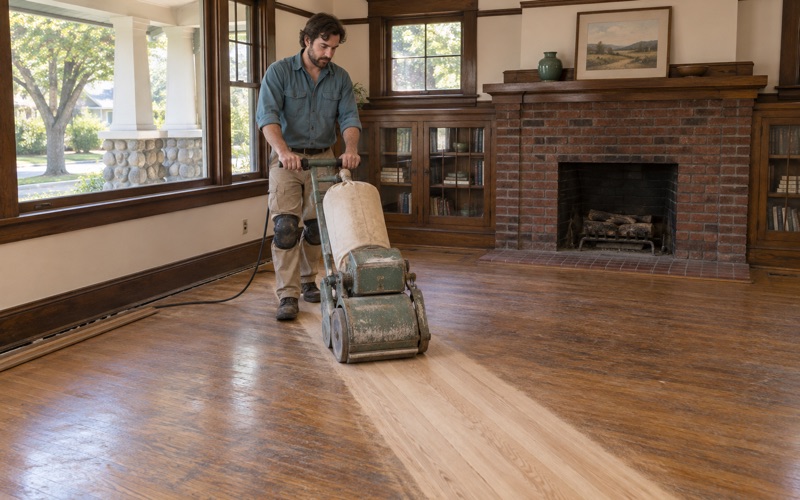
Drum sanders and edgers are loud, and fine dust travels through shared stairwells and doors that do not seal. We use dust containment on sanding jobs and run the heaviest cuts during the hours agreed with the building. When a hallway or landing is shared, we sequence the work so nobody loses access to their own front door.
For upper units, the conversation often turns to sound. Acoustic underlayment and impact insulation class come up whenever a floating floor or a glue-down replacement goes over a unit below. We don’t quote a rating from memory; we check the product data and the building’s own rules for hard flooring and underlayment before any material is ordered.
Small Lots and Buildings of Different Ages
Hermosa Beach is compact, roughly 15 blocks east to west and 40 blocks north to south, and much of it is built out. A California Coastal Commission staff report from March 2026 describes a circa-1953 triplex at 2464 Hermosa Avenue, about 270 feet inland of the beach, proposed for replacement by a three-story structure over a partial basement.
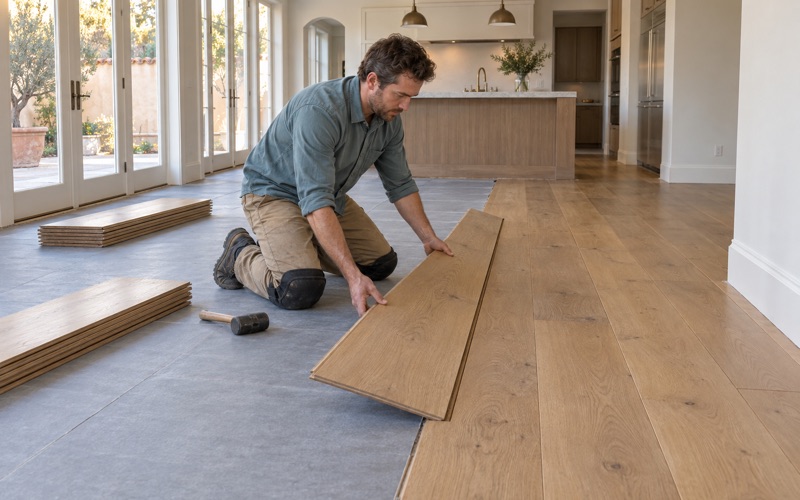
That report also notes that most surrounding parcels hold two-to-three-story single-family and multi-family homes. Small-lot redevelopment like that puts a new building beside one that has stood for decades. Floors in those two buildings can call for very different approaches, from a glue-down engineered plank over a slab to an old board subfloor that needs attention before any sanding.
Looking for wood-flooring closer to Lomita? See Wood-Flooring in Lomita.
Owner Units and Rental Units Under One Roof
An Almost Even Split
Of the 8,934 occupied homes in Hermosa Beach, 4,521 are owner-occupied, or 50.6 percent, and 4,413 are rented, or 49.4 percent. For floor work, that split means the person calling us may be a landlord or property manager just as easily as someone planning to live on the new finish for the next decade.
Renters also lean toward small buildings. The survey counts 1,609 renter households, 36.5 percent of all renters, in buildings with two to four units, while most owners live in detached homes. In a building that holds both an owner’s unit and a rental, floor decisions carry two sets of priorities, and we ask about both before we write a scope.
Rental Turnovers
For a rental, the window between move-out and move-in is usually the whole schedule. We plan sanding, finish coats and cure time around those two dates and record the floor condition on both sides of the tenancy. That record helps separate normal wear and tear from damage when a security deposit deduction is discussed.
A screen and recoat is often the right answer for a turnover when the finish is dull but intact, because it cures quickly and leaves the wood itself untouched. Pet urine stains, gray stains that have reached the fibers and worn-through finish in traffic lanes usually need a full sand or a board replacement instead, and we say which before the tenant leaves.
Owner Units Meant to Last
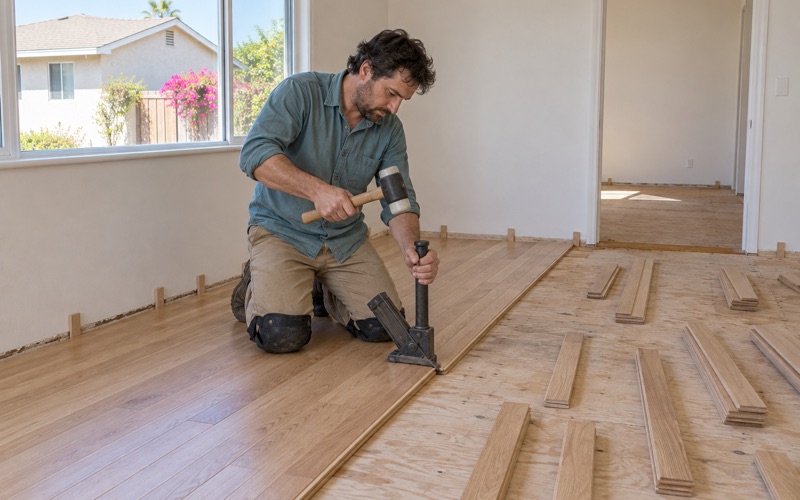
Owners living in their unit tend to ask different questions: which species and sheen level will hold up, whether a herringbone or wide plank layout suits the room, and how to keep squeaks and popping out of a new floor. White oak, red oak and hickory each carry a different Janka hardness rating, and the right pick depends on traffic, pets and light.
A household in a shared building also needs to know when rooms come back into use. We hand over a written room-by-room schedule showing when furniture, rugs and pets can return, so the owner can plan the week and the neighbor across the wall knows what to expect on each day of the job.
Older Beach Units From Before 1940
What the Build Years Show
The same survey dates 1,160 units, or 11.2 percent of the city’s housing, to 1939 or earlier. Building continued through every decade after that, with 18.7 percent of units built in the 1950s and 17.4 percent in the 1970s. Because older and later buildings sit side by side, we never judge a floor’s age from the street.
Build Year Before Sanding
We confirm the build year before any sanding goes on the calendar. Most of Hermosa Beach’s housing was built before 1980, and paint and finish layers in pre-1978 housing are handled under the EPA Renovation, Repair and Painting Rule. Knowing the year early tells us how containment, cleanup and scheduling need to work before a drum sander touches the floor.
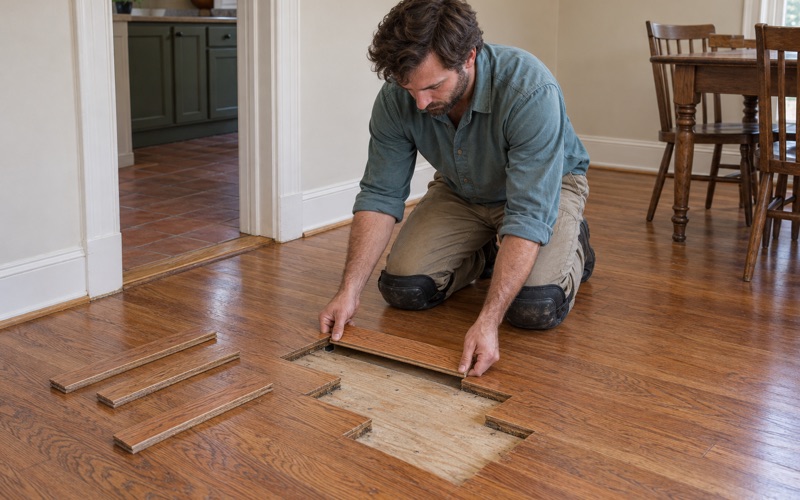
Old solid floors carry their own risks. Decades of sanding can thin a tongue and groove strip until the tongue shows, and earlier sand-through, chatter marks or drum marks may already be there. We look for those before quoting, because a board replacement or weave-in repair sometimes has to come before a full refinish can produce an even color.
Under a Raised Floor
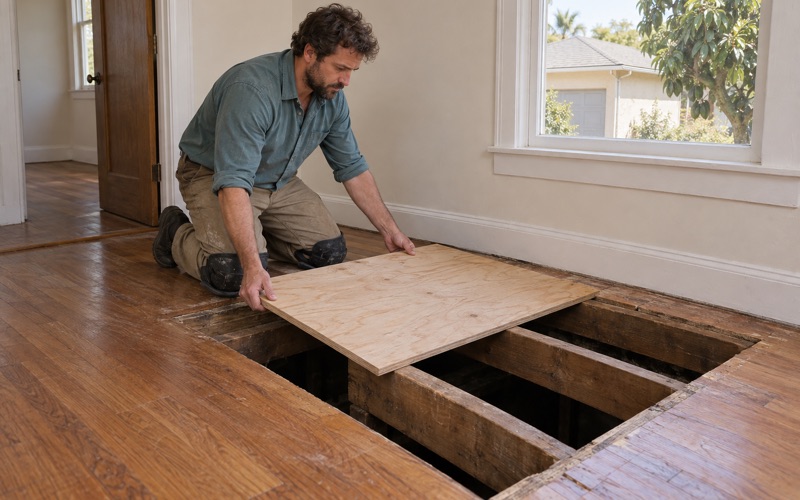
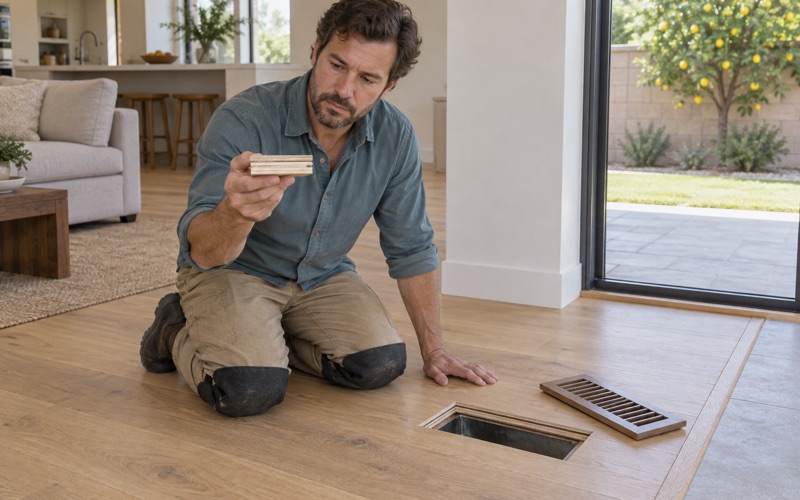
An older unit may sit on a raised foundation with a crawl space rather than a slab-on-grade. When a floor feels bouncy, slopes or has a soft spot, we check from underneath before quoting, because the cause is often a floor joist, girder, pier post or board subfloor rather than the wood on top. Sanding would only hide that problem.
We also look for drywood termite evidence. Small round kick-out holes and piles of termite frass get identified or ruled out before any board is replaced, so new flooring does not go down over an active colony. If the finding points toward treatment, that decision belongs to a pest professional and their Wood Destroying Pests and Organisms Inspection Report.
Coastal Permitting, Finishes and Choosing the Right Work
What the Coastal Picture Means for a Remodel
The California Coastal Commission certified Hermosa Beach’s Land Use Plan in 1982, but the city has no certified Local Coastal Program. Because of that, the Commission applies the Chapter 3 policies of the Coastal Act as the standard of review for coastal development permits in the city, with the certified Land Use Plan used as guidance.
A floor job on its own is one thing; a floor job inside a larger remodel, addition or rebuild is another. We don’t give permit answers. When flooring is part of a bigger project, we ask the owner to confirm the scope with the City of Hermosa Beach Community Development Department and, where it applies, the Commission, and we schedule our work around what they decide.
Finishes Chosen for the South Coast Air District
Our finish work here follows South Coast Air Quality Management District Rule 1113, which sets the wood coatings VOC limit at 275 grams per liter. We choose waterborne polyurethane, oil-modified polyurethane, hardwax oil and sanding sealer from products legal to apply in the district, not from a national catalog. Cure time and recoat window then set the room-by-room schedule.
Refinish, Repair or Replace in a Shared Building
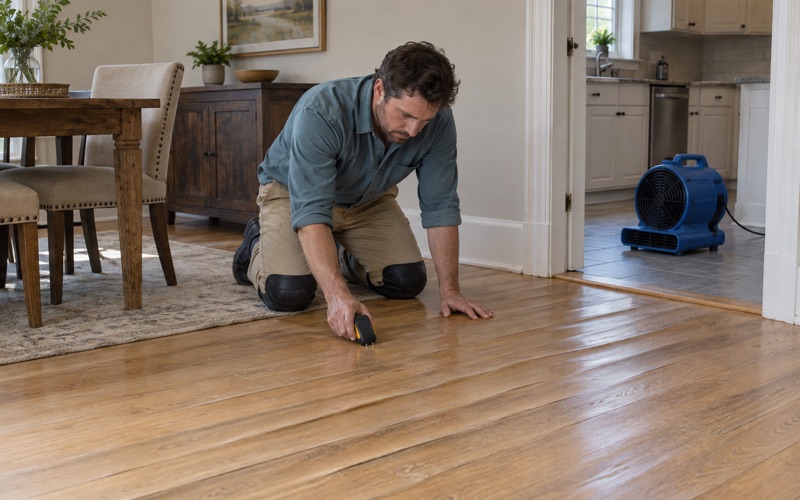
On an engineered floor, we measure wear layer thickness before promising a sanding, since a thin veneer can take a screen and recoat but not a full sand. On solid hardwood, cupping, crowning and seasonal gapping get read with a moisture meter first, because a cupped floor sanded flat before it dries can crown later.
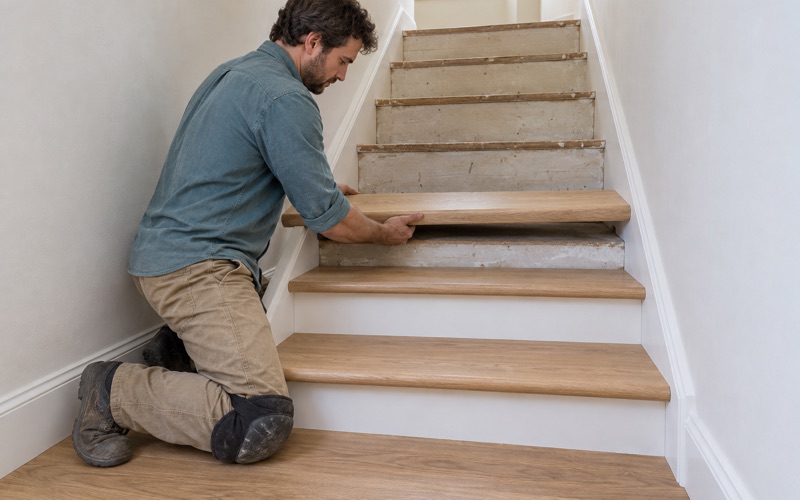
Replacement makes sense when boards are delaminating, buckled beyond repair or soaked by a black water loss. For water or smoke losses, we document the damage with photos and moisture readings an adjuster can use, and we write the repair as matching board and finish rather than a patch. Stairs are quoted separately, by the tread, riser and nosing.
- 20+ Years in Wood Flooring
- Free Written Estimates
- Room-by-Room Schedules