Alhambra Wood Flooring offers hardwood floor recoating in Alhambra, CA for floors whose finish has dulled and scuffed but whose wood is still in good shape. In more than 20 years on wood floors we have found that a well-timed recoat is the least expensive way to keep a hardwood floor looking good, and that it protects the wood so a full sanding can be put off for years.
The catch is that a recoat only works on the right floor. A new coat over wax, polish residue or a worn-through finish fails, often by peeling within weeks. So before we recommend recoating, we look at the wear, test for contamination and check adhesion on your actual floor. If a recoat is not the right answer, we tell you before any finish is spent on it.
Is A Recoat Right For Your Floor?
Floors That Are Good Candidates
The best candidates have a finish that looks dull, hazy with fine scratches, or worn to a lower sheen in traffic areas, but still covers the wood everywhere. Kitchens, hallways and family rooms often reach this stage long before the rest of the house. Recoating at this point restores the look and puts a fresh layer of protection over the wood before the finish fails completely.
Damage A Recoat Cannot Fix
A recoat renews only the surface layer, so it cannot remove gray or black stains in the wood, deep scratches and gouges, pet damage, or areas where the finish has worn through to bare wood. Recoating over those problems only seals them under a shiny coat. Floors with that kind of damage need targeted repairs or a full sanding and refinish instead, and we explain which applies to your floor.
Testing For Wax, Polish And Adhesion
Many floors have been treated with wax, oil soaps or silicone-based polishes over the years, and those products prevent new finish from bonding. We clean a test area, abrade it and apply finish, then check how well it holds once cured. When a test shows poor adhesion, we either use a specialized preparation process or recommend a full sanding, rather than risking a floor full of peeling finish.
How We Screen And Recoat A Hardwood Floor
Deep Cleaning And Preparation
Preparation is most of the work in a successful recoat. We move furniture out, vacuum thoroughly, and clean the floor with products that remove grime and residue without leaving anything behind. Any loose boards are secured and small repairs are handled before abrading, since the finish will lock in whatever condition the floor is in when the coat goes down.
Screening Or Buffing The Existing Finish
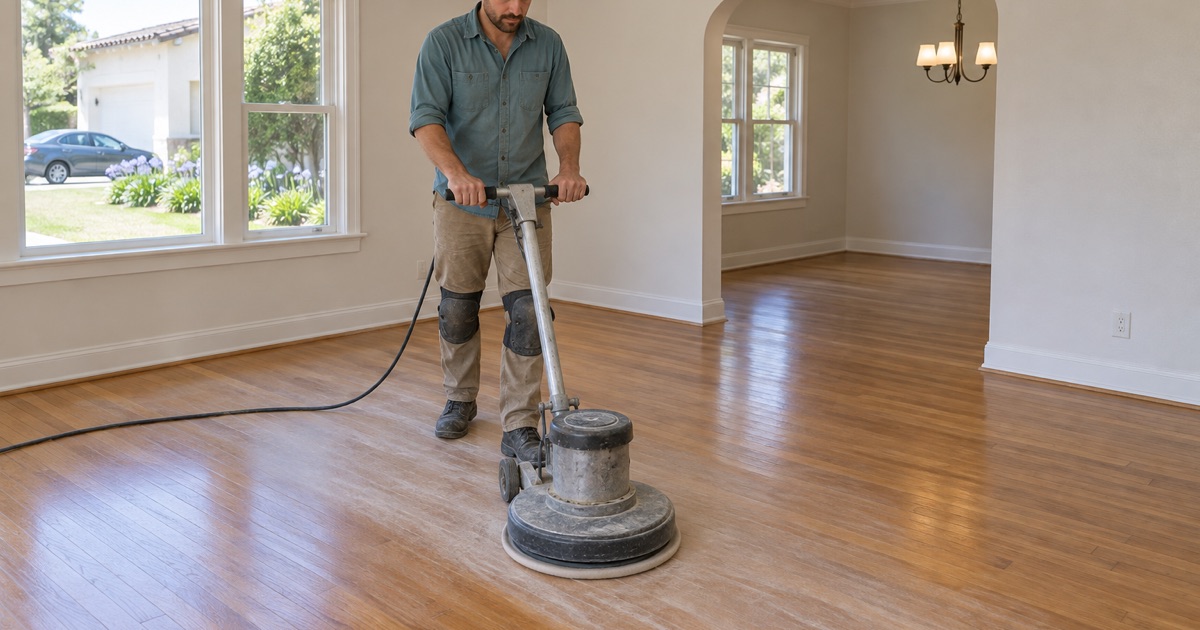
Next, the existing finish is abraded with a buffer fitted with a screen or abrasive pad, sometimes called a screen and recoat or a buff and coat. This step dulls the old finish evenly and creates the fine texture a new coat needs to grip. It does not cut into the wood, which is why the process is quick and why it preserves the wood for future refinishing.
Applying The New Coat
After the dust is removed, we apply a fresh coat of finish matched to the existing one where possible. A floor originally finished with oil-modified polyurethane can often be recoated with a compatible waterborne product after testing, and all of our finishes meet the South Coast air district’s 275 grams per liter wood coatings limit. The sheen can be adjusted at this stage if you want a more matte or glossier look.
The coat is applied in even passes working toward the exit, keeping a wet edge so there are no lap marks, and the room is closed off until the finish has dried. Dust is the enemy of a clean recoat, so we keep doors, vents and fans managed during application and do not let anyone walk through before the surface is ready.
Recoating For Homes, Rentals And Businesses
Occupied Homes
A recoat is much easier to live through than a full refinish, with far less dust and a shorter disruption. We usually work one area at a time, and your written schedule shows when you can walk on each room, when furniture can come back and when rugs are safe to put down. Pets should stay off the new coat until it has hardened enough to resist claws.
Rental Turnovers
Between tenants, a recoat can make a rental floor look cared for without taking up the whole vacancy. We schedule around the move-out and move-in dates, photograph the floor condition before and after, and time the coat so it has cured before the next tenant’s furniture arrives. For many rentals, recoating at each turnover keeps the floors from ever needing a full sanding.
Maintenance Recoats For Commercial Floors
Shops, offices and restaurants with wood floors wear finish quickly in entries and aisles. A regular recoat schedule keeps those areas from wearing through to bare wood, which is what forces a costly full sanding and a longer closure. We can recoat after hours or on closed days, so the business stays open while the floor stays protected.
- 20+ Years in Wood Flooring
- Free Written Estimates
- Room-by-Room Schedules