Alhambra Wood Flooring approaches wood-flooring in El Segundo with more than 20 years in the trade and one question that carries extra weight here: what the floor does to the sound inside a room. We refinish, repair and replace hardwood, and we treat noise as part of choosing a material rather than as an afterthought once the boards are down.
Most floor projects start with something visible. A finish has worn through in a hallway, a pet urine stain has darkened the corner of a bedroom, or boards near a doorway have started to squeak and pop underfoot. Those are the problems we measure and quote, and each one has a repair path that depends on the wood, its remaining thickness and the finish already on it.
What sets this city apart is the building around the floor. Much of the housing is older, most occupied homes are rented, and a sizable share sit in small multi-unit buildings where a hard surface upstairs becomes a sound problem downstairs. The sections below cover how those conditions change the work, from noise to scheduling to the choice between a new finish and a new floor.
Aircraft Noise Programs and Where They Stop
What the Airport Program Treats
LAX forms the northern boundary of El Segundo, and aircraft noise has shaped how many homes here have been retrofitted. The LAX Residential Sound Insulation Program, run by Los Angeles World Airports with the FAA, serves previously untreated units near the airport. It may retrofit exterior doors and windows, install a ventilation system and add other miscellaneous treatments.
The program’s stated goal is an improved interior noise level of at least five decibels, and homes inside higher-noise contours are treated first. Floors are not on its list. The work focuses on the openings in a building’s shell, where outside sound gets in, and leaves the surfaces inside each room to whoever owns the home.
A City Program That Began in 1993
The effort did not start with the airport authority. The City of El Segundo established its own Residential Sound Insulation Program in 1993. As the city described it in 2006, typical improvements were acoustically rated replacement windows and exterior doors, added attic insulation, fireplace glass doors and ventilation systems.
Across both versions the pattern holds: the work targeted the envelope of the house, not its finished floors. An owner who went through either program may have quieter windows and better sealed doors, yet the hardwood, carpet or vinyl in each room was left as it was, along with any decision about replacing it.
What That Leaves for the Owner
We raise this because owners sometimes assume the program handled noise in full. It addressed sound coming in from outside. Sound generated inside, such as footsteps, dropped objects and chairs dragged across a hard surface, is a different problem, and it is shaped heavily by the flooring and what sits beneath it.
We never suggest the airport program will pay for a floor, because floors are not part of its scope. What we can do is lay out how different floor choices behave once outside noise has been reduced, so the interior decision gets made on purpose instead of by default.
Looking for wood-flooring closer to Hermosa Beach? See Hermosa Beach Wood-Flooring.
Floors as the Interior Noise Question
Hard Surfaces and the Unit Below
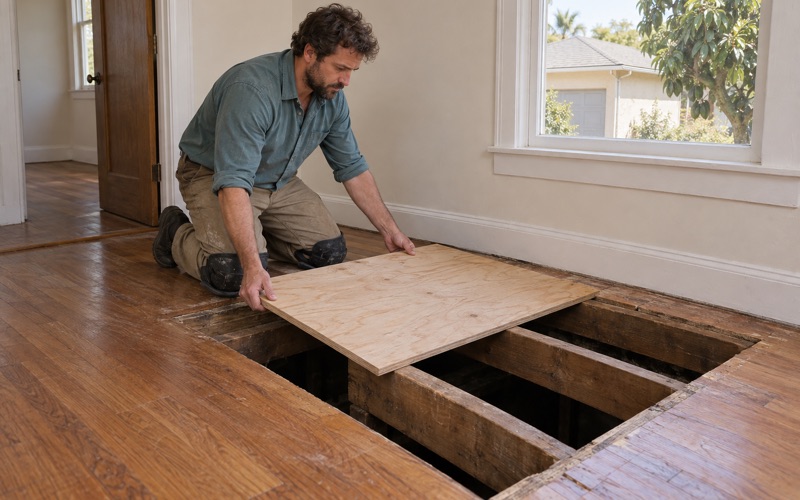
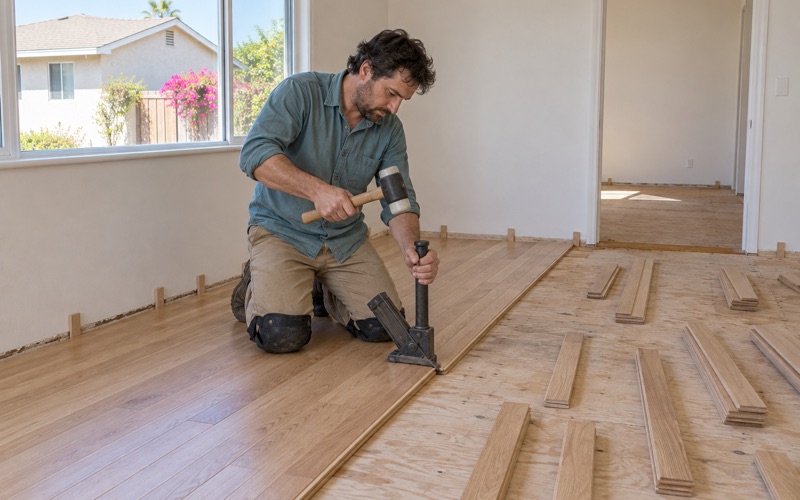
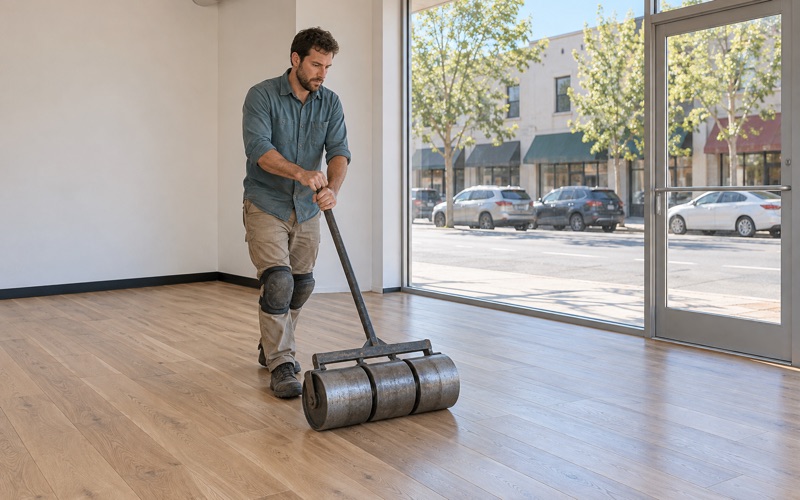
In a detached house, a hard floor mostly affects the room it sits in. In a building with neighbors below, footfall travels through the structure and becomes the downstairs household’s ceiling noise. Nail-down solid hardwood, glue-down engineered hardwood and a floating floor each carry that sound differently, and the installation method matters as much as the species.
That is why we ask early about who lives underneath. A floor that suits an owner’s taste can still draw complaints if it goes into an upstairs unit without attention to what is beneath it. We would rather settle that question at the estimate than after a neighbor has started to complain.
Underlayment and Association Rules
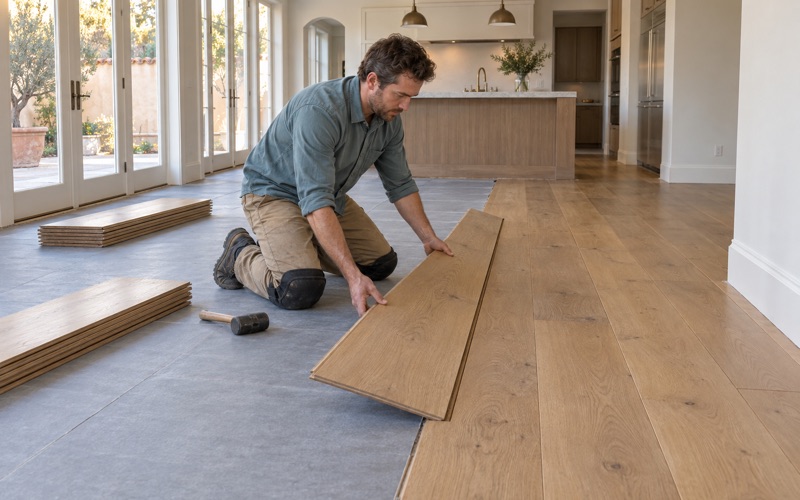
Acoustic underlayment is the usual tool for reducing impact sound under a hard floor, but its effect depends on the whole assembly, from the subfloor and the ceiling below to the flooring on top. We do not quote a single sound figure for a floor, because a number that holds in one building may not hold in the next.
Condominium and townhome associations often write their own requirements for hard flooring and underlayment. Before we order material for a unit in an association, we check its rules and match the product to them. Getting that wrong can mean pulling up a finished floor, which is the most expensive way to learn what the rules said.
Tradeoffs We Lay Out First
For a noise-sensitive room we weigh several options together. A floating engineered floor over underlayment behaves differently underfoot from nailed solid wood. Area rugs soften a hallway without changing the floor at all. Refinishing an existing floor keeps the assembly as it is, which adds no new noise risk but also brings no improvement for the unit below.
We also consider how each space is used. A bedroom over a neighbor’s living room is a different case from a ground-floor kitchen. Working through those questions room by room lets an owner put money where the noise actually matters, rather than treating the whole home as one decision.
Mid-Century El Segundo Floors, 1940s Through the 1960s
El Segundo took its name from Standard Oil’s second West Coast refinery, built after an 840-acre purchase in 1911, and the city incorporated in 1917. Roughly three quarters of its land is now dedicated to industrial and commercial uses, which concentrates homes in a comparatively small residential area.
Much of that housing dates from a narrow window. Of the city’s 7,889 housing units, 4,271, or 54.1 percent, were built between 1940 and 1969, with the 1960s alone accounting for 21.4 percent. Only 13 units were built in 2020 or later, so most floor jobs here involve a floor that has already absorbed decades of wear.
Checking How Much Wood Is Left
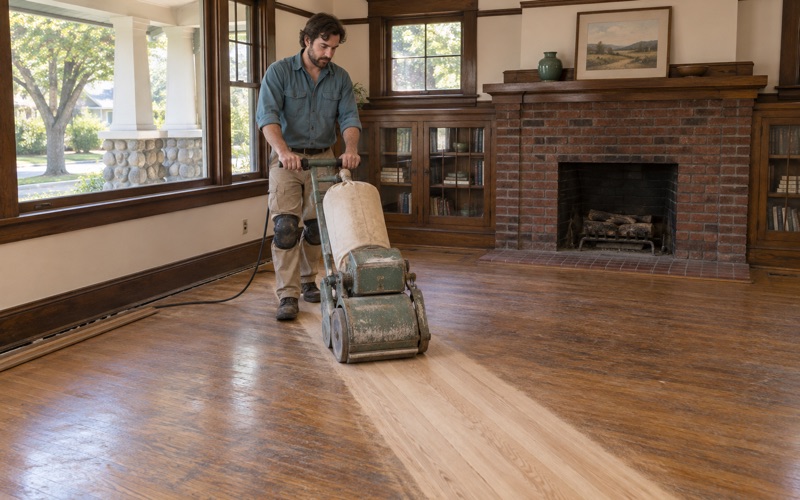
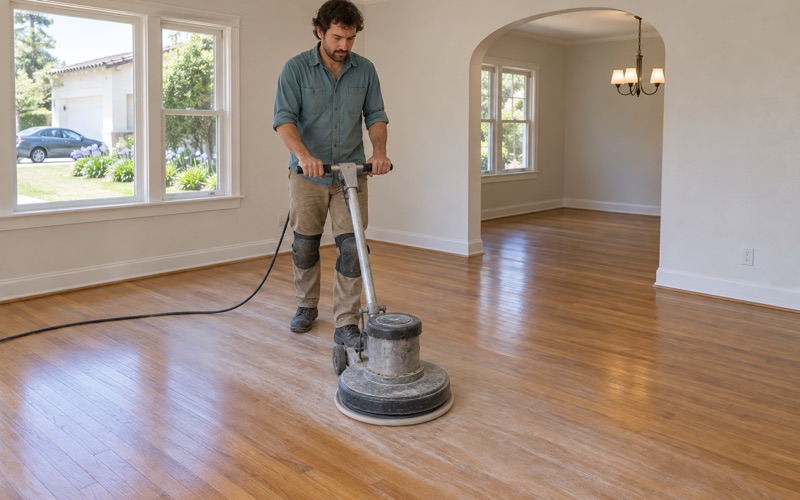
On an older solid hardwood floor, the first thing we measure is how much wood remains above the tongue. A floor sanded several times over the decades may still have plenty of life, or it may be close to exposing fasteners. That measurement decides whether a full sand is safe or whether a screen and recoat is the better call.
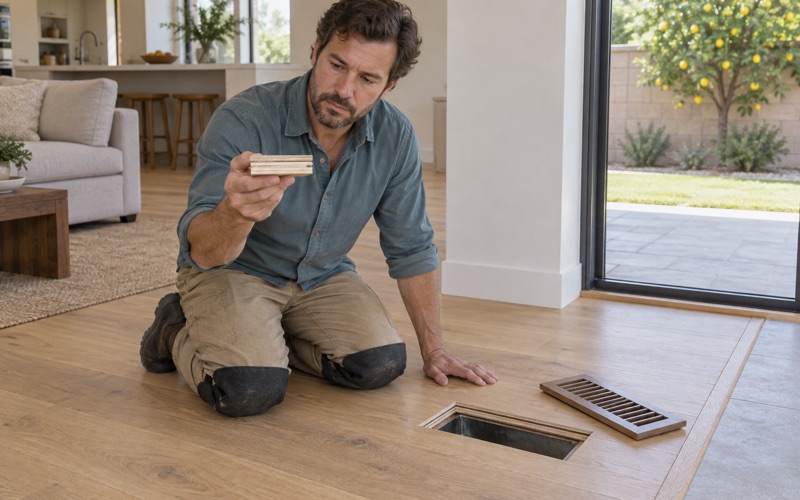
Engineered hardwood from later remodels gets the same scrutiny. We measure the wear layer before promising a sanding, since a thin veneer can accept a screen and recoat but not a full sand. Sand-through on an engineered board cannot be fixed with more finish, only with board replacement, so we check first.
Wear Patterns in Older Rooms
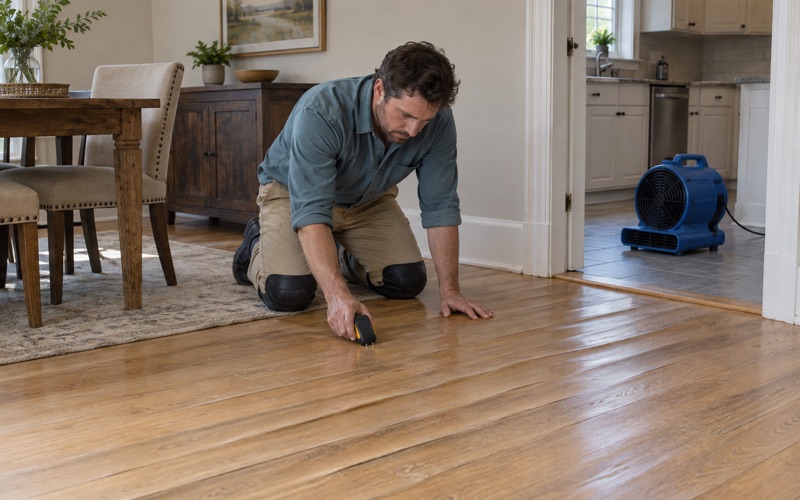
Floors from these decades tend to show their age in recognizable ways. Common problems include worn-through finish in traffic paths, gray stain and black water stain near kitchens and bathrooms, and pet urine stain in bedrooms. Old drum marks and chatter marks from past sanding can also surface under a new coat, which is why the abrasive grit sequence matters.
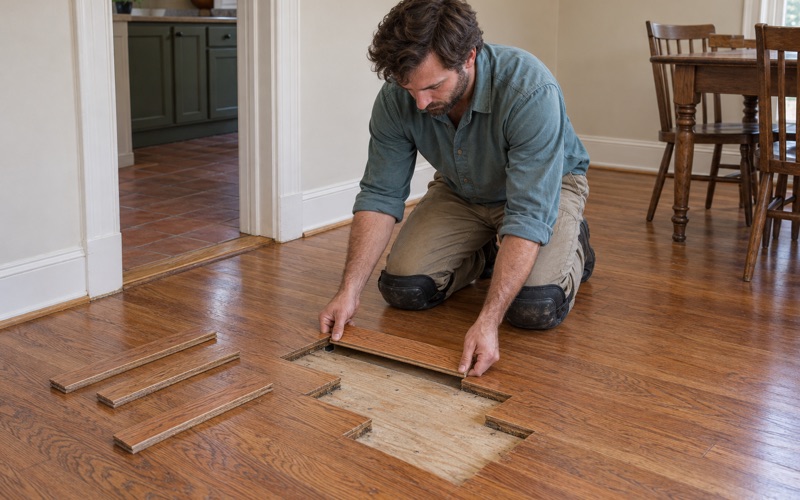
Some damage sands out and some does not. A gray stain often lifts with sanding, while a black water stain has usually gone too deep, and the fix is a weave-in repair with matching boards. We scope that work as matching board and finish rather than a patch, so the repaired area reads as part of the original floor.
Scheduling and Choosing Work in Small Rental Buildings
Renters occupy 57.5 percent of the city’s occupied homes, 4,275 of 7,437 units, and 1,438 of those renter households live in buildings of five to nine units. Floor work in that setting has to fit around leases, neighbors and shared walls, which changes how we plan a job more than it changes the sanding itself.
Working Around Move-Out and Move-In
A turnover is often the best window for a full refinish, because the unit is empty and the finish can cure without furniture or foot traffic. We schedule around the move-out and move-in dates and record the floor condition on both sides of the tenancy, which helps an owner separate normal wear and tear from damage.
In an occupied building, we also plan for the people next door. Sanding is loud, so we talk through working hours with the owner or manager before starting. Dust containment and dustless sanding equipment help keep shared hallways clean, though no setup removes every trace of dust in an older building.
Refinishing or Replacing an Older Unit
Refinishing is usually the less disruptive choice when the wood has sanding life left and the damage is limited to finish wear and surface stains. It keeps the existing assembly, adds no height at doorways and avoids new reducers or T-molding transitions. Between tenants, a screen and recoat can refresh a sound finish in a short window.
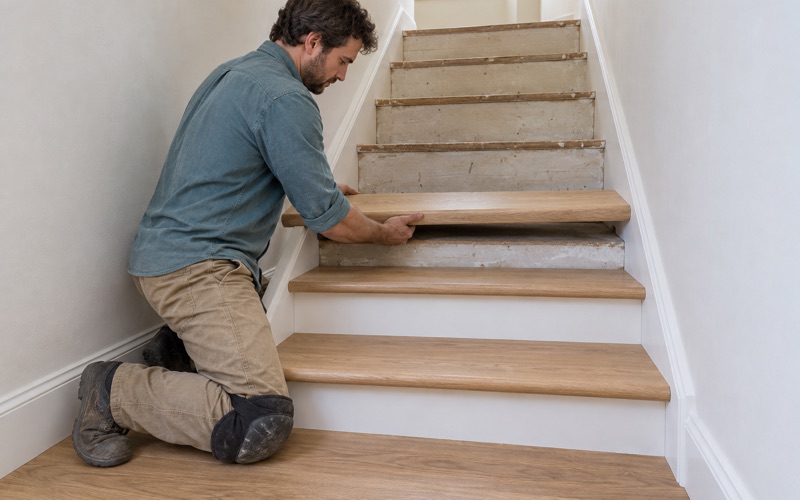
Replacement makes sense when boards are too thin to sand, when stains have gone through the wood, or when an owner wants a quieter assembly for an upstairs unit. It takes longer and may bring association rules into play. We price stairs separately by tread, riser and nosing rather than folding them into a square-foot rate.
A Written Schedule for the Unit
We put the timeline in writing, room by room, showing when furniture, rugs and pets can come back. That matters to an owner coordinating a new tenant’s arrival and to a household living in the unit during the work. Cure time varies by product, so the schedule reflects the finish actually chosen.
Finish choice feeds straight into that schedule. We select from products legal to apply in the South Coast Air Quality Management District, where SCAQMD Rule 1113 sets the wood coatings limit at 275 grams per liter, rather than from a national catalog. Waterborne polyurethane and other compliant finishes differ in sheen level, cure time and recoat window.
- 20+ Years in Wood Flooring
- Free Written Estimates
- Room-by-Room Schedules