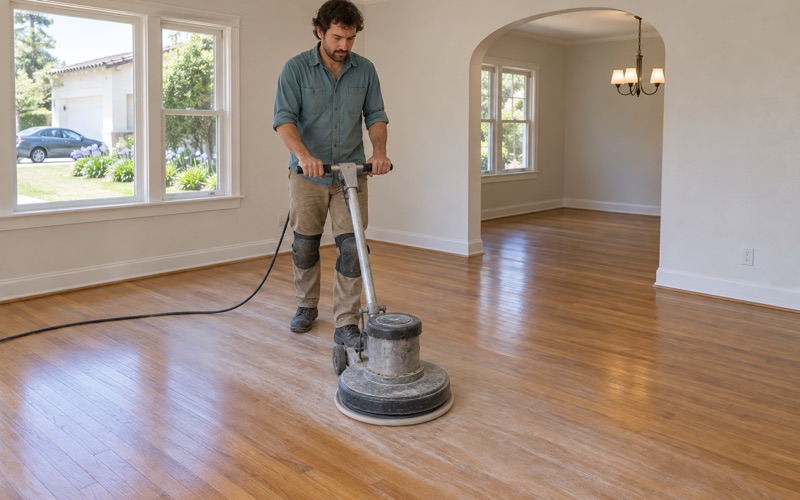
Alhambra Wood Flooring handles wood-flooring in El Monte for owners, landlords and tenants alike, drawing on more than 20 years of sanding, repairing and installing hardwood. The work covers the full run of the trade: refinishing tired oak, replacing damaged boards with matching stock, rebuilding stairs and laying new solid or engineered floors. Every job starts with the floor that is actually there, not a price sheet written for some other house.
Before we sand anything, we confirm the year the home was built. Paint and finish layers from before 1978 are handled under the federal lead-safe renovation rule, so the build year changes how a room is prepared, contained and cleaned. On a raised floor, we also look underneath first, since a bouncy or sagging spot is often a joist, post or subfloor problem that fresh finish would only cover up.
The finishes we apply are chosen from products legal in the South Coast air district, where the wood coatings limit sits at 275 grams per liter. Each quote comes with a written, room-by-room schedule showing when rugs, furniture and pets can return. That schedule matters as much to a tenant moving in next week as it does to an owner living in the house during the work.
El Monte’s Older Bungalows and Revival Houses
Craftsman and Spanish Colonial Floors
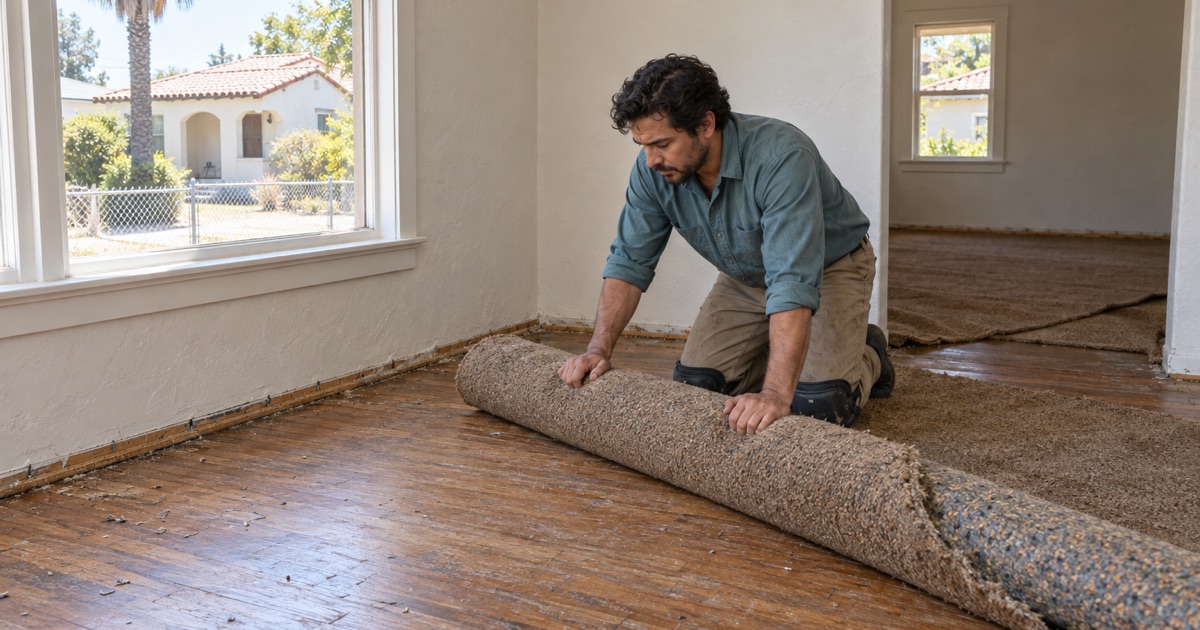
El Monte is a city in Los Angeles County, in the San Gabriel Valley east of Los Angeles, and part of its housing is older than many visitors expect. The city’s own General Plan, in its Community Design Element, notes that several neighborhoods contain intact examples of early-1900s revival styles, including Spanish Colonial houses and Craftsman bungalows. Those are the homes where an original floor may still sit under carpet or old finish.
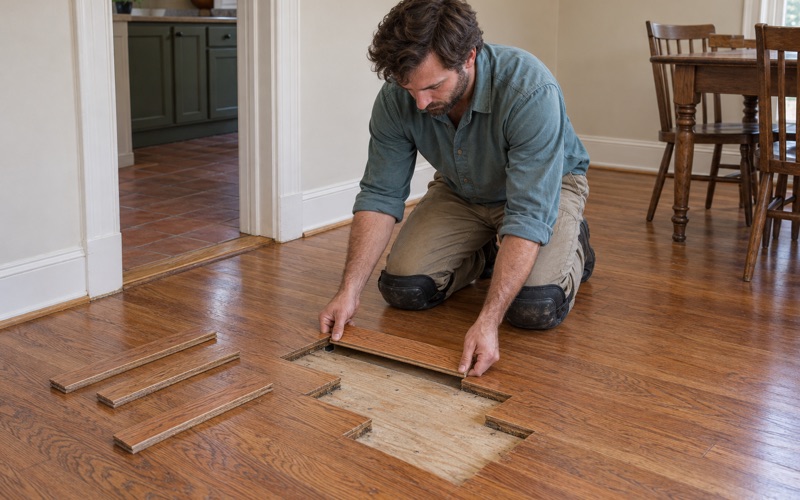
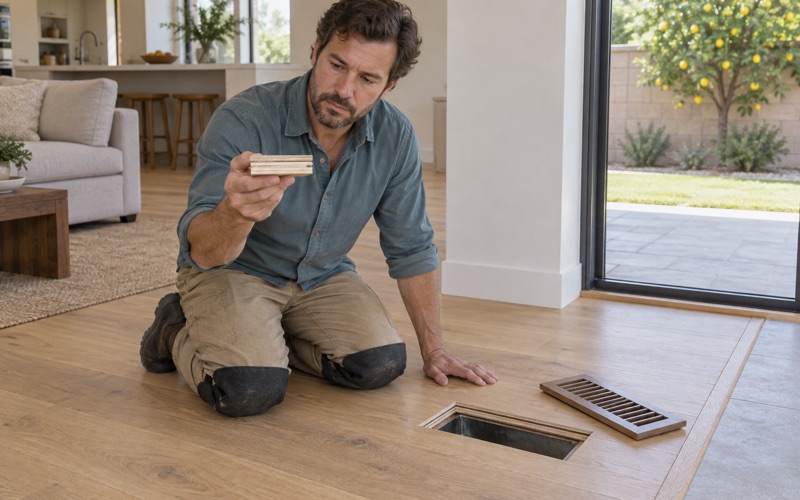
Houses from that period often have narrow-strip tongue and groove oak, sometimes laid over a board subfloor or diagonal sheathing rather than plywood. Decades of sanding can bring the top of the tongue close to the surface, so we check board thickness at a floor register or threshold before promising a full sand. Where a board has worn too thin, a weave-in repair with matching stock keeps the pattern intact.
2,676 Homes Built Before 1940
Census estimates count 2,676 El Monte homes, 8.8 percent of the housing stock, built in 1939 or earlier. That is a small share of the city, but a floor that old may have carried several finishes and more than one round of carpet. Shellac, varnish, paint drips and old carpet adhesive all have to come off in the right order before a new finish goes down.
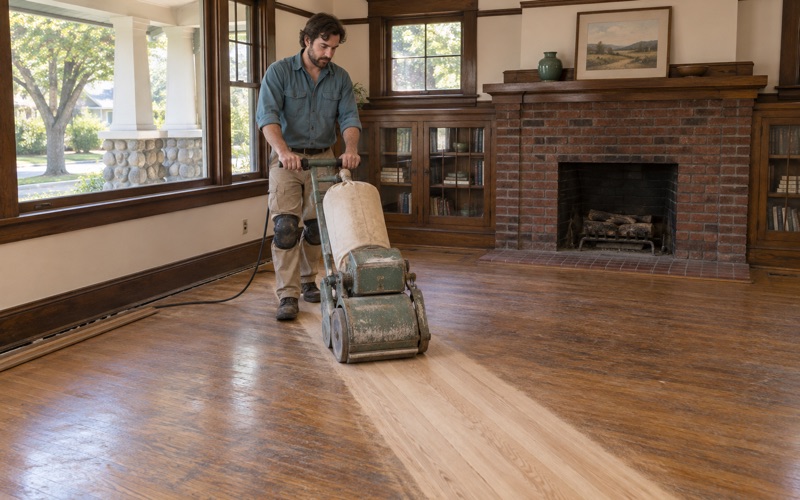
Because pre-1978 paint and finish layers fall under the EPA Renovation, Repair and Painting Rule, we confirm the build year before the sanding is scheduled, not on the morning of the job. That decision sets the containment, the dust collection on the drum sander and edger, and the cleanup. It also tells us whether painted shoe molding and quarter round should be removed and replaced rather than sanded.
Looking Underneath Before Quoting
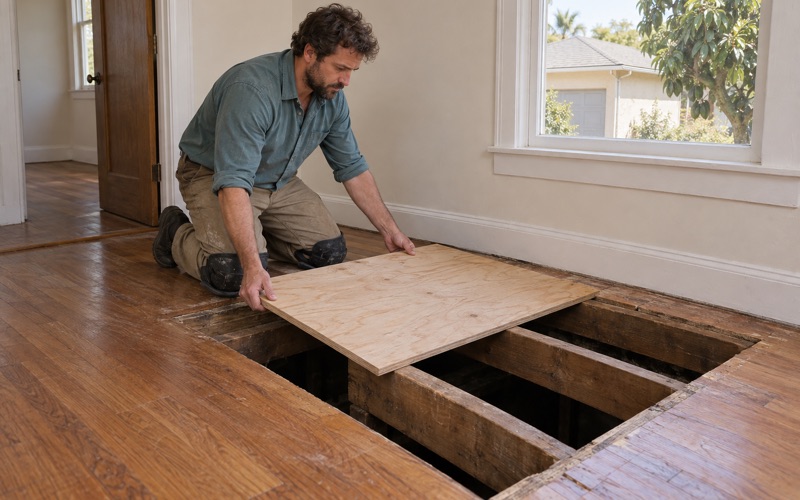
Some older houses sit on a raised foundation with a crawl space, while others are built on slab-on-grade, and we find out at each address rather than guessing from the street. Where there is a crawl space, we go under the house before we price a raised floor. A soft spot, a sloping floor or a bounce near a doorway often traces back to a pier post, girder or floor joist.
Sanding a floor with a structural problem underneath only produces a smoother version of the same dip. If a joist needs a sister joist or a subfloor section needs replacing, the estimate says so. We also look for drywood termite evidence, such as small round kick-out holes and piles of pellet-shaped frass, and rule it out or flag it before any new board goes down over it.
Looking for wood-flooring closer to Arcadia? See Wood-Flooring in Arcadia.
Floors Across a Renter-Majority City
Renters occupy 59.8 percent of El Monte’s occupied homes, 17,552 of 29,344 by the latest five-year census estimate. That makes the landlord, the property manager and the tenant just as much our customers here as the owner living in the house. Floor work in a rental has its own deadlines, its own paperwork and, often, a second household waiting on the other side of the calendar.
Scheduling Around Move-Out and Move-In
We plan rental jobs backward from the dates that matter: the day the last tenant hands back the keys and the day the next one arrives. Sanding, staining, coating and cure time are fit between those two dates, with a written schedule so the property manager knows when the unit can be shown. A screen and recoat can often fit a tight gap where a full sand would not.
We also photograph and record the floor condition on both sides of a tenancy. Separating normal wear and tear, such as traffic-pattern dulling and light scratches, from damage like a pet urine stain or deep gouges is a question that comes up at move-out. Clear before-and-after records give an owner and a tenant the same facts to work from when a security deposit deduction is discussed.
Apartment Buildings and Condos
Among El Monte’s renter households, 37.1 percent live in buildings with five or more units. Wood and engineered floors in those buildings raise questions a detached house does not, starting with what the owner or association allows. For condo and townhome work, we check the association’s written rules on hard flooring and underlayment before any material is ordered, since a rejected floor is expensive to pull back up.
When a building’s rules call for acoustic underlayment, we match the product to what the documents actually require rather than assuming a standard. A floating floor, a glue-down installation or a nail-down floor over plywood each behaves differently above a neighbor’s ceiling. We explain those tradeoffs in plain terms and leave the rating requirements to the building’s own documents.
Rented Houses and Water Losses
Not every El Monte rental is an apartment: more than a third of renter households live in detached houses. In a house or a unit, a leaking water heater or a failed supply line under a sink can soak a hardwood floor before anyone notices. Cupping, crowning and dark staining around a fixture are common results, and the repair needs a scope before anyone moves back into the room.
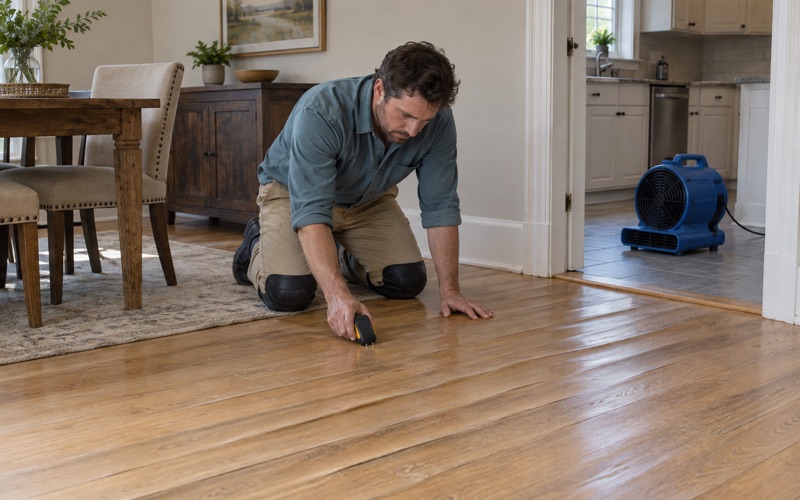
For water and smoke losses, we document the damage with photos and moisture meter readings that an adjuster can use. The repair scope is written as matching boards and a matching finish, not a patch that leaves a visible outline in the middle of the living room. A black water stain that has reached into the wood fibers usually means board replacement rather than sanding.
Neighborhood by Neighborhood, Decade by Decade
The General Plan describes El Monte as a city of distinct neighborhoods: Downtown, Mountain View, Norwood-Cherrylee, Arden Village, Park El Monte and River East. The city is framed by the Rio Hondo and San Gabriel Rivers, with Interstate 605 at its eastern end and Interstate 10 dividing it. We work across all of them and treat each address on its own terms.
Reading a Neighborhood Without Assuming
A neighborhood name tells us where to park, not what floor is under the carpet. The General Plan says several neighborhoods hold intact early-1900s revival houses, but it does not follow that every block in one of them does. In Norwood-Cherrylee, Arden Village or Mountain View, we confirm the build year at each address before we quote the sanding.
The same approach holds in Park El Monte, River East and Downtown. One week’s schedule can include an original oak floor in an older house and an engineered floor in a unit of a multifamily building, and each gets its own inspection, finish plan and timeline. The street address sets the logistics; the floor itself sets the method.
No Single Build Era
El Monte’s housing does not come from one decade. The 1950s are the largest single decade at 20.1 percent of units, but 40.5 percent were built before 1960 and 69.5 percent before 1980, with the rest spread through the decades since. The General Plan records that growth in the 1950s and 1960s replaced much of the city’s rural and historical fabric, which is not the same as all of it.
For us, that spread means moving from strip oak in a prewar house to red oak laid decades later to engineered hardwood from recent years. Each of those floors takes a different abrasive grit sequence, a different approach to gaps between boards and a different expectation about how many more sandings it can take before the wood runs out.
Floors From the Last Few Decades
Homes built from 2000 onward make up 11.6 percent of El Monte’s units, and a newer floor is often engineered hardwood rather than solid. Before promising a full sand on an engineered floor, we measure the wear layer thickness. A thin veneer can take a screen and recoat but not a drum sander, and a sand-through leaves a spot that only board replacement can fix.
Newer glue-down and floating floors bring their own problems, such as delamination, hollow spots and seasonal gapping. We check relative humidity and the moisture content of the wood before any repair, and let replacement boards acclimate so the repaired area moves with the rest of the room instead of standing out a season later.
Getting an El Monte Floor Estimate
What the First Visit Covers
An estimate starts with a walk through every room on the job, a moisture meter check and, where the house has one, a look into the crawl space. We note cupping, checking, finish peeling, white haze and worn-through finish, and we identify the species, whether red oak, white oak or something else. From there we explain whether the floor needs a buff and coat, a screen and recoat or a full sanding.
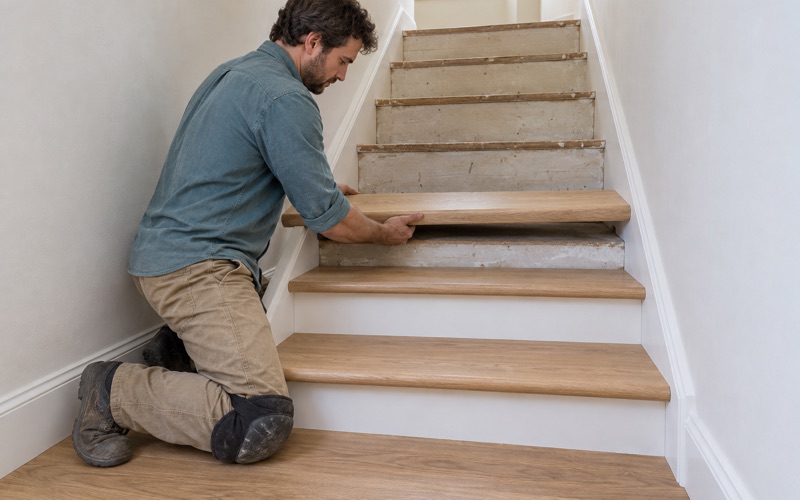
Stairs are quoted separately, by the tread, riser and stair nosing, because stair work is built and priced differently from an open floor. A landing tread or a retrofit tread over an old staircase each gets its own line. Transitions such as a reducer or T-molding at a doorway are listed too, so nothing surprises the owner when the invoice arrives.
Finishes, Cure Time and the Schedule
We choose among waterborne polyurethane, oil-modified polyurethane and hardwax oil based on how the room will be used and which products meet the air district’s limits. Stain color and sheen level are tested on the actual floor before the whole room is committed. Cure time and the recoat window go straight into the written schedule, so a family or a tenant knows which rooms are usable on which day.
Furniture, rugs and pets come back in stages, not all at once. Light foot traffic returns well before a heavy sofa or an area rug, and the schedule spells out each step room by room. That planning keeps a rental on its turnover timeline and lets an owner living in the house keep the kitchen or a bedroom in use while other rooms cure.
Codes and Paperwork in El Monte
El Monte, incorporated November 18, 1912, handles plan review, permits and inspections through its Building & Safety Division. Since January 1, 2026, the city has enforced the 2025 California Building Standards Code, including the 2026 County of Los Angeles Amendments. When a job moves beyond surface refinishing into structural repair, we raise the question with the owner and point them to that division for the answer.
El Monte does not have a historic preservation ordinance, so the decisions about keeping original boards, matching old stock or replacing a worn floor in an early-1900s bungalow rest with the owner. We lay out the options, from a weave-in repair to a complete refinish, and write the estimate so the choice and its cost are clear before any work begins.
- 20+ Years in Wood Flooring
- Free Written Estimates
- Room-by-Room Schedules