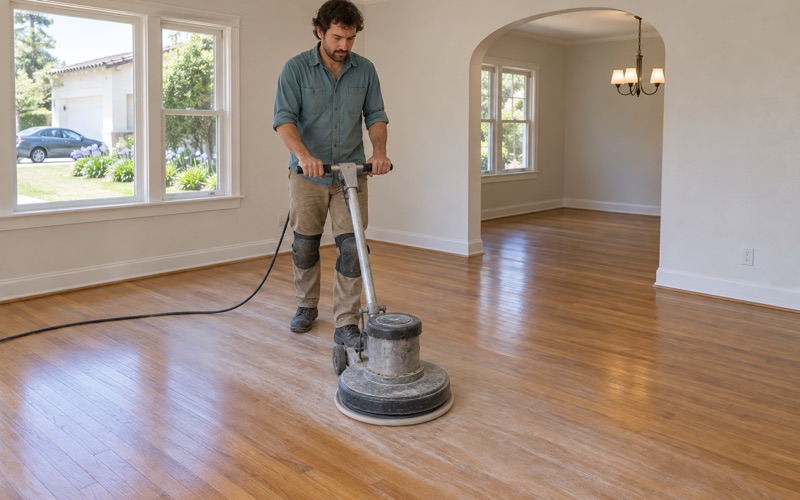
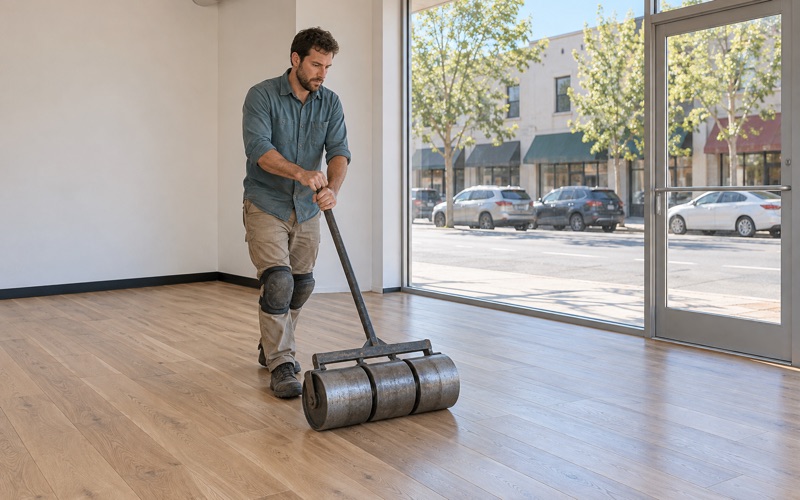
Alhambra Wood Flooring has handled wood-flooring in East San Gabriel and across the western San Gabriel Valley for more than 20 years, and the work here tends to split into two kinds of job. One is the apartment floor between tenants, in a building large enough that the unit next door has the same schedule problem. The other is the owner-held house, where the question is what the last sixty or seventy years did to the boards.
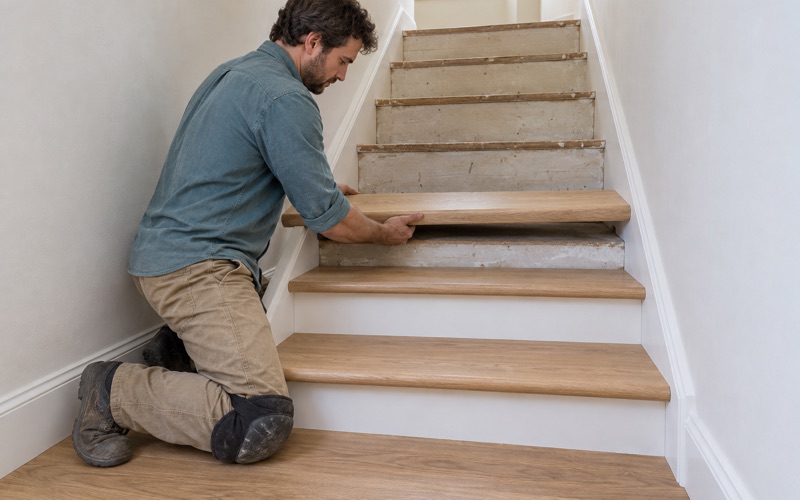
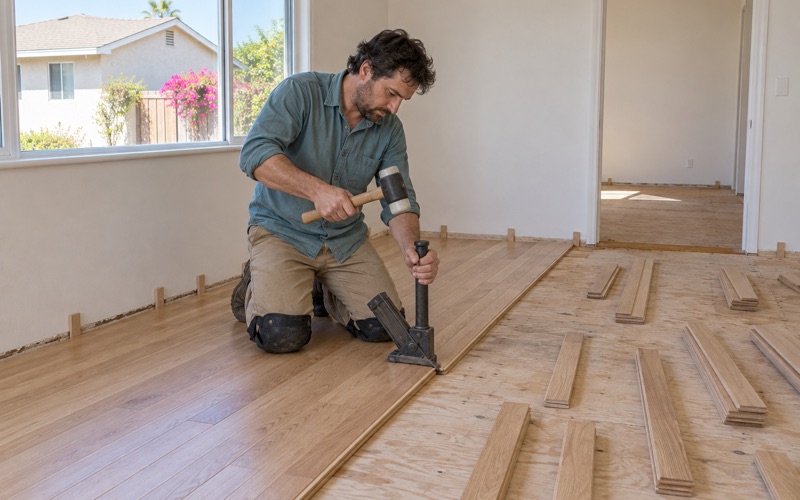
We refinish, repair and install solid and engineered hardwood, and we price each job from what we find in the room rather than from a square-foot table. Sanding, screen and recoat, board replacement, weave-in repair and stair work are quoted separately, because each carries its own labor and its own cure time. Stairs are priced by the tread, riser and nosing.
For property managers, that means turnover work set against the move-out and move-in dates. For homeowners, it means the build year and the floor structure get confirmed before anyone rolls a drum sander through the door. Both get a written room-by-room schedule showing when furniture, rugs and pets can go back.
Apartment Floors in East San Gabriel’s Larger Buildings
East San Gabriel is not usually pictured as an apartment place, but the census count says otherwise. Of 8,477 housing units, 18.0 percent sit in buildings of twenty or more units, according to the ACS 2024 five-year estimates, and those buildings shape a large share of the rental floor work here.
Where the Renters Live
The split between owners and renters is sharp. Among renter households, 38.2 percent live in buildings of twenty or more units, and 52.0 percent live in buildings of five or more. Among owner households, 97.6 percent live in detached houses. The two groups barely share a building type, so the floor problems they bring us rarely look alike.
With 43.7 percent of occupied homes renter-occupied, the apartment side is not a footnote. A building with dozens of units can put several turnovers on the calendar in one season, and every day a floor holds up a new lease costs the owner rent.
What Wears Out in a Busy Unit
Apartment floors fail in predictable places: the traffic lane from the entry to the kitchen, the finish in front of the sink, and the bedroom corner where a desk chair rolled for years. Worn-through finish lets water reach bare wood, and gray stain follows. Pet urine stain is common near doorways and usually runs deeper than the surface suggests.
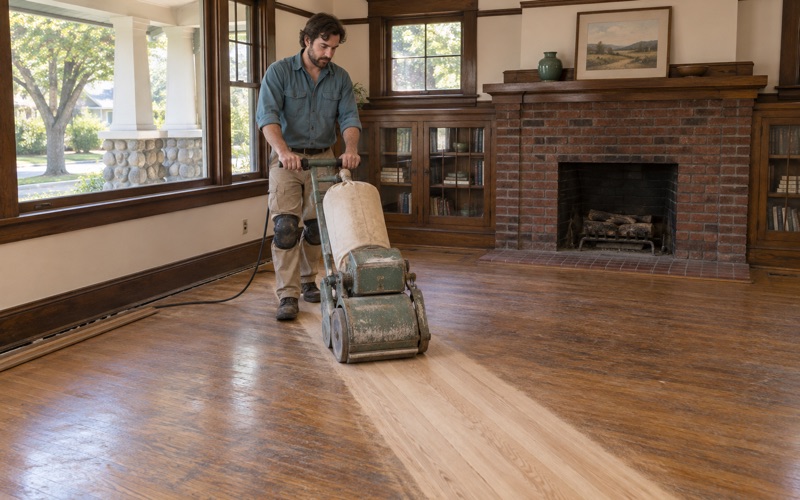
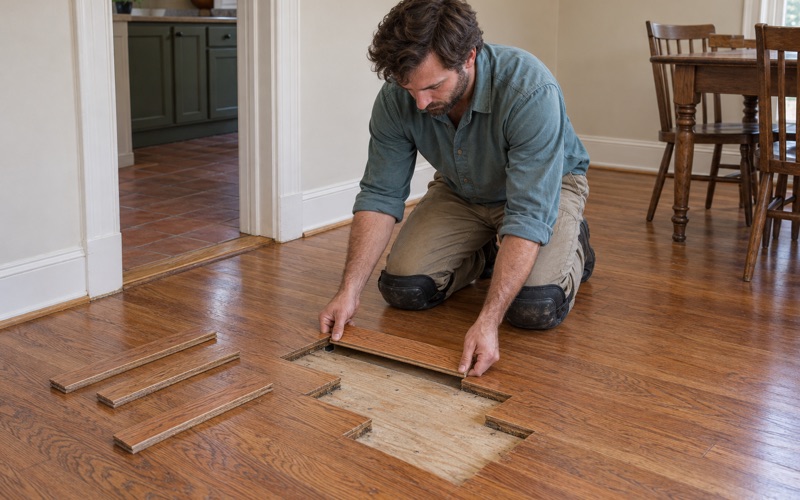
Where the finish is only dulled and scratched, a screen and recoat can restore the look quickly enough for a tight turnover. Where boards have turned black, cupped or started to delaminate, sanding alone will not fix them, and we quote board replacement with a weave-in repair so the new wood disappears into the field.
Sound, Underlayment and Building Rules
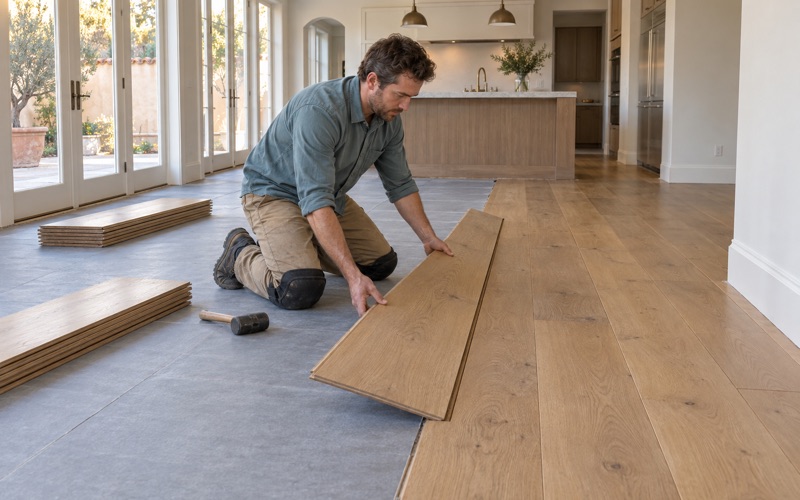
Units stacked over other units raise a question a detached house never does: what the neighbor below hears. When a floating floor or glue-down engineered product replaces carpet or worn wood upstairs, acoustic underlayment matters, and many owners and associations set their own requirements for impact noise.
We read the building’s or association’s rules for hard flooring and underlayment before any material is ordered. We do not quote an impact insulation class or sound transmission class figure from memory; if a rule names one, the product documentation has to show it, and we check that before installation rather than after a complaint.
Looking for wood-flooring closer to East Los Angeles? See Wood-Flooring Services in East Los Angeles.
Turnover Refinishing Under County Rent Rules
Rental floors in East San Gabriel sit under a county regime, not a city one, and owners of older buildings here generally already know it. Our part is narrower: getting the floor ready on schedule and keeping a clear record of what it looked like.
The Rent Stabilization Ordinance and the Registry
Los Angeles County’s Rent Stabilization and Tenant Protections Ordinance, administered by the Department of Consumer and Business Affairs, applies in unincorporated county territory to rental units with a certificate of occupancy issued on or before February 1, 1995. Those units carry annual rent-increase limits and just-cause eviction protections, and owners must register them in the Los Angeles County Rent Registry.
With 82.4 percent of all housing units here built before 1980, much of the local stock predates that cutoff, but the certificate of occupancy date is what counts. We do not advise on the ordinance itself. Questions about increases, registration or tenant rights belong with the county department, and we keep the floor decision separate from them.
Scheduling Around Move-Out and Move-In
A turnover floor is a calendar problem first. We set the work between the move-out and move-in dates the manager gives us, and we choose the finish system with that window in mind. A waterborne polyurethane generally offers a shorter recoat window than an oil-modified polyurethane, though full cure time always runs longer than the day a floor can take foot traffic.
Every finish we use comes from products legal to apply in the South Coast AQMD, where the SCAQMD Rule 1113 limit for wood coatings is 275 grams per liter. That keeps the product choice local instead of pulled from a national catalog, and dust containment keeps the work from spreading into the hallway while neighbors are home.
Recording the Floor on Both Sides of a Tenancy
We photograph and note the floor’s condition when a unit is vacated and again when the work is finished, so the owner has a dated record of what the next tenant receives. Scratches, pet stain, water marks near the kitchen and compression set under heavy furniture are all documented room by room.
That record helps an owner separate normal wear and tear from damage when weighing a security deposit deduction, though that decision and its rules belong to the owner and the law, not to us. What we provide is an honest description of the floor and a repair scope that matches it.
Midcentury Houses Built From 1940 to 1969
The owner side of East San Gabriel is a detached-house neighborhood from a specific era. The ACS 2024 five-year count puts 64.2 percent of all housing units in the years 1940 through 1969, and the 1950s alone account for 24.5 percent, the peak building decade.
What Those Floors Usually Hide
A house from the 1940s, 1950s or 1960s has often had its floors sanded more than once, and sometimes covered with carpet or vinyl for decades. Before promising another full sand, we look at how much wood is left above the tongue. Overwood, old drum marks and edger swirl from past jobs come out in the abrasive grit sequence, but only if the board can spare the wood.
Engineered floors added in later remodels need the same caution. We measure wear layer thickness before a sanding is promised, since a thin veneer can take a screen and recoat but not a full sand, and a sand-through on engineered plank means replacement rather than repair.
Checking the Structure Before the Surface
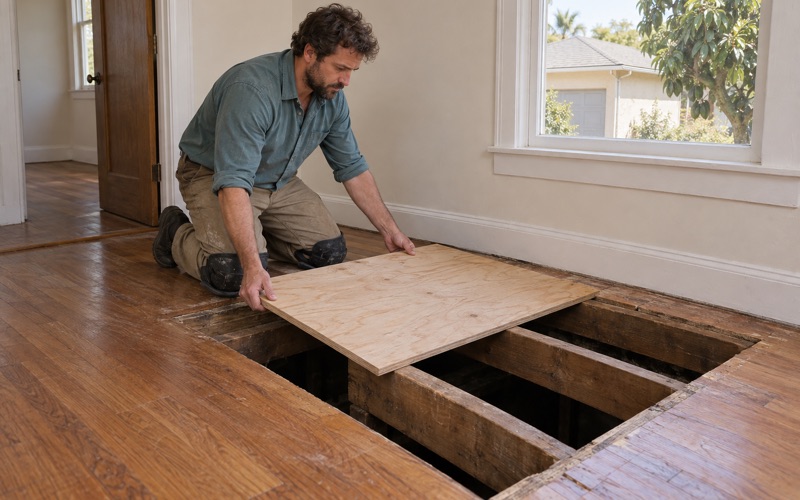
Where a house sits on a raised foundation, we look underneath before we quote. A bouncy floor, a sloping floor or a soft spot is often a floor joist, girder, pier post or subfloor problem, and sanding would only make a failing floor look good for a while. Sometimes the fix is a sister joist; sometimes it is a board subfloor that needs attention first.
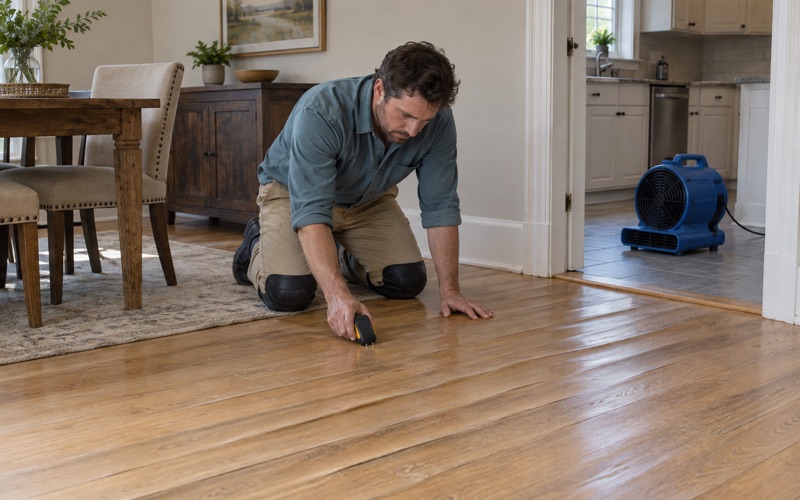
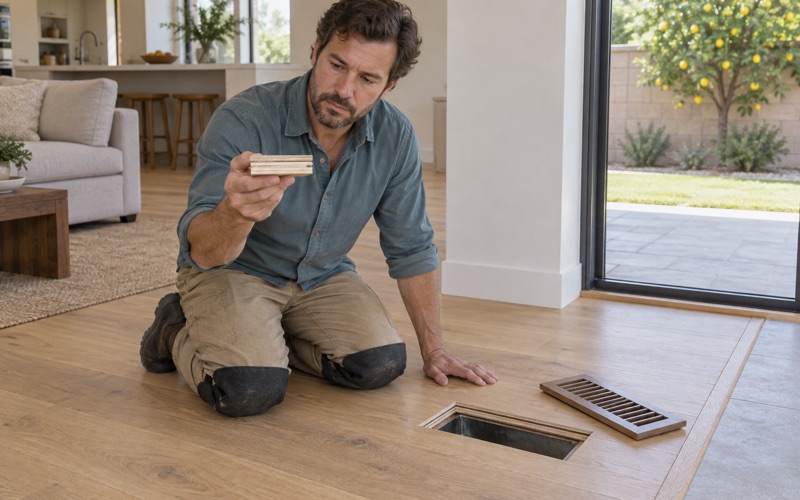
Squeaks and popping in a midcentury house can come from loosened fasteners, gaps between subfloor and joist, or seasonal gapping as boards move with relative humidity. We take moisture meter readings before any install or repair, so new boards go in close to the equilibrium moisture content of the floor around them.
Lead-Era Finishes and Termite Evidence
Nearly all of these houses are pre-1978 housing, so we confirm the build year before scheduling any sanding. Painted baseboards, shoe molding and quarter round, along with older finish layers, are handled under the EPA Renovation, Repair and Painting Rule, with containment set up before the sanders start.
Small round kick-out holes and piles of pellet-shaped termite frass near a baseboard point to drywood termites. We identify that evidence or rule it out before replacing any board, so new wood does not go down over an active colony. If a Wood Destroying Pests and Organisms Inspection Report already exists for the house, we read it first.
Floors in Unincorporated East San Gabriel
East San Gabriel is an unincorporated community and census-designated place in Los Angeles County, not a city. It covers about 2.2 square miles and has no city government, which changes who answers a question once it goes beyond the floor itself.
Who Handles Building Questions
Building rules for unincorporated territory come from Los Angeles County Code Title 26 and related county titles, and Los Angeles County Public Works handles building and safety. Its San Gabriel Valley Building and Safety Office sits at 125 S. Baldwin Avenue in Arcadia, and its name suggests it covers this area, though that is worth confirming with the county before relying on it.
We do not give permit answers for floor work. If a job includes structural repair under a raised floor, or anything beyond refinishing and board work, the owner should ask the county directly, and we describe the scope in writing so that conversation stays specific. A San Gabriel mailing address under ZIP 91775 does not place a home under the City of San Gabriel.
The West San Gabriel Valley Area Plan
On March 11, 2025, the Los Angeles County Board of Supervisors adopted the West San Gabriel Valley Area Plan, which covers the East Pasadena-East San Gabriel community among nine unincorporated communities. The plan includes a historic context statement and a historic preservation component.
Owners planning a larger remodel of an older house may want to read the plan and its historic material before work starts. We flag it rather than interpret it, and we keep our own scope to the floor.
Weather, Water and Smoke
East San Gabriel falls in National Weather Service forecast zone CAZ548, Los Angeles County San Gabriel Valley. Dry stretches pull moisture out of wood and open gaps between boards, while damp conditions under a floor can bring cupping or crowning. We read those symptoms against moisture readings rather than blaming the season alone.
When the damage comes from a leak or a fire, we document it with photos and moisture readings an adjuster can use. The repair scope is written as matching board and finish rather than a patch, and smoke damage gets soot and ash residue cleaned and odor sealing addressed before any new finish goes down.
- 20+ Years in Wood Flooring
- Free Written Estimates
- Room-by-Room Schedules