Alhambra Wood Flooring takes on wood-flooring in East Los Angeles with more than 20 years of work behind us, much of it on floors older than the people who walk on them. We sand and refinish, repair damaged boards, rebuild stair runs and install new solid or engineered hardwood. Every job starts with the same question: what is this floor made of, and what has it already been through?
That question matters because an old floor hides its history. One room might carry several finish layers, a patched section from a long-ago plumbing leak and boards worn thin by decades of sanding. We look at all of it before quoting, including the structure underneath when a floor bounces, sags or slopes, because sanding a floor that moves only polishes the problem.
The sections below cover what changes about the work in this community specifically: the age of the housing, the large share of homes occupied by tenants, and the fact that the building authority here is the county rather than a city. Where those details affect how a job is scheduled, documented or finished, we explain how we handle them.
Belvedere-Era Houses and the Floors Inside Them
A Tract Laid Out in 1905
Much of northwestern East Los Angeles traces back to a 170-acre tract the Janss Investment Company began developing in 1905, later renamed Belvedere Heights. By 1922 Janss was advertising 6,000 lots sold. The name East Los Angeles came afterward, given to Belvedere and adjacent areas by local business leaders in 1932, with a renaming ceremony following in 1937.
For a flooring contractor, the dates matter more than the names. Houses built on lots sold in that era were framed with the materials of their day, and floors from that period were often narrow-strip solid hardwood nailed over a board subfloor or diagonal sheathing. Many of those floors can still be sanded, but every earlier sanding removed some of the wood that sits above the tongue and groove.
More Than a Third of Homes Built Before 1940
Census figures put the age of the housing in plain numbers. According to the American Community Survey 2024 five-year estimates, 34.1 percent of homes in East Los Angeles were built in 1939 or earlier, and 64.8 percent were built before 1960. Only 6.3 percent date from 2000 or later, so a new floor over new framing is the exception here, not the rule.
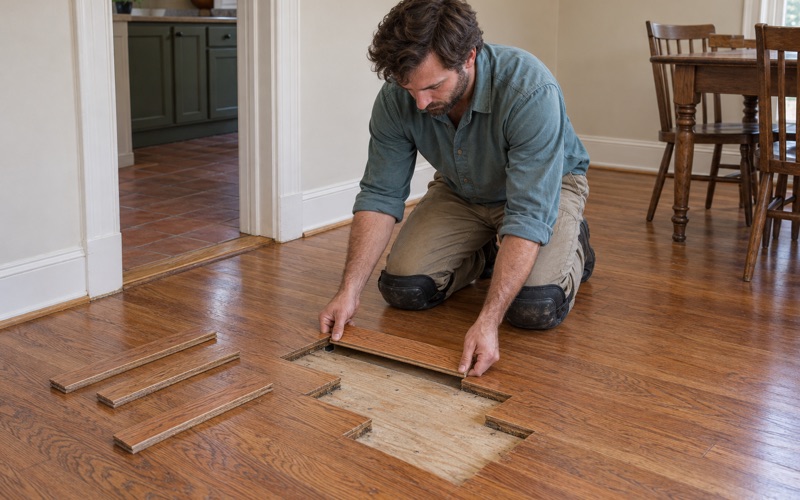
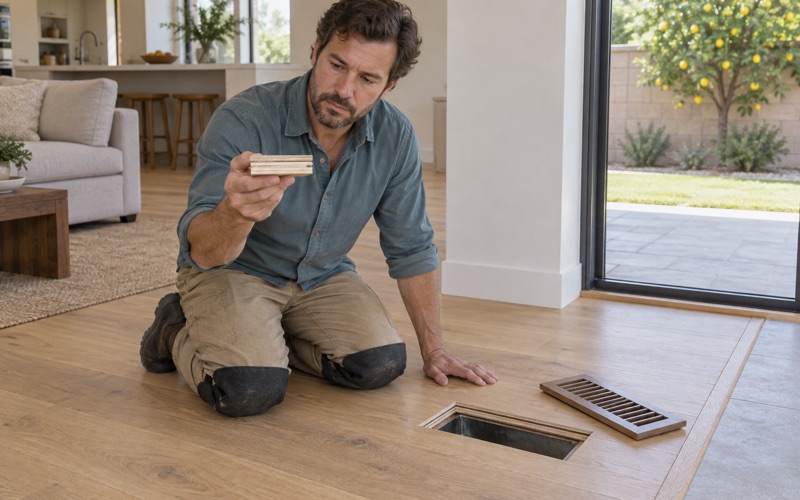
A floor that has lived that long has usually been refinished more than once, coated with whatever product was popular at the time and repaired by several different hands. Before promising a full sand, we pull a floor register or threshold where we can and look at how much wood remains above the tongue. Where too little is left, a screen and recoat may be the honest recommendation instead.
What We Check Before Quoting a Prewar Floor
Old floors tend to show a familiar set of symptoms: squeaks and popping underfoot, seasonal gapping between boards, black water stains near kitchens and bathrooms, and worn-through finish down hallways. Some of these are purely cosmetic. Others, like a soft spot, a bouncy floor or a sloping floor, can point to a failing floor joist, girder or pier post below.
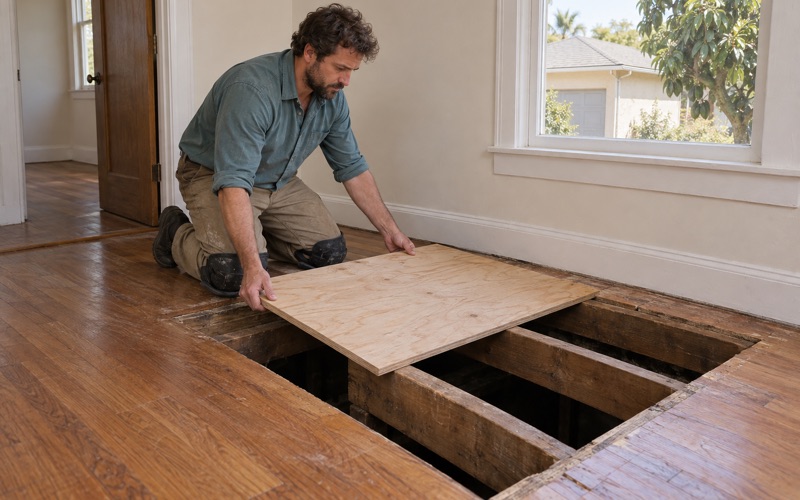
When a house sits on a raised foundation, we check the crawl space before quoting, looking for sagging framing, moisture and drywood termite damage. Small round kick-out holes and piles of pellet-shaped termite frass are identified or ruled out before any board replacement, so new wood never goes down over an active colony. If a joist needs a sister joist added, that repair is scoped separately from the floor.
Owners planning foundation bolting or cripple wall bracing can coordinate it with floor repairs so the crawl space is opened once. Programs such as Earthquake Brace + Bolt apply only to wood-framed homes built before 1980 that sit on a raised foundation, and the program itself decides whether a given house qualifies.
Looking for wood-flooring closer to Highland Park? See Highland Park Wood-Flooring.
Prewar Floors in Houses That Are Often Rented
Two of Every Three Households Rent
East Los Angeles is largely a renting community. Of 30,442 occupied units, 66.5 percent are renter-occupied, and 64.5 percent of renter households live in one-unit structures, either detached or attached. Only 2.4 percent of housing units are in buildings of 50 or more units, so the typical rental floor here is inside a house, not a large apartment building.
That puts a great deal of prewar hardwood under tenants rather than owners. A landlord with an older house may have covered its original hardwood with carpet or vinyl years ago, and a turnover is often the first chance to pull that covering up and see what survived. We record what we find before quoting, since old adhesive, staple holes and pet urine stains all change the scope.
Scheduling Around Move-Out and Move-In
We plan rental jobs backward from the move-in date. The written schedule we give a landlord or property manager lists each room, the sanding and coating days, the cure time and the day furniture and appliances can come back in. If the gap between tenants is short, we say plainly whether a full refinish fits or whether a buff and coat is the realistic choice.
We photograph and describe floor condition when one tenancy ends and again when our work is finished. That record helps an owner separate normal wear and tear from damage when a security deposit deduction is being weighed, though that decision belongs to the owner and the law rather than to us.
Owners on the County Rent Registry
Unincorporated Los Angeles County has its own Rent Stabilization and Tenant Protections Ordinance, found in Chapter 8.52 of the County Code and administered by the Department of Consumer and Business Affairs. It fully covers rental units on properties with two or more units that received a certificate of occupancy on or before February 1, 1995, and owners register those units and pay an annual fee through the county rent registry.
We do not interpret what that ordinance says about repairs or tenants, and landlords with questions should take them to the county department directly. What we can provide is a written scope, firm dates and before-and-after photos, which make floor work straightforward to document for whatever records an owner keeps.
Working Under County Rules, Not a City Hall
Los Angeles County Is the Building Authority
East Los Angeles is an unincorporated census-designated place, which means it has no city government of its own. Building permits and inspections come from Los Angeles County Public Works, Building and Safety Division, under Title 26 of the County Code, the Los Angeles County Building Code. The East Los Angeles Building and Safety Office is at 4801 East 3rd Street. City Terrace is part of the same census-designated place and falls under the same county office.
Homeowners sometimes call a city hall that does not govern their address. When a flooring job reaches into structure, such as replacing framing under a sagging floor, we point the owner to the county office to confirm what the work involves before it starts. We do not guess at answers on the county’s behalf, and we do not start structural work until that question is settled.
Lead-Era Paint and Finish Layers
With 64.8 percent of homes built before 1960, most houses here predate 1978, the cutoff that matters under the federal EPA Renovation, Repair and Painting Rule. We confirm the build year before a sanding date is set, and pre-1978 paint and finish layers are handled under that rule rather than treated like any other dust.
On a prewar floor that often means painted baseboards, shoe molding and quarter round coming off, along with old finish layers that could contain lead. We set up dust containment, run dustless sanding equipment, keep work areas closed off from the rest of the house and clean up thoroughly before the household or the next tenant returns.
Finishes Chosen for the South Coast Air District
East Los Angeles sits within the South Coast Air Quality Management District, where SCAQMD Rule 1113 sets the wood coatings VOC limit at 275 grams per liter. We choose sanding sealer, stain and polyurethane from products that meet that limit, rather than ordering from a national catalog that was never written with Southern California rules in mind.
Waterborne polyurethane is a common choice, with oil-modified polyurethane or hardwax oil considered where a compliant product suits the wood and the way the room is used. Each option carries its own recoat window, cure time and sheen level choices, and the room-by-room schedule we hand over reflects whichever finish actually goes down.
Wood Floor Services Across East Los Angeles
Sanding, Refinishing and Recoating
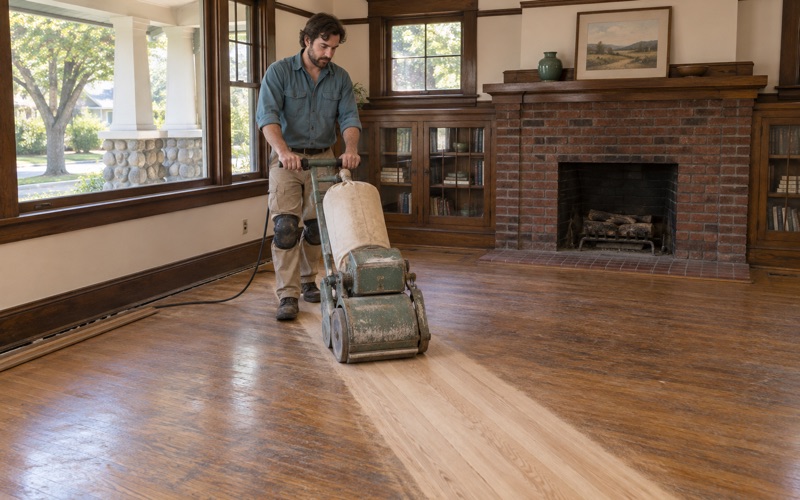
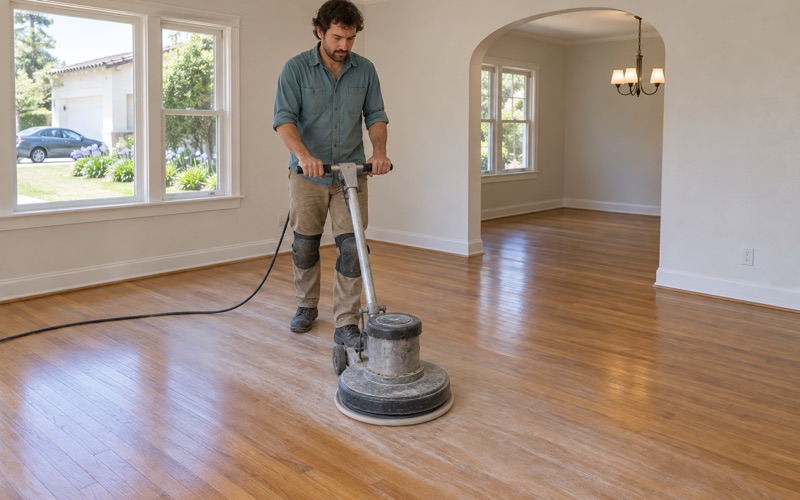
A full refinish works through an abrasive grit sequence with a drum sander or orbital sander and an edger, followed by sealer and finish coats. Done carelessly, it leaves chatter marks, drum marks, edger swirl or sand-through on boards that were already thin. On engineered hardwood we measure wear layer thickness first, because a thin veneer can take a screen and recoat but not a full sand.
Floors that are dull but sound often need only a buff and coat. A white haze, finish peeling or a gray stain says more about what went wrong in an earlier job, and we explain up front whether sanding will remove it or whether boards need replacing. Deep pet urine stains and black water stains usually fall into that second group.
Board Repairs, Water and Smoke Losses
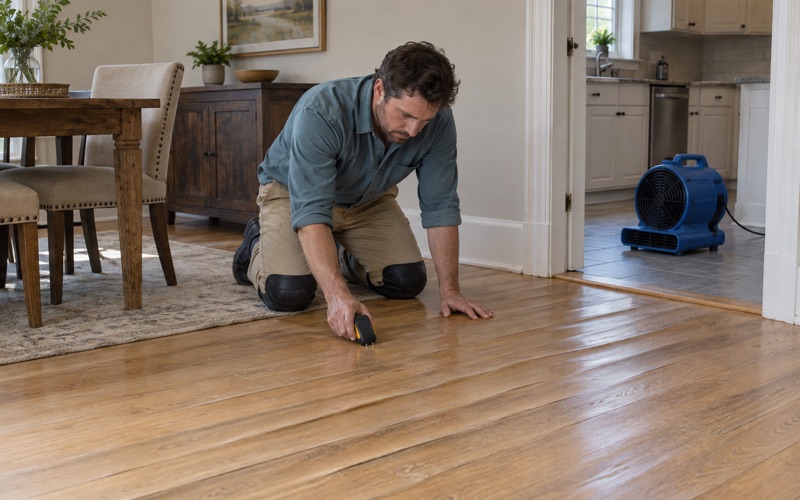
Cupping, crowning and buckling usually trace back to moisture, so we take moisture meter readings before recommending board replacement or a weave-in repair. Where a pipe or roof leak caused the damage, we repair the floor only after the source is fixed and the wood has dried back toward equilibrium moisture content, so the new boards are not fighting the old ones.
For insurance claims after a water or smoke loss, we document the damage with photos and moisture readings an adjuster can work from. The repair scope is written as matching board and matching finish rather than a visible patch, and smoke jobs include soot and ash residue cleanup plus odor sealing where the wood has absorbed it.
Stairs and New Installations
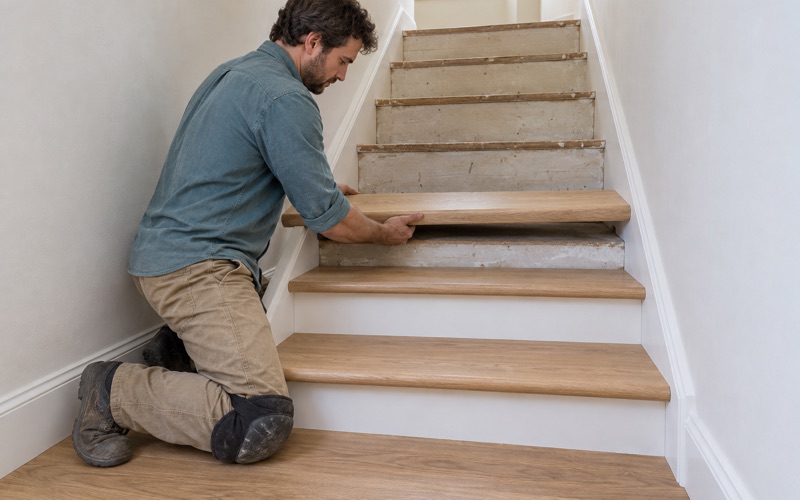
Stair work is quoted by the tread, riser and stair nosing instead of being folded into a square-foot price, since stairs are built differently from open floor. We replace worn stair treads, fit retrofit treads where the stringers are sound and match landing treads to the flooring around them so the transition reads as one surface.
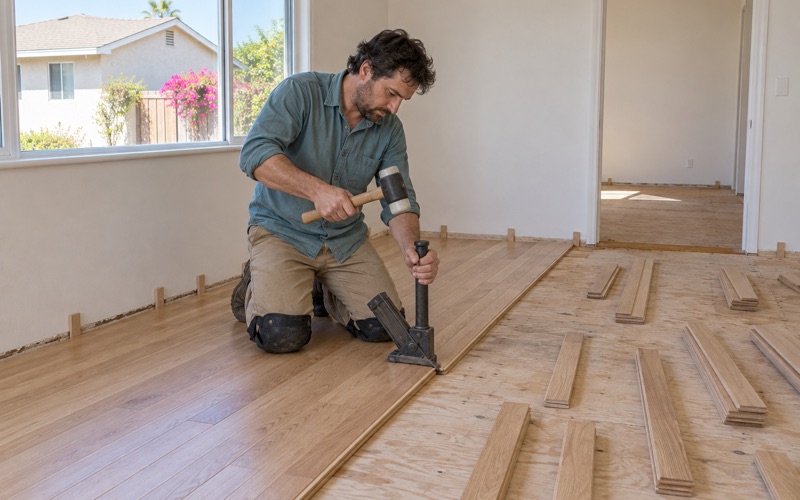
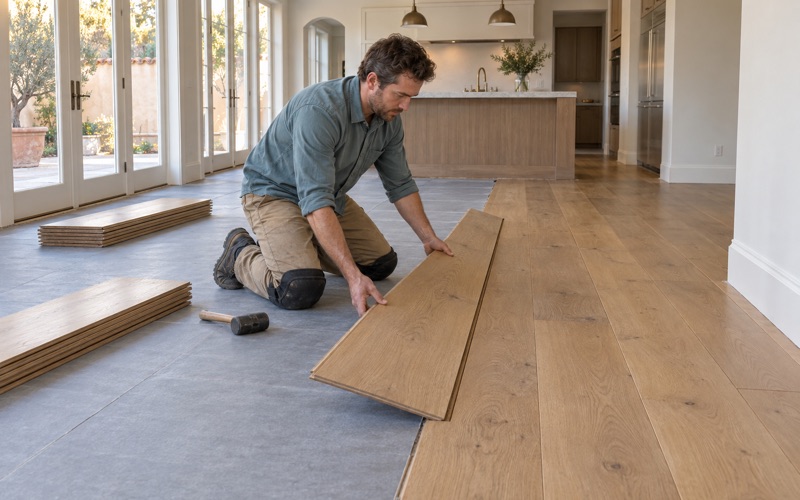
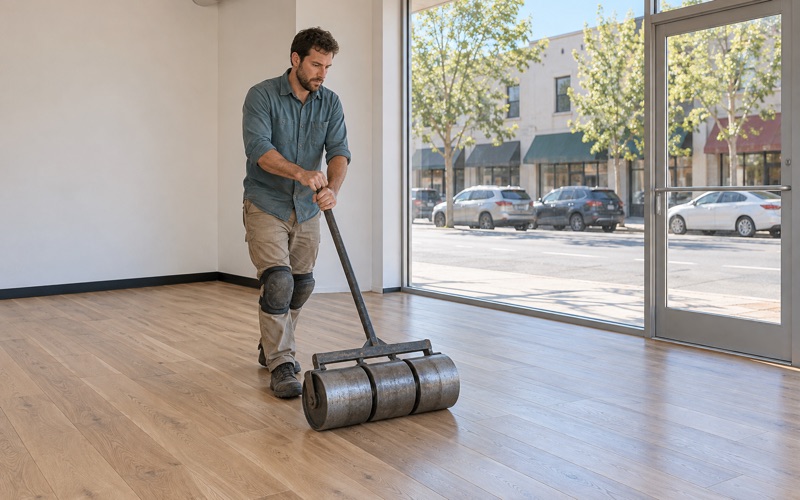
For new floors we install solid hardwood and engineered hardwood as nail-down, glue-down or floating floors, with acclimation and an expansion gap planned from the start. Red oak and white oak blend well with many older floors, while hickory and hard maple bring a higher Janka hardness rating to busy rooms. Reducers, T-molding and shoe molding finish the edges and doorways cleanly.
Whether the house is owner-occupied or between tenants, every East Los Angeles job ends with a written room-by-room schedule showing when furniture, rugs and pets can come back. That lets a household plan around the cure time instead of guessing at it, and it keeps a freshly coated floor from being marked up in its first days.
- 20+ Years in Wood Flooring
- Free Written Estimates
- Room-by-Room Schedules