Alhambra Wood Flooring provides commercial wood flooring in Alhambra, CA for retail shops, offices, studios, restaurants and other businesses. With more than 20 years of wood floor experience, we know that a commercial floor is judged on two things a homeowner rarely worries about as much: how well it stands up to constant traffic, and how little the work interrupts the business that depends on it.
Every commercial project starts with how the space is used. We look at entries, aisles, rolling loads and cleaning routines, test the slab or subfloor, and ask about opening hours, deliveries and landlord or building rules. The plan we write covers the floor itself and the sequence, hours and reopening dates for each area, so managers can tell staff and customers what to expect.
Commercial Wood Floor Services
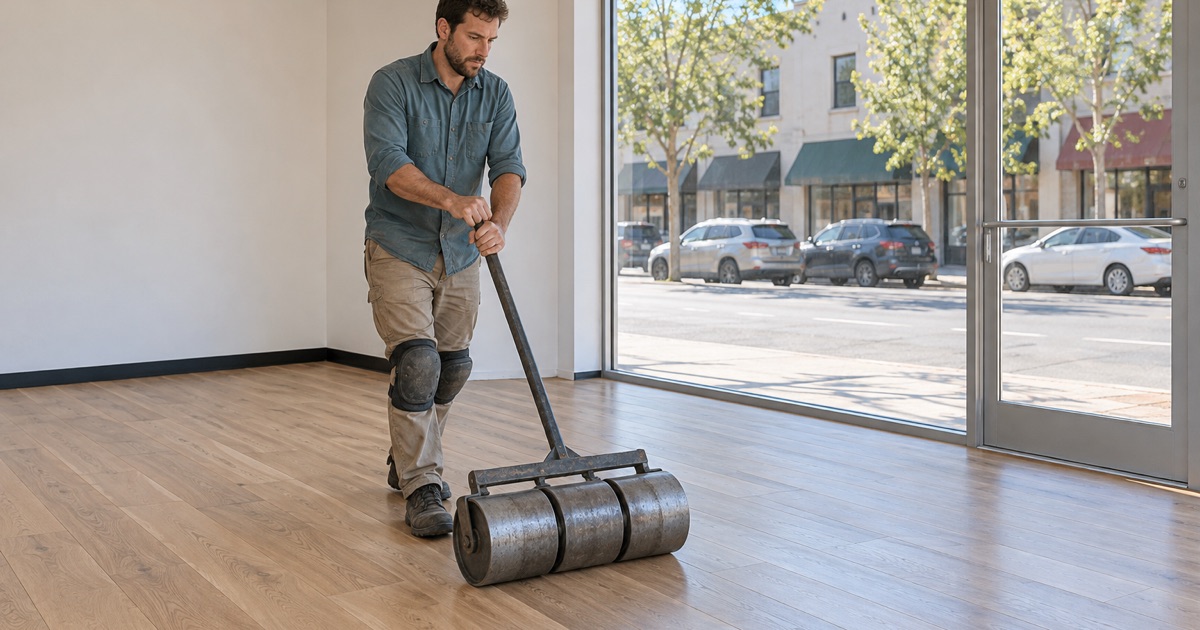
Installing New Wood Floors In Commercial Spaces
Most commercial spaces sit on concrete slabs, so engineered wood glued down or installed over a suitable underlayment is the common approach. We test slab moisture before any material arrives, flatten high and low spots that would show under long boards, and choose species and construction for the traffic the floor will see. In multistory buildings, we confirm acoustic underlayment requirements before ordering, since noise to the tenant below is a frequent source of complaints.
Sanding And Refinishing Worn Commercial Floors
When traffic has worn through the finish into the wood, a full sanding and refinish restores the floor. We use vacuum-connected sanding equipment and seal the work area to limit dust in the rest of the building, then build a finish system chosen for commercial wear. Large floors are divided into sections so part of the space can stay usable while each section is sanded and finished in turn.
Repairs To Damaged Boards
Dropped equipment, water from a leaking fixture or years of rolling carts can damage individual boards. We cut out damaged boards, weave in matching replacements and blend the finish so the repair does not stand out on the sales floor. Repairs can often be scheduled alongside a recoat, so the space closes only once for both.
Where damage traces back to a building problem, such as a roof leak, a plumbing fixture or moisture rising through a slab, we note the cause in writing for the property manager. Replacing boards without addressing the source leaves the business paying for the same repair again, and a written record helps sort out whether the tenant, the landlord or an insurer is responsible.
Planning Around Business Operations
After-Hours, Closed-Day And Phased Work
Many businesses cannot close for the several days a full refinish takes. We work evenings, overnight or on closed days where the building allows it, and split larger floors into phases so one area is finished while the rest remains open. The written schedule shows when each zone is closed, when it can take light foot traffic and when fixtures and furniture can return.
Dust, Odor And Neighboring Tenants
In shared buildings, dust and finish odor can affect neighboring businesses. We use contained sanding with dust extraction, seal doorways and returns, and choose lower-odor waterborne finishes. Every finish we apply meets the South Coast air district’s 275 grams per liter wood coatings limit, which also rules out some high-solvent commercial products sold elsewhere.
Building Rules And Coordination
Property managers and landlords often set rules on work hours, elevator use, loading access and insurance documentation. We ask for those rules at the start, coordinate with the general contractor on tenant improvement projects, and schedule deliveries of flooring and equipment so they do not block customers or neighboring tenants.
Fixtures, shelving and display cases are another planning item. Some can be moved by the business before we arrive, while built-in counters and heavy casework may need the floor finished around them. We walk the space before quoting so the estimate reflects what actually has to move and what the floor will meet at its edges.
Keeping Commercial Wood Floors In Service
Maintenance Recoat Schedules
The cheapest commercial wood floor is one that never needs a full sanding. A regular screen and recoat renews the protective finish in entries, checkout areas and aisles before they wear through to bare wood. We can set a recurring schedule based on how quickly your traffic wears the finish, so the floor stays protected and the business avoids a longer closure later.
Walk-Off Mats, Glides And Cleaning
Grit carried in on shoes is the main thing that wears a commercial finish. Walk-off mats at entries, protective glides on chairs and fixtures, and a cleaning routine using products compatible with the finish all extend the time between recoats. We give staff simple written care instructions suited to the finish we applied.
Choosing Species And Finish For Heavy Use
For high-traffic spaces, harder species such as hickory, hard maple and white oak resist denting better than softer woods, and a low-sheen commercial finish hides the fine scratches that constant use creates. Wire-brushed or textured surfaces can further disguise wear. We walk through samples with you so the floor suits both the look of the business and the traffic it will carry.
- 20+ Years in Wood Flooring
- Free Written Estimates
- Room-by-Room Schedules