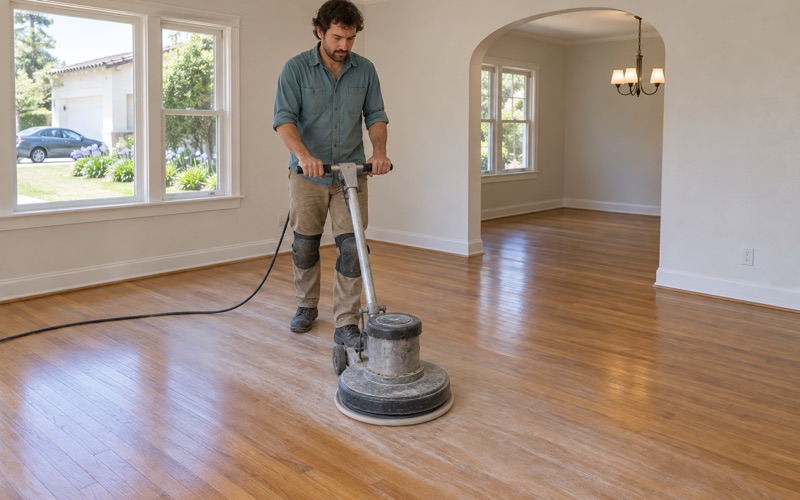
Alhambra Wood Flooring brings more than 20 years of experience to wood-flooring in Commerce, and nearly every job we take on here begins with a floor that already has a long history. Refinishing, board repair and full replacement all start the same way: a close look at what the existing wood has been through, how many sandings it has survived and what finish is sitting on it today.
We read the floor before we price it. That means measuring how much wood remains above the tongue, noting cupping, gaps, squeaks and soft spots, and confirming the house’s build year so older finish layers are handled the right way. The written scope that follows says plainly whether a full sand and refinish, a screen and recoat or a board replacement is the honest answer for that room.
Owners here are usually weighing how to keep an older floor working rather than choosing material for a blank new subfloor. The sections below explain what the city’s housing record tells us about the floors we find, how its residential neighborhoods sit inside an industrial city, how we decide between refinishing and replacing, and what each service involves once work begins.
Floors in Commerce’s 1940s and 1950s Houses
Half the Homes Come From Two Decades
The American Community Survey 2024 five-year estimates count 3,381 housing units in Commerce. Of those, 887 were built in the 1940s and 877 in the 1950s, which puts 52.2 percent of the city’s homes in those two decades alone. Add the houses from the 1960s and 1970s and the share built before 1980 reaches 72.9 percent.
For flooring, that age profile matters more than anything in a product catalog. A floor put down around 1950 has carried decades of furniture, foot traffic and earlier refinishing, and some have spent years under carpet or sheet vinyl. We expect a layered history in these rooms, and we talk through uncovering and assessing it up front rather than presenting it later as a surprise.
Why There Are Almost No Newer Homes
The same survey estimates zero housing units built in Commerce in 2010 or later, and just 121 from 2000 through 2009. Of the homes added since 1980, most came in the 1980s and 1990s. In a small city whose land has long been organized around industry, new residential subdivisions have not been part of the recent picture.
The practical result is that a Commerce homeowner is rarely picking a floor for a fresh, level substrate. Our work here is replacement, repair and restoration over subfloors that earlier owners may have patched, shimmed or overlaid, so the plan has to account for what is already there. We check flatness and fastening before recommending any new product, because a modern plank installed over an uneven old base inherits every hollow spot.
Detached Houses and What They Hide
About 64.5 percent of units in Commerce are detached houses, 2,182 in all, alongside smaller counts of attached homes, duplexes and apartment buildings. Detached mid-century houses often carry wood through living rooms, halls and bedrooms, and it is common to find strip flooring under carpet that was added decades after the house was built.
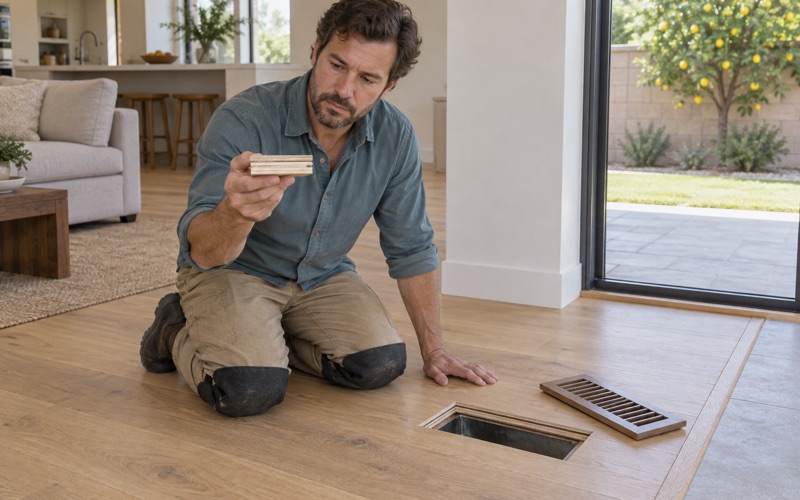
Before promising a result, we lift a carpet corner or a floor register where the owner allows it, so we can see board thickness, species and direction. Red oak and white oak strip floors respond to a drum sander very differently than a later engineered plank does, and knowing which one is in the room sets the whole schedule.
Looking for wood-flooring closer to El Monte? See El Monte Wood-Flooring.
Homes in Bandini, Rosewood and Laguna
The residential side of Commerce is compact, and knowing where it sits and how it came to be explains a good deal about the floors inside. It also explains why plan and inspection questions here go to a city office of its own.
Neighborhoods Older Than the City Itself
Commerce’s residential communities came before its incorporation. In the late 1940s, residents of Bandini, Rosewood and Laguna joined with the area’s industrial leaders, and the city incorporated in 1960 to prevent Vernon and Los Angeles from annexing its industrial land. It is usually called the City of Commerce to set it apart from the everyday word.
That history shapes the houses we work in: residential pockets set among the rail line, warehouses and retail, including the Citadel Outlets on the site of a former tire factory. The city is served mostly by Montebello Unified School District, and much of the housing in these neighborhoods is the mid-century stock the census describes.
Floor Care Next to Industry and Freeways
Commerce is served by the Long Beach and Santa Ana freeways and sits beside active industrial land, so fine grit tracked in from outside is part of daily life for many households. That grit is what wears a finish down in traffic lanes and at entries, and it shows up first as a dull, gray path from the front door to the kitchen.
We point out those wear patterns during the estimate and recommend entry mats and felt pads that match how the house is actually used. Inside, our sanding runs with dust containment, which keeps fine dust out of the rest of the home and away from the people living in it while the work is underway.
Who Reviews Plans in Commerce
Plan check, building inspections and building permits in Commerce run through the city’s own Building and Safety Division, part of Economic Development and Planning. The city states that plans submitted for plan check from January 1, 2026 are reviewed against the 2025 California Building, Electrical, Green, Mechanical, Plumbing and Residential Codes.
Sanding and refinishing are finish work, but a floor job can grow into something more when a joist is cracked or a subfloor section has rotted. When our scope moves toward structural repair, we tell the owner right away and point them to that division before the work goes further, instead of guessing at an answer on the city’s behalf.
Refinish or Replace a Mid-Century Floor
Reading What an Old Floor Has Left
A solid strip floor can only be sanded so many times before the wood above the tongue runs thin. In houses this age we look for exposed nail heads, sand-through spots, chatter marks, drum marks and edger swirl left by earlier crews, because each one tells us how aggressive the last sanding was and how much material it took.
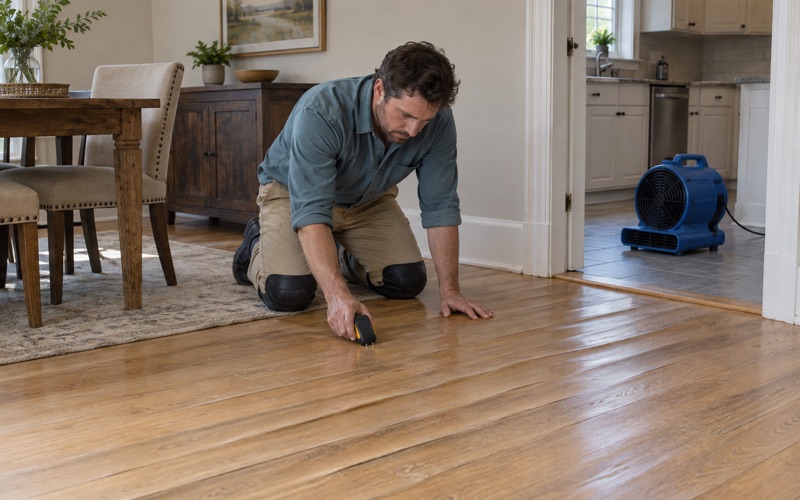
We also look for cupping near exterior doors and kitchens, crowning where a floor was sanded while it was still cupped, and seasonal gapping that opens and closes through the year. Gaps that tighten in wetter months are normal wood movement. Gaps paired with loose, squeaking or popping boards point to a fastening or subfloor problem that refinishing alone will not fix.
When a Refinish Is Enough
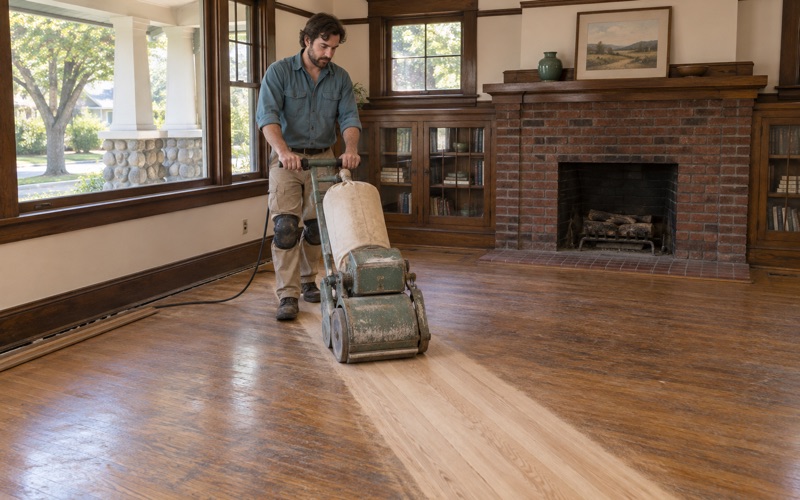
If the boards are sound and enough wood remains, a full sand through a proper abrasive grit sequence brings a mid-century oak floor back to bare wood. From there the owner chooses a stain color, a sheen level and a finish system, and we put the cure time and recoat window in writing so there is no guessing about when the room is usable.
When the finish is only dull or lightly scratched, a screen and recoat is the lighter path. It abrades the top coat and adds fresh finish without cutting into the wood, which protects thickness on a floor that has likely been sanded more than once over its life. Finish peeling or white haze from an incompatible product usually calls for a full sand instead.
When Boards Need Replacing
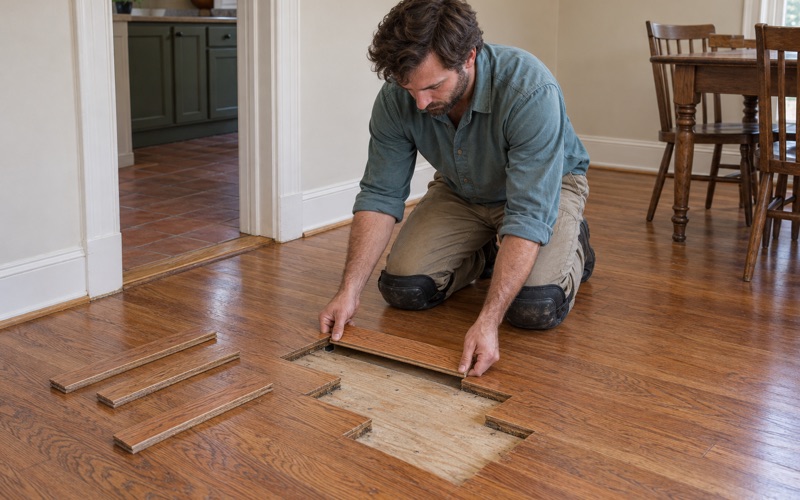
Pet urine stains, black water stains and split or burned boards rarely sand out, because the damage runs deeper than the surface. Our fix is board replacement with a weave-in repair, staggering new strips into the existing pattern instead of cutting a straight patch line that shows from across the room. We match species, width and grain as closely as the existing floor allows.
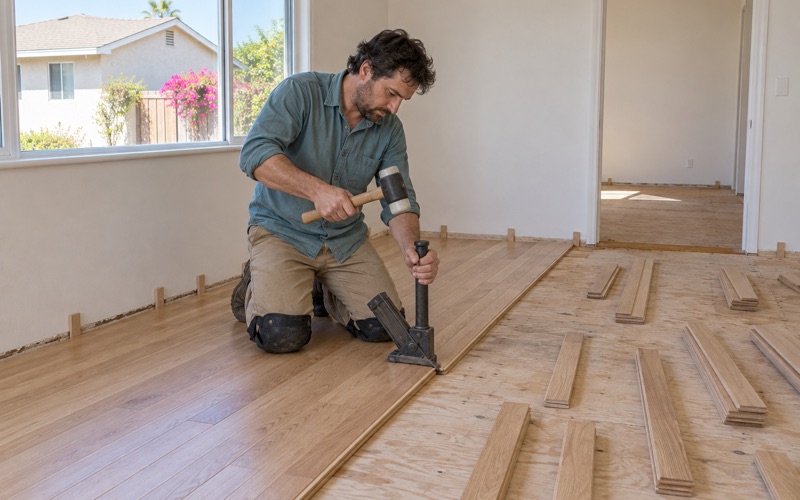
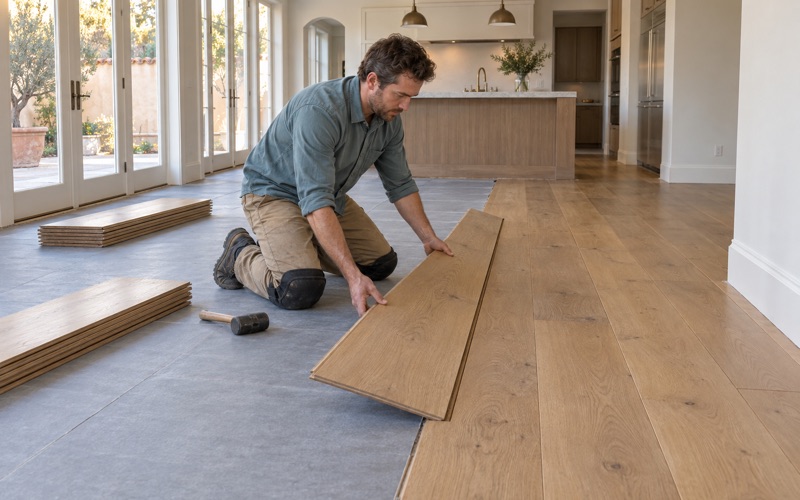
Sometimes replacing the whole room is the better investment, particularly where a previous owner laid a thin engineered floor over the original. We measure the wear layer on any engineered product before promising a sanding, since a thin veneer can take a screen and recoat but not a full sand. If replacement wins, we lay out solid and engineered options with their acclimation and installation needs.
Wood Floor Services Across Commerce
Much of the work we plan in Commerce is shaped by the age of the houses. The steps below are the ones that most often separate a floor that lasts from one that has to be redone, and each is written into the estimate before the first board is touched.
Lead-Safe Preparation on Older Finishes
Because so much of Commerce’s housing was built long before 1978, we confirm each house’s build year before any sanding is scheduled. Old paint on baseboards and thresholds, along with earlier finish layers in pre-1978 housing, is handled under the federal EPA Renovation, Repair and Painting Rule, which shapes how rooms are closed off, how dust is contained and how cleanup is done.
That confirmation happens while the quote is being written, not on the morning of the job. It lets a household plan where children and pets will stay, and it keeps the schedule honest about the extra preparation time older finishes can add. It also means baseboards and shoe molding that must come off are planned for rather than improvised.
Sagging Floors and Termite Checks
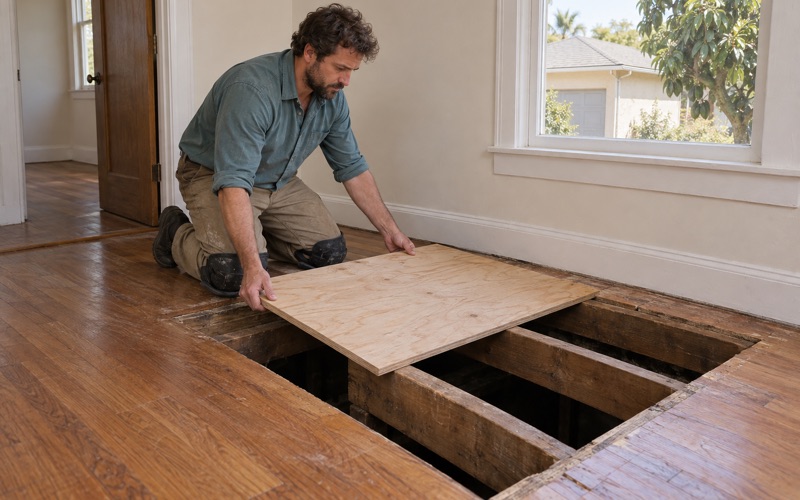
A sagging floor, a soft spot or a bouncy floor is rarely a finish problem. Where a house has access underneath, we check the floor joists, girders, pier posts and subfloor before we quote, because sanding a floor that moves would only hide the cause for a season. A sister joist or new blocking may be the first line item on the estimate.
We also rule out drywood termites before replacing any board. Small round kick-out holes and piles of pellet-shaped frass can point to an active colony, and a new board laid over one would not last. If we find that evidence, the owner hears about it before any material is ordered.
Finishes, Stairs, Schedules and Claims
Every finish we apply is selected from products legal in the South Coast Air Quality Management District, where the wood coatings limit under SCAQMD Rule 1113 is 275 grams per liter. Within that limit, owners still choose among waterborne polyurethane, oil-modified polyurethane and hardwax oil, each with its own look, cure time and upkeep.
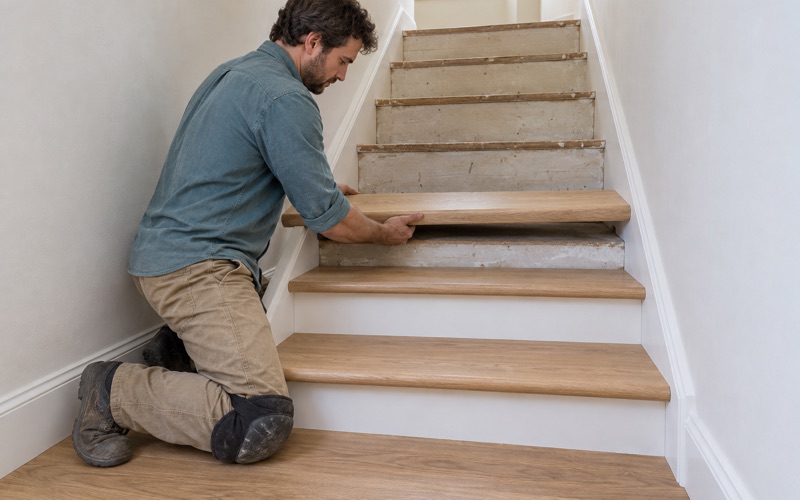
Stairs are quoted by tread, riser and nosing rather than folded into a square-foot price, since stair work is built differently from open floor. Each job comes with a room-by-room schedule showing when furniture, rugs and pets can return. Rental turnovers are timed to move-out and move-in dates with the floor condition recorded on both sides, and water or smoke losses get photos and moisture readings an adjuster can use.
- 20+ Years in Wood Flooring
- Free Written Estimates
- Room-by-Room Schedules