Alhambra Wood Flooring handles wood-flooring in Boyle Heights for building owners, property managers and the tenants who live on those floors, and we bring more than 20 years of sanding, repair and installation to every unit. Most of the work we see in this neighborhood sits inside apartments rather than detached houses, so a job usually starts with a unit number, a move-out date and a building we share with the people who live there.
That changes how we quote. We look closely at the floor in the unit, but we also ask about the building around it: roughly when it went up, how many units it holds, where equipment can be carried in and which hours neighbors need quiet. A sanding plan that suits a single house can be the wrong plan for an upstairs unit with a household below and a new tenant due at the end of the week.
Below we lay out what apartment floors here tend to involve, how a turnover refinish runs, what older buildings keep hidden under carpet, and how we keep an occupied building livable while the floors are down.
Apartment Floors Are Most of the Work Here
A Neighborhood of Renters
The census numbers point one direction. In the American Community Survey 2024 five-year estimates for ZIP code 90033, which we use as a proxy because Boyle Heights has no Census place of its own, 82.4 percent of occupied households rent. That ZIP is not the neighborhood boundary, since Boyle Heights also takes in parts of 90023 and 90063, but it is the cleanest single read available.
For a flooring contractor, that share decides who picks up the phone. The caller is more often the owner of a small building, a manager handling several properties, or a tenant relaying a landlord’s request than a homeowner planning a remodel. We write our estimates so they can be forwarded to whoever approves the spend without needing us on the call.
Small and Mid-Size Buildings
The same ZIP 90033 estimates show 5,666 renter households, about half of all renters at 52.1 percent, living in buildings of two to nineteen units. That count spreads across duplexes, three- and four-unit buildings, and buildings of five to nineteen units, with no single size taking over.
Buildings in that range typically turn over one unit at a time, so we rarely refinish a whole property at once. We handle the unit that just came open, note the species, stain and sheen we used, and keep that record so the next unit on the property can be matched when its tenant moves out.
The City Rules Around the Building
Boyle Heights is a neighborhood of the City of Los Angeles rather than a separate city, so building questions go to the Los Angeles Department of Building and Safety, known as LADBS. When a project goes beyond refinishing, such as replacing subfloor or touching a structural member, we ask the owner to confirm the scope with LADBS before anything is scheduled.
Owners of larger wood-frame buildings may already know the LADBS Soft-Story Retrofit Program under Ordinances 183893 and 184081. It covers buildings of two or more stories built under codes enacted before January 1, 1978, with ground-floor parking or similar open space, and it does not apply to residential buildings of three or fewer units. It is a seismic program, not a flooring rule, but we ask whether retrofit work is planned so our dates do not collide with it.
Many older rentals in Los Angeles also sit under the city’s Rent Stabilization Ordinance, which secondary sources describe as covering rental properties of two or more units with a certificate of occupancy on or before October 1, 1978. Questions about what either program asks of an owner belong with the city. Our part is the floor.
Looking for wood-flooring closer to Pasadena? See Wood-Flooring Services in Pasadena.
Refinishing a Unit Between Tenants
Working to the Move-Out and Move-In Dates
Rental turnovers set the calendar. We schedule sanding and finish around the day the last tenant returns the keys and the day the next one arrives, and we tell the owner how much of that gap the cure time needs. When the window is too short for a full sand and several coats, we say so before a lease gets signed with a date the floor cannot meet.
We also record the floor at both ends of the tenancy with dated photos and notes. An owner weighing a security deposit deduction has to separate normal wear and tear, like a dulled path from the door to the kitchen, from damage like a pet urine stain or deep gouges, and a record made at move-in makes that call far easier.
Screen and Recoat or a Full Sand
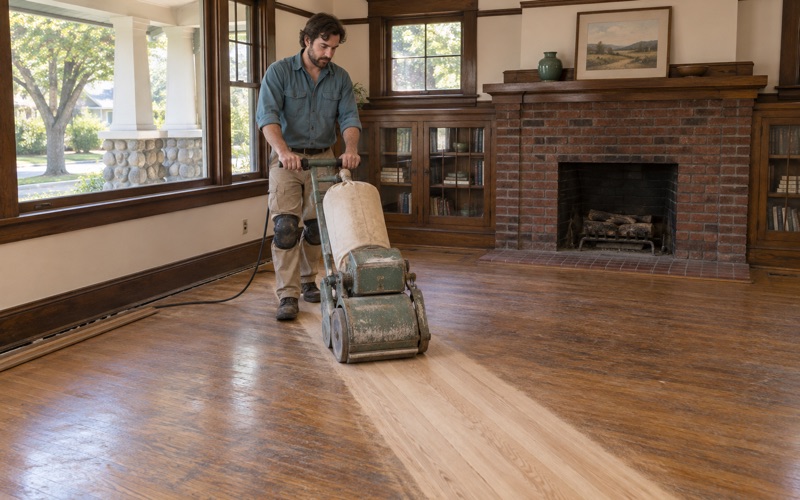
Plenty of turnover floors do not need a full sand. When the finish is tired but has not worn through to bare wood, a screen and recoat, sometimes called a buff and coat, abrades the existing surface and bonds a fresh coat on top. It is the quickest way to get a unit photographed and listed again.
A worn-through finish, gray stains where water sat, or a black water stain beside a sink base or a leaking refrigerator line calls for sanding to raw wood and sometimes board replacement. We walk the unit and mark which rooms need which treatment, so the owner is not paying for a full sand in a bedroom that only needs a coat.
Finishes That Suit a Rental
For most turnovers we recommend a waterborne polyurethane. It dries quickly, carries less odor than an oil-modified polyurethane, and stays light in color, which makes a cure easier on the neighbors. Every product we apply is legal in the South Coast Air Quality Management District, where the wood coatings limit under SCAQMD Rule 1113 is 275 grams per liter.
Sheen level matters in a rental as well. A satin or matte finish hides the fine scratches that come with furniture moving in and out, while a high gloss shows every one. Each owner gets a written room-by-room schedule showing when rugs, furniture and pets can come back, so the new tenant’s move-in can be planned around it.
Prewar Buildings and What the Carpet Is Hiding
Old Hardwood Under Newer Coverings
Much of the housing here is old. In the ZIP 90033 estimates, 38.1 percent of housing units were built in 1939 or earlier. The neighborhood takes its name from Andrew Boyle, who bought 22 acres on the bluffs and made his home there in 1858, and from the 1920s through the 1960s it was a center of Jewish, Mexican and Japanese immigrant life.
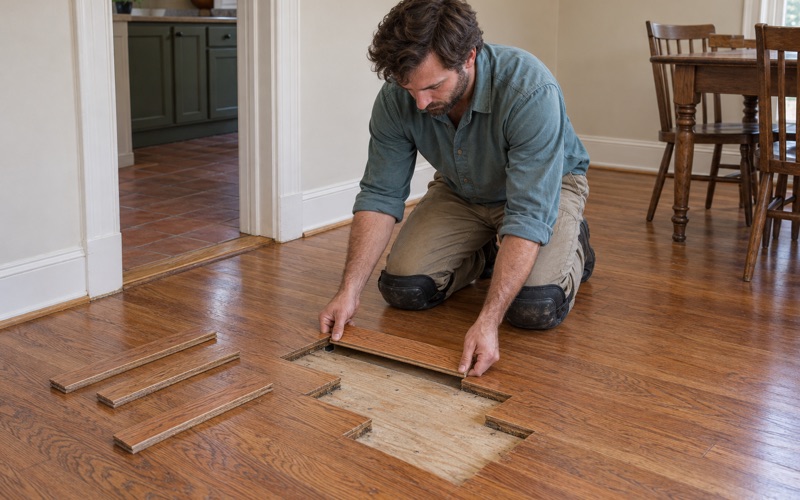
When we pull back carpet or luxury vinyl plank in a prewar unit, we can find tongue and groove hardwood underneath, often red oak or white oak strip. Sometimes it needs only sanding. Other times it carries tack strip holes, staple lines, paint splatter and old adhesive, and we price that cleanup and board repair on their own lines so the owner can compare it with a new floor.
Thin Boards and Past Sandings
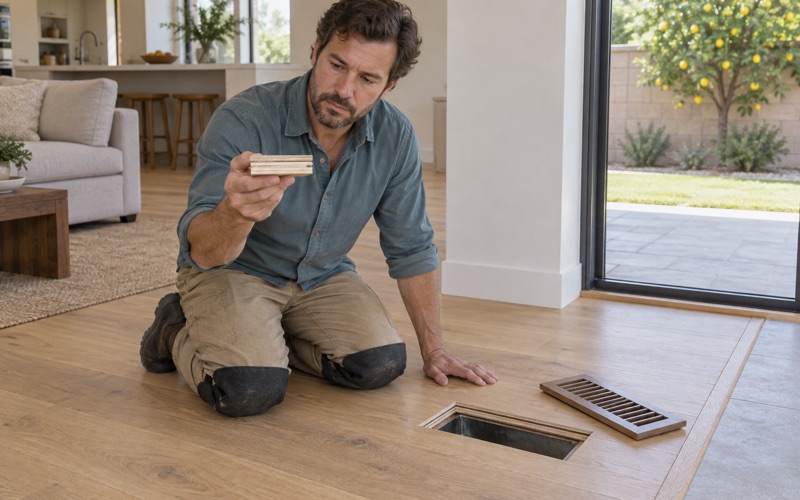
Solid hardwood sanded several times over eight or nine decades may have little wood left above the tongue. Before we promise a full sand, we lift a floor register or a threshold to see the board profile. Where too little remains, a hard sand risks sand-through and exposed nail heads, and a screen and recoat or a weave-in repair is the honest recommendation.
Engineered hardwood from later remodels calls for the same caution. We measure wear layer thickness before quoting, since a thin veneer can take a screen and recoat but not a full sand. A sander that cuts through that veneer leaves a spot no finish can hide, and the fix becomes board replacement.
Paint and Finish Layers in Older Units
In the same estimates, 73.8 percent of housing units predate 1980. Housing built before 1978 falls under the EPA Renovation, Repair and Painting Rule when work disturbs painted surfaces, so we confirm the build year before any sanding goes on the calendar rather than after the drum sander is in the room.
In practice that puts baseboards, shoe molding and painted thresholds under attention first. We plan dust containment and cleanup for pre-1978 housing from the start, and we tell the owner and any neighboring tenants what to expect on the days that work happens.
Working in an Occupied Building
Noise, Dust and Shared Hallways
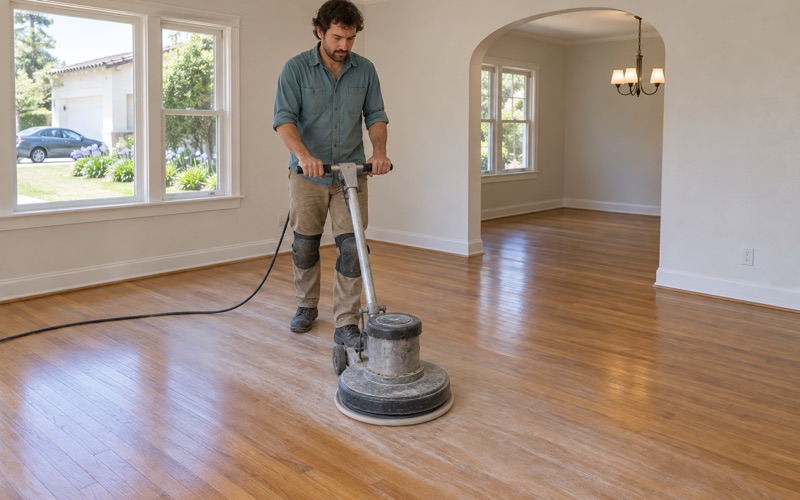
Most turnovers happen while the rest of the building is at home. Drum sanders and edgers are loud, so we keep sanding to daytime hours, give the owner the noisy days in advance so tenants can be told, and run dustless sanding with vacuum-connected machines to keep dust out of hallways and the units next door.
Stairwells and corridors in older walk-ups are narrow, so we carry equipment straight in and stage it inside the unit instead of in a common area. Finish goes down with the unit door closed and ventilation planned, and we clear our materials out of shared spaces at the end of each day.
Sound Between Floors
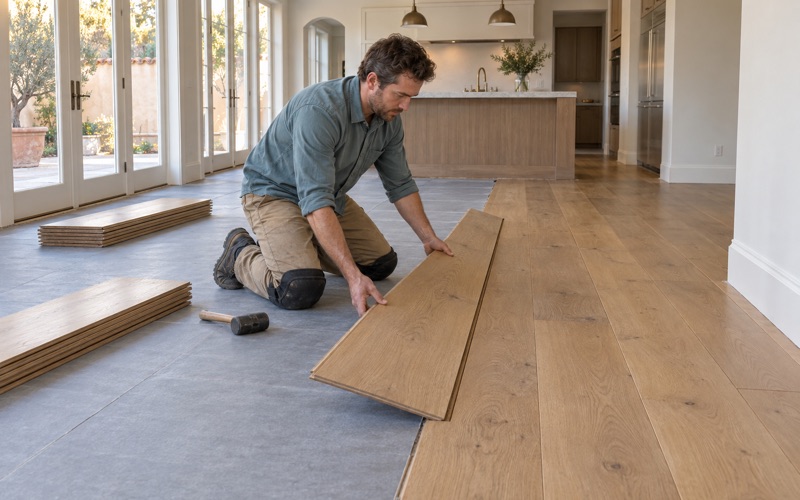
When an upstairs unit gets new flooring rather than a refinish, the household below hears the difference. Upper-floor installs usually call for acoustic underlayment, and a floating floor or a glue-down installation can suit a unit better than a nail-down floor over an old board subfloor, depending on what is underneath.
Some buildings carry an association or management company with its own rules for hard flooring and underlayment. We check those rules before ordering material, so a finished floor never has to come back up because the underlayment beneath it was the wrong product.
Services Across Boyle Heights
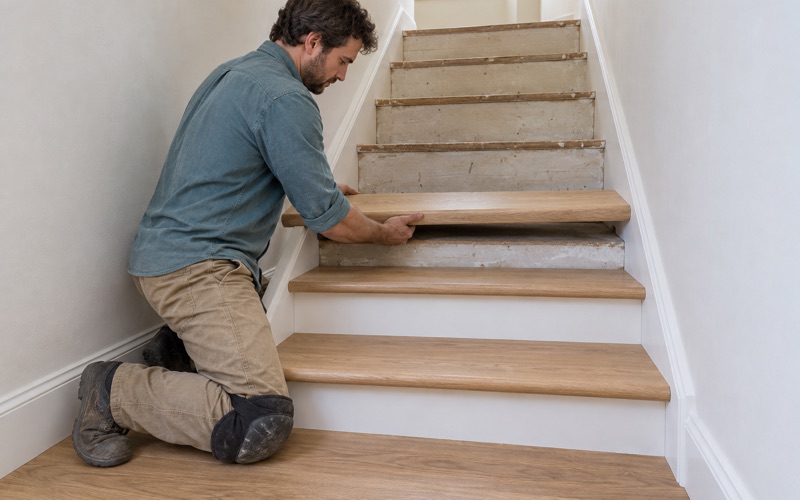
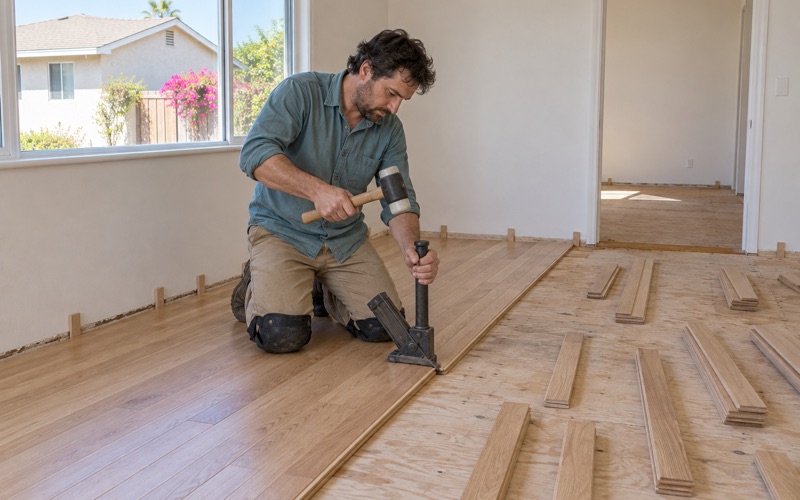
Beyond turnovers, we sand and refinish hardwood, replace damaged boards with matching species and width, install solid and engineered hardwood, and build stair treads, risers and nosings, which we quote by the piece rather than folding into a square-foot price. From units near Mariachi Plaza to buildings on the streets around Hollenbeck Park, the work follows the same sequence.
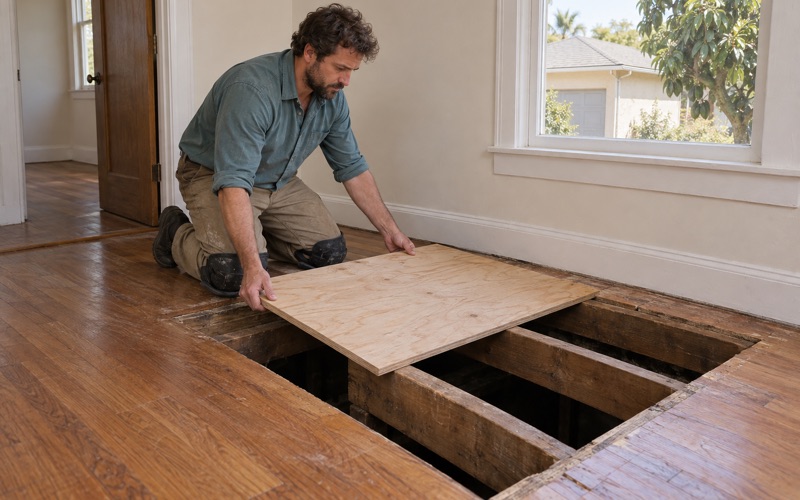
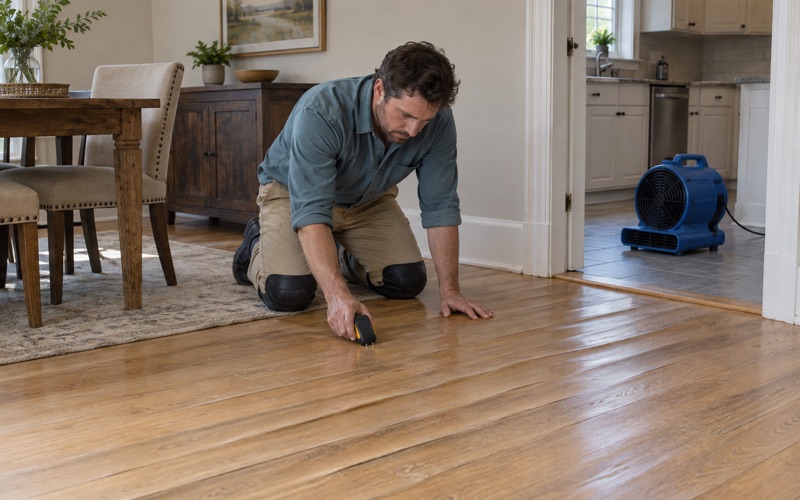
Where a unit sits over a crawl space and the floor feels bouncy or sags, we look underneath before quoting, because a joist, pier post or subfloor problem comes back through a fresh finish. Small round kick-out holes or piles of termite frass are identified as drywood termite evidence or ruled out before a board is replaced. For water or smoke losses, we document moisture meter readings and photos an adjuster can use, and write the repair as matching board and finish.
- 20+ Years in Wood Flooring
- Free Written Estimates
- Room-by-Room Schedules